
Indonesia’s Transport Safety Still Waits for Tragedy
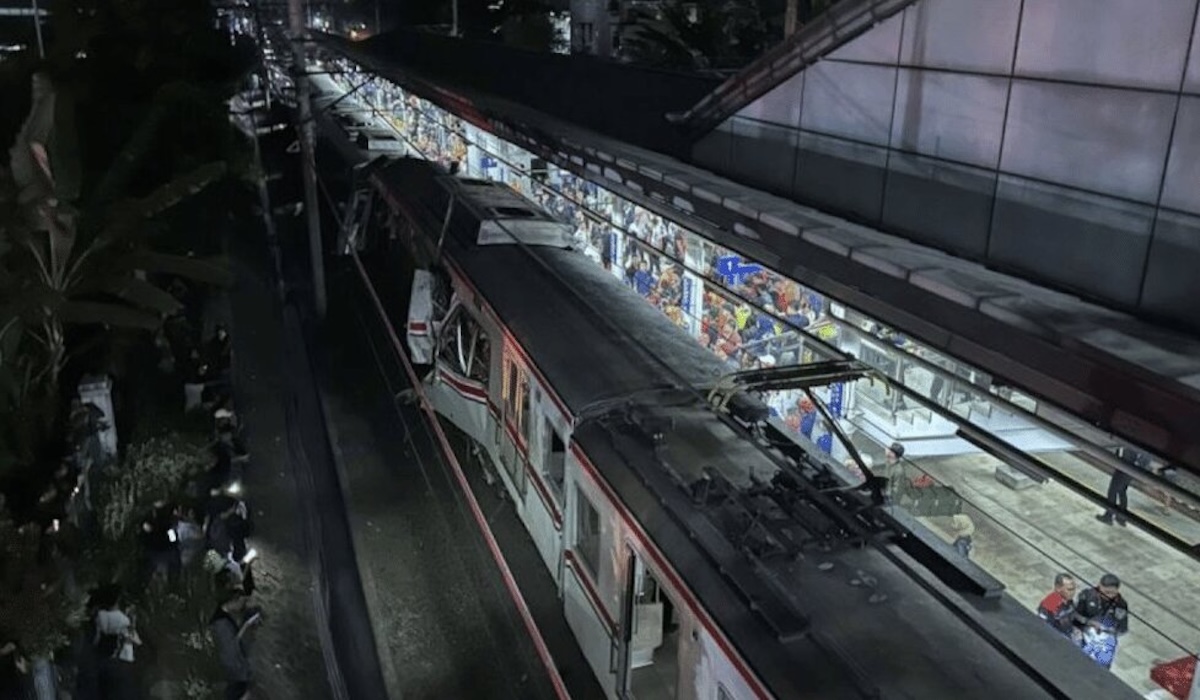
The Indonesian Transport Society (MTI) states that transport safety should not react only after accidents occur. Ideally, public protection should be built through three pillars: education, engineering, and enforcement. However, in reality, Indonesia’s system only acts after a tragedy strikes, rather than preventing it.
MTI’s Advisory Council member Djoko Setijowarno said this is not merely a momentary lapse but evidence of the state’s negligence towards road transport safety.
‘On average, over 100 people die daily from accidents in Indonesia, mostly on roads. This isn’t from one viral major tragedy but an accumulation of daily accidents often overlooked,’ he said on Friday (29 May).
The rising death toll indicates no significant improvements have been made. ‘In fact, there is a gradual increase,’ Djoko stressed.
The Bekasi Timur train tragedy is the latest example of this system failure. Nearly a month later, the National Transportation Safety Committee (KNKT) has only presented a timeline and factual data without analysis or conclusions on the cause. KNKT Chief Soerjanto Tjahjono acknowledged this during a working session with DPR Commission V:
‘The current presentation contains only factual data, no analysis and no conclusions on the cause of the accident.’
Although the investigation is ongoing, patterns of failure are evident. The Bekasi Timur tragedy resulted not from a single error but layered failures: human negligence, faulty infrastructure, suboptimal operational systems, and a lack of emergency safety standards.
‘This reflects no significant improvements in Indonesia’s road transport safety. Prevention is cheaper than post-accident management,’ Djoko said.
The situation is increasingly alarming as safety standards have not kept pace with high public reliance on transport. BPS 2025 data shows hundreds of thousands of daily train passengers, over 300,000 bus fleets, and 145 million motorcycles on roads. At such scale, a single safety gap can escalate into a mass tragedy within seconds.
Tulus Abadi, Chair of the Empowered Consumer Forum Indonesia, stressed that risk mitigation cannot rely solely on user behaviour. ‘Technical engineering solutions with safety dimensions are needed to reduce fatality risks,’ he said.
This logical demand should not need repeating.
Serious responses only emerged after the Bekasi Timur tragedy drew public attention. DPR Commission V’s working session demanded evaluations go beyond timelines to comprehensive safety system reforms. Commission V Chair Lasarus stressed that once systemic issues are identified, repairs must be immediate to prevent recurrence. Evaluations should not remain mere notes without concrete action.
This demand is relevant as Bekasi Timur is not the only tragedy awaiting answers. The ALS bus accident in South Sumatra adds to unresolved cases. On roads, level crossings, and overlooked routes, accidents do not adhere to schedules.
As long as the transport safety system waits for tragedies to act, the critical question is no longer when the next accident will occur, but how prepared the system is when it does. (Z-10)