
Indonesia’s Trade Surplus Forecast to Narrow in September as Oil Weighs
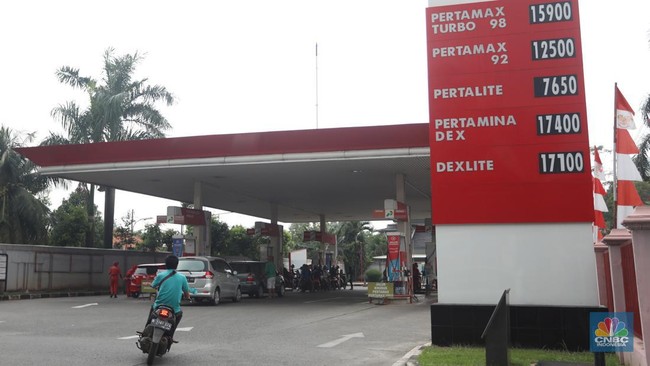
Jakarta, CNBC Indonesia – Economists expect Indonesia’s trade balance to remain in surplus in September 2026. However, the surplus is forecast to fall significantly from US$3.55 billion in August, mainly because rising oil prices are expected to lift the value of imports more than exports.
Bank Permata chief economist Josua Pardede estimates that Indonesia will record a trade surplus of around US$1.79 billion in September 2026, a significant narrowing from US$3.55 billion in August.
He believes the decline will be driven mainly by imports growing much faster than exports. Exports are projected to rise by 9.39% year on year in September 2026, up from 6.72% in August.
“Export growth is supported by relatively high commodity prices, particularly coal, as well as demand from China, India and Japan. Improving manufacturing activity in a number of trading partner countries is also supporting demand for Indonesian exports,” Josua told CNBC Indonesia, as quoted on 2 October 2026.
Imports, however, are expected to increase more sharply, by 23.07% year on year in September 2026, compared with 19.09% in August. The rise is being driven mainly by higher global oil prices, which are increasing the energy import bill, as well as greater demand for raw materials and capital goods as domestic manufacturing activity recovers. This is consistent with Indonesia’s manufacturing PMI returning to expansion at 52.4 in September, from 49.8 in August.
Josua said that strong import growth does not necessarily indicate a weakening economy. Some of the increase, he said, is instead linked to stronger production and investment activity.
Bank Central Asia (BCA) chief economist David Sumual forecasts a trade surplus of US$1.52 billion in September 2026. He expects exports to grow by 9.31% year on year and 1.31% month on month. Imports, however, are projected to rise by 25.08% year on year and 10.3% month on month.
“The trade balance is improving mainly because of export commodity prices, particularly the significant rise in coal prices. On the other hand, exports to China of crude palm oil (CPO) and several metal products appear to have increased. Imports, meanwhile, are expected to continue growing strongly as oil prices keep rising,” David said.
Bank Danamon chief economist Irman Faiz, speaking separately, expects the trade balance to post a surplus of around US$1 billion in September 2026. Exports are projected to grow by 4.5% year on year to US$25.8 billion, while imports are expected to rise by 22% to US$24.8 billion.
He cited three main factors behind the forecast. First, rising oil prices are increasing the energy import bill, and the oil and gas trade deficit is expected to widen. The effect on the value of imports will still depend on volumes and when goods arrive.
“Second, improving manufacturing activity is supporting a recovery in imports of raw and intermediate materials, after imports fell quite sharply in August 2026. We therefore expect imports to rise month on month again, although they will not yet have fully returned to July 2026 levels,” Faiz said.
Third, exports are expected to return to more normal month-on-month levels. Historically, exports have more often fallen in September than risen from August. A recovery in demand for manufactured products may provide support, but may not be reflected immediately in shipments during the same month.
Overall, the surplus is expected to persist, but its contribution as a buffer for foreign-exchange supply is becoming more limited. Faiz said the balance of risks points towards a smaller surplus, or even a deficit if the recovery in imports proves stronger or exports weaker than expected.
Current Account Deficit Warning
Josua said that if the value of imports continues to rise faster than exports, the resilience of the trade balance and the ability to generate foreign exchange will become increasingly vulnerable. This warrants attention because the trade surplus is one of the buffers supporting rupiah stability. As the surplus narrows while foreign-exchange needs for imports and external debt payments remain high, pressure on the current account could increase.
Josua expects Indonesia’s current account deficit to widen to around 2.49% of GDP in 2026, from 0.09% in 2025. The risk would increase if uncertainty surrounding MSCI were to trigger a prolonged outflow of portfolio investment.
Josua said future policy challenges would therefore involve not only keeping inflation within its target, but also strengthening food supplies, reducing dependence on energy imports, increasing the value added of manufactured exports and maintaining investor confidence.
“September’s trade balance is still expected to be in surplus, but with a thinner buffer. This shows that Indonesia’s economy remains resilient, although its capacity to absorb external shocks is becoming more limited,” he said.
Source: jawawa.id (https://jawawa.id/newsitem/indonesias-trade-surplus-forecast-to-narrow-in-september-as-oil-weighs-1793584268)
Originally published by CNBC Indonesia (https://www.cnbcindonesia.com/news/20261102070859-4-781337/surplus-dagang-ri-diramal-susut-di-september-minyak-jadi-beban), translated from Indonesian