
Indonesia's Trade Balance Surpluses for 71 Consecutive Months, Trade Minister's Comments
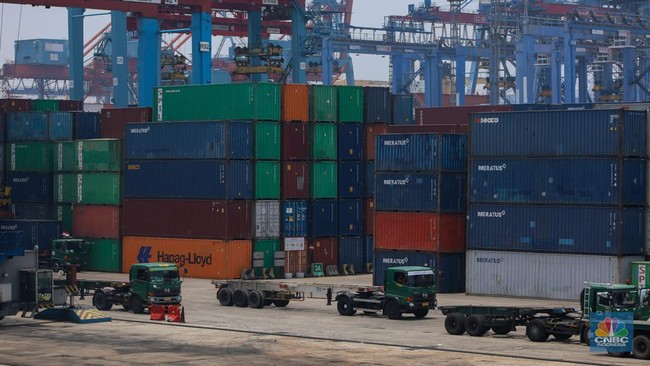
Indonesia’s trade balance once again recorded a surplus in March 2026 amounting to US$3.32 billion, extending the positive trend to 71 consecutive months since May 2020. This performance affirms Indonesia’s resilience amid global pressures.
Trade Minister Budi Santoso stated that the ongoing surplus demonstrates the strong fundamentals of the national trade sector, with the primary contribution coming from the non-oil and gas sector.
“The surplus that continues in the March 2026 period shows that Indonesia’s trade fundamentals remain strong. Indonesia continues to maintain its monthly surplus. Non-oil and gas exports are supporting the January-March 2026 trade performance, particularly from the processing industry sector which is increasingly competitive in the global market,” said Budi in his statement, quoted on Thursday (7/5/2026).
He detailed that the March surplus was supported by a non-oil and gas surplus of US$5.21 billion, despite a lingering oil and gas deficit of US$1.89 billion. Cumulatively for January-March 2026, the trade balance recorded a surplus of US$5.55 billion, consisting of a non-oil and gas surplus of US$10.63 billion and an oil and gas deficit of US$5.08 billion.
The commodities contributing the largest surpluses came from fats and animal or vegetable oils (US$8.68 billion), mineral fuels (US$6.22 billion), and iron and steel (US$4.29 billion). From the partner country side, the largest surplus came from the United States at US$5.06 billion, followed by India and the Philippines.
Processing Industry Becomes the Engine
On the export side, Indonesia’s export value in March 2026 was recorded at US$22.53 billion, up 1.62% month-on-month (MtM), although still contracting 3.10% year-on-year (YoY). The increase was mainly driven by a surge in oil and gas exports, while non-oil and gas growth was limited.
Cumulatively for January-March 2026, total exports reached US$66.85 billion, up slightly by 0.34% compared to the same period last year. This performance was supported by non-oil and gas exports which rose 0.98% to US$63.60 billion.
Budi emphasised that the processing industry sector became the main driver of exports with a dominant contribution.
“Throughout the first three months of 2026, export growth was driven by the performance of the processing industry sector, up 3.96% (CtC) to US$54.98 billion compared to January-March 2025 which was US$52.89 billion,” he explained.
The contribution of this sector even reached 82.25% of total national exports. Commodities with the highest increases included nickel, tin, aluminium, and chemicals.
Imports Decline Due to Seasonal Factors
On the other hand, Indonesia’s imports in March 2026 were recorded at US$19.21 billion, down 8.08% from February (MtM), although still growing 1.51% year-on-year. The decline occurred across all commodity groups.
“This decline was influenced by seasonal factors from the long Eid al-Fitr holiday, geopolitical pressures in the Middle East region, and weakening domestic demand,” he explained.
However, cumulatively for January-March 2026, imports actually increased 10.05% to US$61.30 billion, mainly driven by non-oil and gas imports which rose 12.16%. Imports were still dominated by China, Australia, and Japan with a combined contribution of nearly 53%.
Government to Maintain Momentum
Looking ahead, the government affirmed it will maintain this positive trend by expanding export markets and strengthening the domestic industry.
“We will continue to expand markets while maintaining domestic industry stability and ensuring adaptive policies to global dynamics,” he concluded.