
Indonesia's Trade Balance Slips Back into Deficit: Here Are the Goods Behind the Large Shortfall
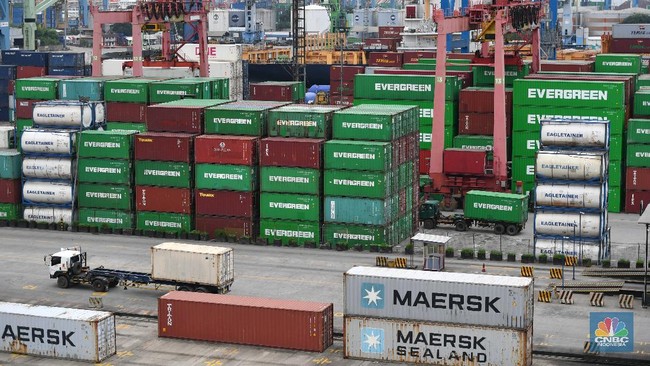
Jakarta - Indonesia’s trade balance returned to a deficit in May 2026 after 72 consecutive months of surplus since May 2020. In May 2026, the nation’s trade balance recorded a deficit of US$1.61 billion, caused by export values reaching only US$23.20 billion against imports of US$24.81 billion.
Statistics Indonesia (BPS) noted that with this result, the cumulative trade balance for the January-May 2026 period still managed a surplus of US$4.03 billion, although this was a sharp decline compared to the US$15.38 billion surplus recorded in the same period last year.
“The cumulative trade balance for January-May 2026 is a surplus of US$4.03 billion,” said Ateng Hartono, Deputy for Distribution and Services Statistics at BPS, during a press conference on Wednesday (1/7/2027).
In the first five months of this year, Ateng stated that the main commodity contributing to the trade deficit was machinery and mechanical equipment (HS 84) with a negative value of US$12.74 billion. This was followed by electrical machinery and equipment (HS 85) with a deficit of US$6.23 billion, plastics and plastic articles (HS 39) with a deficit of US$3.74 billion, cereals (HS 10) with a shortfall of US$1.62 billion, and aircraft and parts thereof (HS 88) with a deficit of US$1.56 billion.
Meanwhile, the main commodities contributing to the trade surplus during the January-May 2026 period were animal or vegetable fats and oils (HS 15) at US$13.92 billion, and mineral fuels (HS 27) at US$10.88 billion. Iron and steel (HS 72) recorded a surplus of US$7.09 billion, followed by nickel and articles thereof (HS 75) which still experienced a surplus of US$5.36 billion, along with footwear (HS 64) valued at US$2.72 billion.