
Indonesia’s Tourism Industry Has Yet to Return to Normal After Covid, Says Business Group
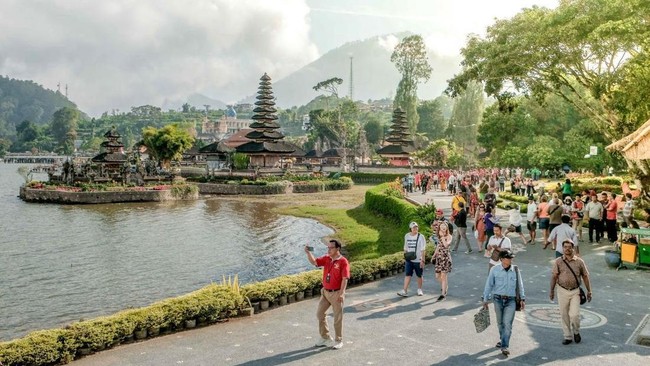
Jakarta, CNBC Indonesia — The Indonesian Tourism Industry Association (GIPI) says the country’s tourism sector remains under pressure and has yet to recover to pre-Covid-19 levels, although the number of hotel accommodation units has grown significantly.
GIPI chairman Hariyadi B.S. Sukamdani said Indonesia had 34,702 hotel accommodation units in 2025, up from 27,607 in 2021. He cited an increase of 19.5% in total hotel and accommodation supply over the period. (The figures supplied in the article also describe the increase as 20.4%.)
“Looking at the 2025 data for the hotel sector compared with 2021, there was an increase in supply — in the total number of hotels and accommodation units — to 34,702. In 2021, the total was 27,607,” Hariyadi said at GIPI’s fourth national leadership and working meetings on Wednesday, 14 October 2026.
Hotel occupancy also improved in 2025 compared with 2021, with the average rising to 49.26% from 36.64%. However, this remained below the 54.99% recorded in 2019, before the pandemic.
“The average occupancy rate was 36.64% in 2021 and 49.25% in 2025. Before Covid-19, in 2019, it was 54.99%. Given the increase in supply and the lower occupancy rate, there may be a correlation, as supply has also risen considerably,” Hariyadi said.
Overall, he said, accommodation services had remained relatively stable or stagnant because supply had increased through the addition of accommodation units.
“We consider the development not particularly significant — in other words, stagnant. It should not be judged solely by the decline in occupancy,” he said.
The aviation sector continues to face challenges. The number of domestic air passengers fell by 22.9% in 2025 to 61.2 million, from 79.4 million in 2019.
“If we look at these figures, passenger transport — particularly domestic flights — has declined, although the data for individual sectors is relatively stable,” Hariyadi said.
The number of aircraft operated by Indonesian airlines was also lower in 2025 than in 2019, falling to 560 from 616. International visitor arrivals in 2025 remained below their 2019 level: 15.39 million compared with 16.11 million.
However, from January to August 2026, international arrivals to Indonesia grew by an average of 5.38%. If that growth is sustained, GIPI projects that arrivals could reach 16.22 million in 2026, exceeding the 2019 figure.
“International visitor arrivals from January to August 2026 totalled 10.57 million, up by an average of 5.38% compared with the same period in 2025. If this trend continues, with growth of 5.38% each month, arrivals in 2026 could reach 16.2 million and recover to above the 2019 level,” Hariyadi said.
GIPI identified several obstacles facing Indonesia’s tourism industry. First, promotion is not optimal because the Ministry of Tourism has a limited budget. Second, revenue collected from the tourism sector is not fully spent on supporting its growth.
As examples, Hariyadi cited visa fees amounting to Rp5.03 trillion in 2024, as well as tourism taxes collected by local governments. Jakarta collected Rp1.9 trillion in hotel tax and Rp3.95 trillion in restaurant tax in 2023, while Bali’s combined hotel and restaurant tax reached Rp8.66 trillion in 2025. By comparison, the Tourism Ministry’s 2026 budget is Rp1.8 trillion. Hariyadi said the amount returned to tourism from these revenue sources was relatively small.
Third, high airfares are making passengers, particularly domestic travellers, more selective when choosing flights.
“The challenges include persistently high ticket prices, driven by expensive aviation fuel and other flight costs, such as VAT on aviation fuel, passenger service charges, ground handling and aircraft spare parts,” he said.
Other obstacles include rising labour costs, costly regulations and limited access to bank financing.
Hariyadi also pointed to opportunities for the industry, including a weaker rupiah, the emergence of more diverse and attractive destinations, increased international flights to several Indonesian regions, and growing domestic travel among upper-middle-income groups and Generation Z.
“The depreciation of the rupiah makes Indonesian tourism more competitive. The number of international flights to several international airports in different regions has also increased,” Hariyadi said.
Source: jawawa.id (https://jawawa.id/newsitem/indonesias-tourism-industry-has-yet-to-return-to-normal-after-covid-says-business-group-1791978631)
Originally published by CNBC Indonesia (https://www.cnbcindonesia.com/news/20261014161818-4-776194/pariwisata-ri-belum-balik-normal-usai-covid-pengusaha-bongkar-datanya), translated from Indonesian