
Indonesia’s Third Waste Congress Promotes Collaboration on Waste Management from Source to Disposal
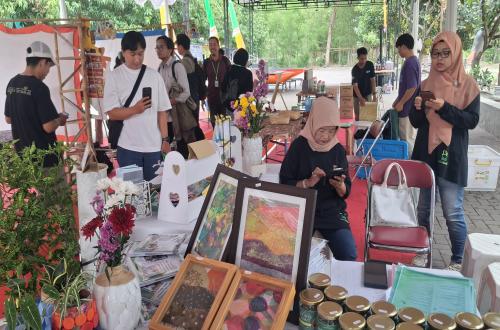
SLEMAN — The Indonesian Waste Ecosystem Foundation (Yayasan Ekosistem Sampah Indonesia, or Yayasan EKSIS) held a press conference for the Third Indonesian Waste Congress 2026 at the Wedomartani village office in Ngemplak, Sleman, on Friday (20 November 2026). Under the theme “Good Practices in Waste Management Towards an Independent and Sustainable Waste Management System”, the congress brings together various stakeholders to discuss waste-related problems and seek joint solutions from source to disposal.
A’ak Abdullah Al-Kudus, chair of the organising committee, said registrations had far exceeded the initial target. More than 260 people had signed up, compared with the target of about 100. They came from a number of regions, including Yogyakarta, Central Java, East Java, West Java, Bali, Medan, Riau and West Nusa Tenggara.
“This is extraordinary in our view. We were initially rather pessimistic about whether people would be interested in waste issues. But the response exceeded our expectations, reaching 150 per cent above the target,” A’ak said.
He added that participants were attending at their own expense, without travel allowances from the organisers. In his view, this showed public interest in and concern about waste management.
The congress, held from 20 to 22 November 2026, divided its discussions among three commissions. Commission I focused on waste prevention, education and sorting. Commission II addressed collection and subsequent handling, including depots and waste banks. Commission III discussed waste processing, appropriate technology and the development of recycled products.
Warsito Ellwein, a member of the Indonesian Waste Congress steering committee, said waste problems were becoming increasingly complex and could not be solved by one party alone. Cooperation was therefore needed among government, businesses, communities and the public.
“Waste is an issue that belongs to all of us, and it is becoming more complex by the day. We cannot tackle it separately; we have to do it together,” Warsito said.
He said he hoped the congress would not remain a merely ceremonial event. Instead, it should mark the beginning of follow-up discussions, workshops and efforts to map waste issues in different regions. Good practices already being implemented by local communities should also be shared so they can be adopted elsewhere.
Nazir Foead, also a member of the steering committee, highlighted the importance of connecting waste-management initiatives across a single circular-economy chain. Efforts to reduce waste, he said, should not be the responsibility of consumers alone, but should also begin with producers.
Producers need to consider the waste generated by their products and packaging. Businesses can also reduce their use of plastic and encourage reuse and recycling. These efforts need to be linked so that the output of one waste-management process can be used in another.
The Third Indonesian Waste Congress runs until 22 November 2026 at Dolo Field in Wedomartani, Ngemplak, Sleman. The organisers hope participants’ experiences and waste-management practices can be compiled into recommendations to promote a more independent and sustainable system.
Source: jawawa.id (https://jawawa.id/newsitem/indonesias-third-waste-congress-promotes-collaboration-on-waste-management-from-source-to-disposal-1795506819)
Originally published by Republika (https://rejogja.republika.co.id/berita/tozv5o291/kongres-sampah-indonesia-iii-dorong-kolaborasi-pengelolaan-sampah-dari-hulu-hingga-hilir), translated from Indonesian