
Indonesia's Teacher Shortage Is Not Just About Numbers, but Mismatched Placement
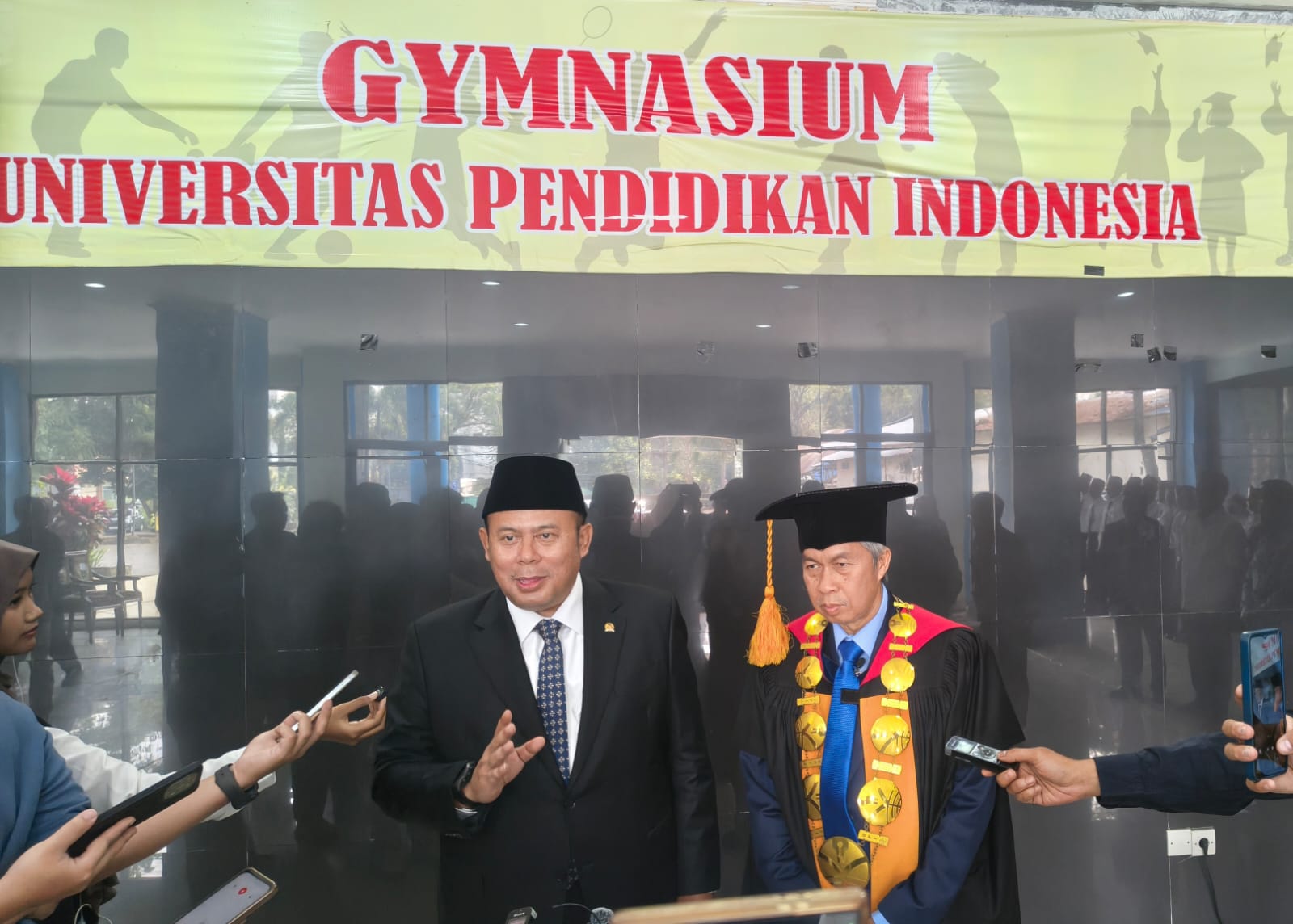
Deputy Speaker of the Indonesian House of Representatives Cucun Ahmad Syamsurijal has stated that Indonesia is not simply short of teachers. The real problem, he said, lies in where teachers are placed and whether that placement matches actual needs. In one region there may be a surplus of teaching staff, while in another schools are still struggling to find teachers for particular subjects.
Cucun argued that the uneven distribution of teachers shows something is amiss in recruitment governance. The state, he said, cannot merely open vacancies and appoint teachers. Real needs in each region must serve as the foundation. “So do not just keep recruiting without matching the required formations. Recruitment must match regional needs,” Cucun stressed at the Campus Orientation and Public Lecture event at the Indonesia University of Education (UPI) 2026 on Tuesday (18/8).
The firm statement from the people’s representative of the West Java electoral district touched on a problem that has recurred for years: the number of teachers, formations, and locations of need do not always converge. Cucun argued that education problems cannot continually be reduced to a matter of budget availability. The education budget mandate is clear. What is no less important is how that budget is translated into well-targeted policy.
“In this context, UPI is considered to hold a strategic position. The campus, known as one of the centres of teacher education, has academic experience as well as access to education problems on the ground. It is UPI that understands education. So we need to increase public participation, while also meeting with education practitioners to get input on what we should include in the legislation currently under way,” he explained.
The call for UPI’s involvement comes as the House of Representatives is drafting regulations on the national education system. This means higher education institutions should not merely be suppliers of human resources. Academic knowledge and field findings should also help determine policy direction.
UPI data shows the scale of the education ecosystem at the campus. Total UPI enrolment this year reached 13,860 students, comprising 11,556 undergraduate students, 1,564 professional education students, 471 master’s students, 161 doctoral students, and 108 diploma students. The figures demonstrate UPI’s large capacity. However, a large number of students does not automatically resolve the problem of teacher imbalance.
UPI Rector Didi Sukyadi did not deny the complexity of the issue, acknowledging that teacher shortages in several regions remain unfinished business. However, the university does not have the authority to resolve the entire chain of the problem.
“Education problems in Indonesia today are very, very complex. UPI, especially regarding the teacher shortage, cannot help in its entirety. UPI’s contribution so far has included student teaching practice in schools that need it. The scheme serves as a bridge between the campus world and education needs on the ground. But student teaching practice is clearly not a permanent solution to the teacher distribution problem; it is more like a patch for urgent needs,” he said.
“The main problem remains with government policy: how to calculate teacher needs precisely, open formations based on need, and then ensure teaching staff are placed in regions that actually require them. I also acknowledge that resolving this problem requires decisions at a higher level. The problem I mentioned can certainly only be resolved politically,” he explained.
Herein lies the paradox of Indonesian education. The country has higher education institutions that continue to produce prospective teachers. UPI alone has thousands of students across various levels of education. Yet at the same time, several regions still face teacher shortages.
The problem, therefore, is not simply how many teachers are produced, but whether graduates are absorbed according to need and whether government policy can direct their distribution. If recruitment proceeds without reading the map of regional needs, the imbalance will keep recurring. Schools in certain areas may have surplus teaching staff, while other schools lack teachers for the same subjects.
Cucun expressed hope that UPI would take part in improving the situation. He also reminded new students not to make a diploma the ultimate goal of education. The aim is not to produce great people, but people who are useful. So the measure is not the diploma, but whether they become people who are useful to their surroundings.
Batam City is still facing a shortage of around 500 teachers, with the greatest need at the state junior secondary level in mainland areas.
The challenge of ensuring the availability of quality and evenly distributed teachers demands concrete, comprehensive and immediate action from stakeholders across the country.
The problem of teacher shortages cannot be solved merely through opening teacher vacancies or partially increasing the capacity of teacher training institutions.
Limited access and infrastructure, as well as difficult transport access and geographical conditions, make many teachers reluctant to work in remote areas.
Southeast Sulawesi Province still lacks productive teachers at the senior secondary level and equivalent, particularly in vocational secondary schools.