
Indonesia's Sugar King Famous in Singapore, His Name Immortalised in a Street
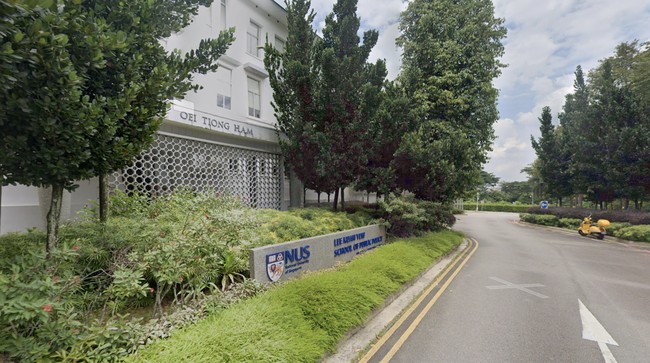
Singapore has long been a favoured destination for Indonesian entrepreneurs to invest their assets. However, few know that an Indonesian businessman once controlled up to a quarter of Singapore’s land. Imagine, out of Singapore’s 728.6 km² territory, a quarter—or 182 km²—was owned by this entrepreneur. Such was his influence and contributions that his name has been immortalised in Singapore’s streets and buildings. Who is this figure? The Sugar King from Semarang. The entrepreneur is Oei Tiong Ham, a Semarang native and owner of one of the world’s largest sugar companies, Oei Tiong Ham Concern (OTHC). OTHC is a business conglomerate founded by Oei Tiong Ham in 1893. It began as a single company called Kian Gwan, established by Oei’s father in 1863. Kian Gwan initially dealt in property but gradually expanded into the sugar business when management passed to Oei. Under Oei’s leadership, Kian Gwan reached its peak of success. From the late 1880s, through modernising the company, Oei Tiong Ham successfully monopolised the Java sugar market after opening sugarcane plantations and establishing large-scale sugar mills. From there, he accumulated vast wealth and built a business empire known as OTHC. Through this sugar monopoly, as noted by Onghokham in Konglomerat Oei Tiong Ham (1992), OTHC exported 200,000 tonnes of sugar, outcompeting many Western companies between 1911 and 1912. At the same time, OTHC controlled 60% of the sugar market in the Dutch East Indies. Its business wings extended beyond the Dutch East Indies to India, Singapore, and London. Its operations were not limited to the sugar industry but also included warehousing, shipping, and banking. It is no surprise that, thanks to this vast business, Oei was said to possess wealth of 200 million guilders. For context, one guilder in 1925 could buy 20 kg of rice. If rice is priced at Rp10,850 per kg, his fortune is estimated at Rp43.4 trillion. On the other hand, the immense profits Oei earned became a curse for him. His vast wealth attracted the attention of colonial Dutch East Indies tax officials. As written by Liem Tjwan Ling in Oei Tiong Ham: Raja Gula dari Semarang (1979), the colonial government demanded 35 million guilders in taxes from Oei to cover post-war losses. Not only that, Oei was required to pay double taxes without clear reason. From this, Oei felt he was being squeezed by the government. The taxes were merely a pretext for the authorities to seize his money. As a result, to escape the burdensome taxes, he left Semarang and settled permanently in Singapore in 1920. In Singapore, he was truly free. Still citing Liem, in the British colony, Oei bought vast amounts of land and houses, totalling an area equivalent to a quarter of Singapore’s territory. At the time, not everyone could buy land there—only the super-rich, and Oei was among them. These asset purchases were all recorded in Oei Tiong Ham’s personal name. According to the official website of the National Library of Singapore, he also acquired the Heap Eng Moh Steamship Company Limited and was an initial shareholder in Overseas Chinese Bank (OCB), now known as OCBC. He donated US$150,000 for the construction of Raffles College, including building several schools. He was also a major donor in humanitarian activities. All this occurred before Oei’s death on 6 July 1924. Following Oei’s passing, his business glory began to wane. This decline led to the swift collapse of Oei Tiong Ham’s business. In 1961, the Indonesian government sued OTHC for allegedly violating foreign exchange regulations. For Oei’s son, Oei Tjong Tay, as quoted by Benny G. Setiono in Tionghoa dalam Pusaran Politik (2003), this lawsuit was an attempt by the government to find excuses to liquidate all OTHC assets in Indonesia after previously failing to take over the company. In short, the Semarang court ruled OTHC guilty. On 10 July 1961, evidence items related to the case were confiscated and seized by the state. The seizure, which happened in a single day, included Oei Tiong Ham’s inherited assets. In other words, all OTHC and Oei family assets were seized. The proceeds from this seizure became the capital for establishing the state-owned sugarcane SOE, PT Rajawali Nusantara Indonesia (RNI), in 1964. After the state takeover, the traces of the great OTHC conglomerate from decades in the colonial era vanished just like that. Even the echoes of Oei Tiong Ham’s descendants are no longer heard, remaining only as history. This includes the ownership of land and houses covering a quarter of Singapore’s area. All of it disappeared. Nevertheless, traces of Oei Tiong Ham’s greatness in Singapore can still be seen in many places. At the National University of Singapore, there is a building named after Oei Tiong Ham. Then, in the city streets, there is Oei Tiong Ham Park.