
Indonesia's Strategy Towards Sustainable Food Self-Sufficiency
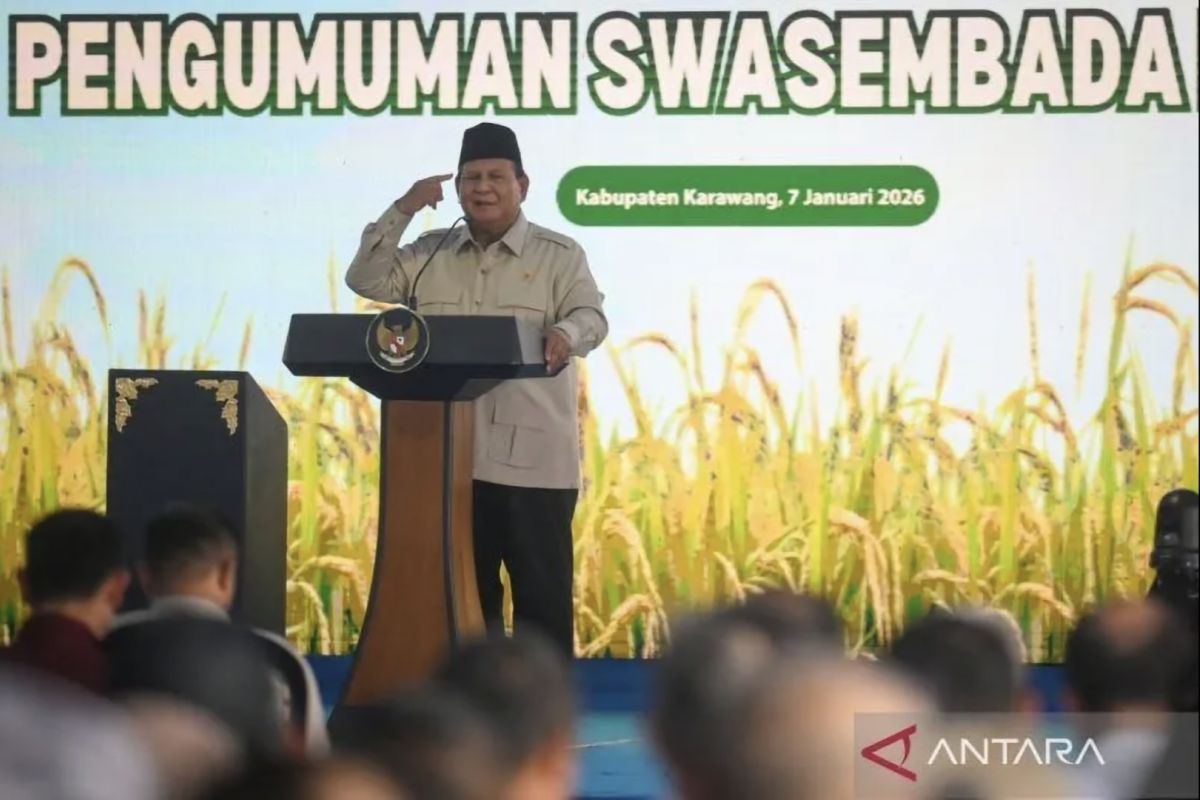
On 7 January 2026, before more than a million participants attending online and offline from across the nation, President Prabowo Subianto announced that Indonesia had achieved food self-sufficiency in 2025. The grand harvest in Kertamukti Village, Cilebar District, Karawang Regency, served as a symbolic field, as West Java is the main contributor to national rice production.
Referring to Ministry of Agriculture data, Indonesia’s food Self-Sufficiency Ratio (SSR) for the 2020-2023 period ranged between 91.04 percent and 98.88 percent, then fell to 87.14 percent in 2024, meaning Indonesia had not yet entered the category of full self-sufficiency throughout that period. The ASEAN Food Security Information System (AFSIS) subsequently reported that Indonesia’s SSR reached 110.25 percent in 2025. Full self-sufficiency was finally achieved.
An SSR figure above 100 percent means production exceeds consumption, a condition fundamentally different from previous partial self-sufficiency states. National rice production rose from 30.62 million tonnes in 2024 to 34.69 million tonnes in 2025, supported by an increase in the rice harvest area from 10.05 million hectares to 11.32 million hectares. This condition was also reinforced by government rice reserves reaching a record high in history, penetrating 4 million tonnes, and throughout 2025 there were no rice imports at all.
President Prabowo’s administration did not rely on a single approach. Through intensification, the government strengthened superior seeds, pump irrigation, land optimisation, irrigation systems, agricultural modernisation, and the rejuvenation of agricultural tools and machinery. On the extensification side, the acceleration of new paddy field printing was carried out in parallel.
One breakthrough that had a direct impact on farmers was the reform of subsidised fertiliser distribution. Presidential Regulation Number 6 of 2025 and Minister of Agriculture Regulation Number 15 of 2025 simplified 145 regulations while simultaneously reducing the maximum retail price of subsidised fertiliser by 20 percent. The simplification of regulations, which had previously become a barrier to fertiliser distribution in the field, had a direct effect on farmers who now gained faster access at lower prices.