
Indonesia's Strategy to Attract Investment: Building Downstreaming with its Ecosystem
The Ministry of Investment/Investment Coordinating Board (BKPM) has stated that the government is not only pushing downstreaming programmes but also coupling them with ecosystem development. This is to ensure that national downstreaming projects do not stop at processing raw materials but also create production chains leading to finished goods.
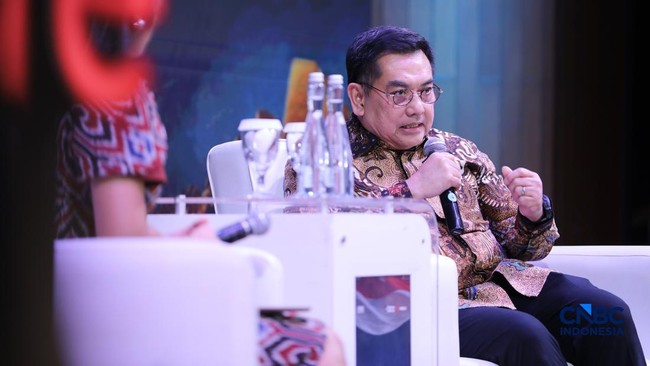
Heldy Satrya Putera, Deputy for Investment Downstreaming Strategy at BKPM, outlined the government’s downstreaming roadmap covering the development of 28 commodities. He said that building the ecosystem while running downstreaming programmes is important to give global investors the confidence to place long-term capital in Indonesia.
“We are pushing to build this downstreaming by constructing its ecosystem. So we are not just thinking about the initial product, but how this product continues to the end product. This is what we must also oversee,” he said at the Mindialogue 2026 event in Jakarta, quoted on Thursday (13/8/2026).
This ecosystem development strategy begins with providing certainty of raw material supply from abundant natural resource reserves. Heldy said investors will not be interested in building an industry if there is no guarantee of sustainable raw material supply at the location.
“The first criterion is reserves. Business players and investors will not build an industry if there is no certainty or sustainability of the raw materials. Therefore, we identify data on which of our reserves are the largest in the world,” he explained.
Beyond raw materials, the government is focusing on attracting ‘champion’ investors who possess the best technology to process natural resources domestically. To complement the arrival of such technology, the government is encouraging human resource preparation through vocational programmes supported by fiscal incentives.
“We encourage this with a vocational package and incentives as well. We provide 200% of the total costs they incur for education. So they can receive incentives,” he added.
An example of this downstreaming and ecosystem development is the nickel commodity downstreaming project towards the electric vehicle battery industry and copper towards copper foil production.
With this approach, regulatory adjustments will continue to be made dynamically so that incoming investment remains competitive compared to rival countries.
“But regarding certainty, we always strive for it and we also constantly observe how competitor countries are providing their policies. If there is something better, we will look at it,” he concluded.