
Indonesia's Strategic Minerals to Boost Industrial Competitiveness
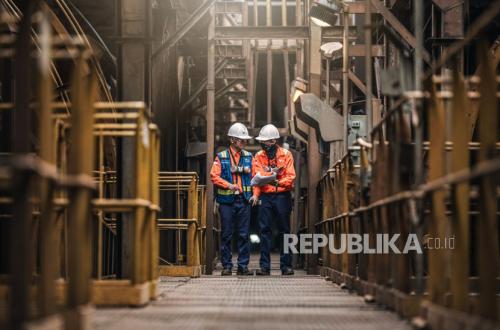
The management of strategic minerals in Indonesia is becoming increasingly progressive, marked by ongoing downstream projects and the strong operational performance of national mining companies. The positive performance recorded by companies within the MIND ID Group throughout the first quarter of 2026 serves as a strong signal that the management of national strategic minerals will play an increasingly significant role in strengthening Indonesia’s industrial competitiveness and providing a real impact on national economic growth.
Amidst global economic challenges and ongoing commodity market pressures, several members of the MIND ID Group managed to record solid production and sales growth. This performance demonstrates that strategic commodities such as tin, nickel, copper, gold, bauxite, alumina, and coal remain essential foundations for national industrial development.
Executive Director of Indonesia Mining & Energy Watch, Ferdy Hasiman, assessed that the operational performance of MIND ID Group members during the first three months of this year shows a positive and consistent direction. He noted that while the first quarter was quite good, it may not have reached its maximum potential as Freeport’s production has not yet peaked.
“The dividend contribution from Freeport is quite large. Furthermore, Antam’s profits are substantial. I also appreciate PT Timah; it is historic because in the first quarter alone, they have recorded a profit of more than Rp 1 trillion. This is very good,” Ferdy stated on Wednesday (10/6/2026).
One of the most notable achievements came from PT Timah Tbk. The company successfully increased tin ore production by 96 per cent to 6,312 tonnes of Sn, compared to 3,224 tonnes in the same period the previous year. Tin metal production also rose by 82 per cent to 5,630 metric tonnes, while tin metal sales surged by 113 per cent to 6,009 metric tonnes. This performance demonstrates Indonesia’s strengthening position as one of the world’s leading tin producers.
In the downstream mineral sector, PT Aneka Tambang Tbk (ANTAM) recorded significant progress in its bauxite and alumina business. Bauxite sales increased by 9 per cent to 593,476 wet metric tonnes (wmt). Meanwhile, Chemical Grade Alumina (CGA) production rose by 13 per cent to 49,566 tonnes, and sales increased by 11 per cent to 49,072 tonnes. This achievement shows the increasing importance of downstreaming in creating added value for minerals domestically.
Meanwhile, PT Vale Indonesia Tbk managed to increase its nickel sales volume by 15 per cent to 45,000 tonnes in the first quarter of 2026. This is a strong indicator that demand for critical minerals for electric vehicle batteries and clean energy is growing.
On the other hand, PT Freeport Indonesia is still facing the impact of the mud rush incident that occurred in September 2025. Copper production was recorded at 95 million pounds and gold production at 92,000 ounces. Nevertheless, the company maintains its operations and continues various strategic projects that will strengthen Indonesia’s position in the copper and high-value precious metal processing industry.
According to Ferdy, these achievements show that strategic commodities such as nickel, gold, tin, copper, and coal remain vital pillars for strengthening national industry. This is especially true as global demand for critical minerals continues to rise alongside the development of the electric vehicle, renewable energy, and high-tech industries.
In addition to operational performance, the strengthening of national industrial competitiveness is also supported by several strategic projects undertaken by MIND ID Group members. This is part of Indonesia’s effort to increase the added value of mineral resources through downstreaming and the development of the domestic processing industry.
In the copper sector, PT Freeport Indonesia continues the development of the Grasberg underground mine in Papua and the operation of the Precious Metal Refinery (PMR) facility in Gresik. The presence of the PMR is a significant milestone as it allows for the refining of gold and silver to be conducted domestically, providing greater added value to the national economy.
In the coal commodity sector, PT Bukit Asam (PTBA) is continuing the development of the Dimethyl Ether (DME) downstream project, which is projected to serve as a national LPG import substitute. This project is one of the government’s strategic agendas to increase the added value of coal while strengthening national energy security. “Like PTBA’s DME project. State funds have been disbursed through capital injection. The only question is whether PTBA can continue that project, because previously foreign investors withdrew,” said Ferdy.
Nevertheless, he hopes the project will proceed with a healthy business model and provide optimal economic benefits. “We hope this project is indeed economical and does not burden PTBA’s finances in the future,” he added.
In the critical minerals sector, ANTAM is accelerating the development of the Smelter Grade Alumina Refinery (SGAR) project in Mempawah, West Kalimantan. This project is a vital part of increasing the added value of national bauxite through domestic alumina production. Additionally, ANTAM is involved in the construction of an integrated electric vehicle battery ecosystem project in East Halmahera, alongside the Indonesia Battery Corporation (IBC) and Huayou, which is expected to strengthen Indonesia’s position in the global electric vehicle supply chain.
“Furthermore, PT Antam in East Halmahera must perform better. Additionally, the alumina project in Mempawah must be completed promptly. If the realisation of these projects proceeds quickly, their future performance will improve significantly,” said Ferdy.
Meanwhile, PT Timah has also begun developing the potential of rare earth elements (REE) through the processing of monazite by-product minerals. Although still in the pilot project stage, the development of REE is considered strategic because these commodities are essential raw materials for the electronics, renewable energy, electric vehicle, and defence technology industries. “The rare earth project is not yet operational.”
Source: jawawa.id (https://jawawa.id/newsitem/indonesias-strategic-minerals-to-boost-industrial-competitiveness-1781100159)
Originally published by Republika (https://ekonomi.republika.co.id/berita/tgf2do472/mineral-strategis-indonesia-jadi-mesin-pendongkrak-daya-saing-industri), translated from Indonesian