
Indonesia’s Rules Set Global Example as TikTok and Instagram Face Calls to Take Responsibility
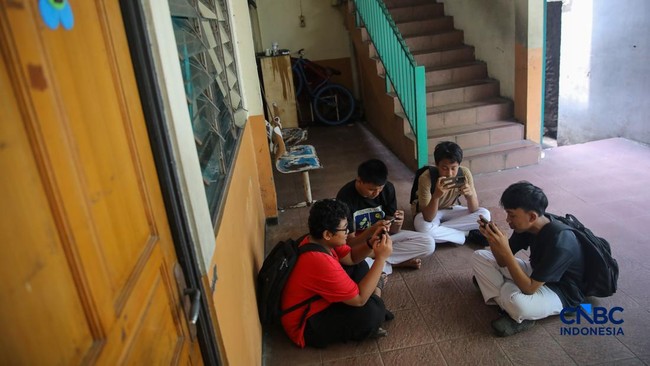
Jakarta, CNBC Indonesia – Communications and Digital Affairs Minister Meutya Hafid has stressed that protecting children in the digital sphere is also the responsibility of technology companies.
Around 70 million Indonesian children under the age of 16 face various risks online, she said, meaning digital platforms must also take protective measures by implementing Government Regulation No. 17 of 2025 on the Governance of Electronic Systems for Child Protection (PP Tunas).
The government recently strengthened child protection in the digital sphere through the regulation, known as PP Tunas.
Meutya said protecting children requires more than restricting access to social media. It must also cover online games, e-commerce and other digital services that could pose a risk to children’s development.
“That principle underpins PP Tunas: ‘Wait Until Children Are Ready’,” she said in a written statement cited on Friday (6 November 2026).
According to Meutya, the large number of children using digital services means technology companies must shoulder greater responsibility. Platforms must ensure that their products and features have protection mechanisms suited to children’s ages and levels of readiness.
The urgency of the regulation is also linked to concerns about children’s mental health. Data from the Health Ministry’s Free Health Checks (CKG), which Meutya presented, show that about 363,000 children aged 7–17 display symptoms of depression and 338,000 show symptoms of anxiety.
The findings underscore the importance of safeguarding children’s mental health, including by addressing digital risks such as bullying, exposure to harmful content, online gambling and excessive use of services.
“This shows that protecting children in the digital sphere is not merely a technology issue, but is directly related to the health and future of our generation,” she said.
Meutya explained that one difference between PP Tunas and Australia’s age-restriction policy is its risk-based approach.
This means services are assessed according to their characteristics and the level of risk they pose to children, rather than solely by the type of platform. As a result, the regulation is not limited to social media, but also covers online games and high-risk e-commerce.
The risk assessment covers seven areas, including contact with strangers, exposure to harmful content, the exploitation of children as consumers, personal data security, and the risks of addiction and harm to health.
“If a platform has features that allow children to communicate with strangers, or contains material that is unsuitable for children, that will be part of the risk assessment,” she said.
The assessment also considers the potential for children to be exploited as consumers, addiction, and effects on their health. Meutya said the Communications and Digital Affairs Ministry’s rules therefore cover not only social media, but the entire high-risk digital sphere.
Meutya stressed that effective implementation of PP Tunas will require cooperation between the government, technology companies, parents, schools and the public.
Restrictions on children’s access to social media have now been introduced in many countries. Indonesia is among the first countries to implement such restrictions nationwide.
Countries adopting similar rules
The following countries have announced or are preparing child-protection rules for social media using an approach similar to Indonesia’s:
Australia introduced age limits and child-protection rules for social-media platforms earlier, making it one of the first countries to take a similar path to Indonesia.
Singapore is drafting comparable rules using a phased approach and is monitoring the results of implementation in Indonesia before setting permanent regulations.
Malaysia has announced plans to restrict social-media access for children under 16, following a pattern similar to Indonesia’s.
French President Emmanuel Macron has formally expressed support for, and considered, introducing similar child-protection rules across the region.
The European Union is considering a similar child-protection framework across its member states, following input from France and other countries.
Greece is the latest country to say it will set a minimum age for social-media access, following the direction of Indonesia’s policy.
In the United States, a settlement involving a Rp296 trillion fine against Meta has effectively established daily-use limits, curfews and age verification that are exactly the same as Indonesia’s policy.
Source: jawawa.id (https://jawawa.id/newsitem/indonesias-rules-set-global-example-as-tiktok-and-instagram-face-calls-to-take-responsibility-1793958637)
Originally published by CNBC Indonesia (https://www.cnbcindonesia.com/tech/20261106142131-37-782999/aturan-ri-ubah-dunia-tiktok-instagram-dituntut-tanggung-jawab), translated from Indonesian