
Indonesia's Rubber Glory Fading: Farmers Feel Neglected
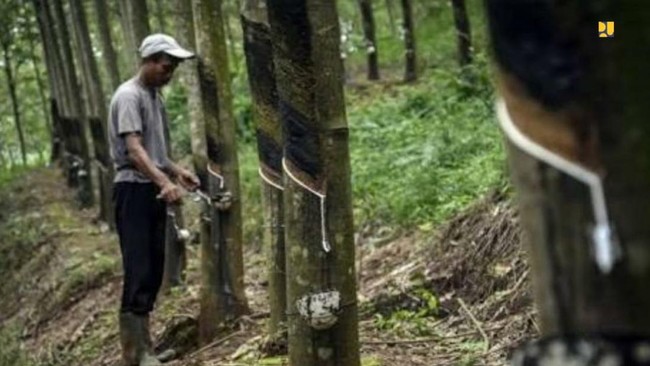
Indonesia’s rubber industry, once a major driver of national foreign exchange, is in a state of decline. Data from the Ministry of Agriculture shows that Indonesian rubber exports reached 2.38 million tonnes in 2011, valued at US$11.14 billion. By 2019, the Ministry identified rubber as the second-largest foreign exchange earner after palm oil, with export volumes of 2.99 million tonnes worth US$5.10 billion.
However, the current situation is starkly different. Production is steadily declining, exports are weakening, processing plants are closing down, and farmers are increasingly switching to other commodities. According to data from the Indonesian Rubber Farmers Association (Apkarindo), national rubber production is projected to drop from 3.68 million tonnes in 2017 to approximately 2.1 million tonnes by 2025.
Export performance is also under pressure. Apkarindo noted that the volume of Indonesian natural rubber exports from January to July 2026 reached only 85.4% of the same period in 2025. In terms of value, exports for that period reached only 87.5% compared to January-July 2025.
This decline in production is also hitting the rubber processing industry. Of the 157 crumb rubber processing units recorded as of 30 September 2026, 60 units have ceased operations, consisting of 52 permanent closures and 8 temporary suspensions. Only 97 units remain operational.
Amidst these conditions, the issue is no longer just about pricing. Farmers are also facing the challenge of aging, unproductive trees. Supartijo, Chairman of the South Sumatra Regional Leadership Council of Apkarindo, stated that only a small fraction of plantations currently maintain high productivity.
“Of the total area available, only about 300,000 to 400,000 hectares still have high productivity. The rest are old, weak, and lack vitality; they have never been properly fertilised because prices are so low that farmers cannot afford to support their families,” Supartijo said during a Public Hearing with Commission IV of the Indonesian House of Representatives (DPR RI) in Jakarta on Tuesday (6/10/2026).
He added that the condition of the aged trees means that even when rubber prices rise, it does not automatically improve farmer welfare. “Currently, prices have risen, but the trees are old, over-tapped, and yields are very low. Consequently, many farmers are migrating from rubber to plant oil palm.”
This transition has even led to rubber trees being felled to make way for oil palm. “The rubber wood is sold quickly for cash, and then oil palm is planted because oil palm is treated as the ‘golden child,’ while rubber is treated like a ‘stepchild’,” he remarked.
The impact is also felt by the processing industry. The increasingly limited supply of raw materials has left several factories unable to operate at full capacity. “There is a factory in South Sumatra that went from 30 units down to 19, and even those are operating at idle capacity because there is no supply,” said Supartijo.
Furthermore, the labour force in the rubber sector is shrinking. “Rubber tappers and labourers no longer want to work because they only earn between Rp50,000 and Rp60,000 a day, instead of the previous Rp100,000,” he added.
Rubber Could Become a Thing of the Past
Supartijo believes these conditions require government intervention to prevent the commodity from losing its production base entirely. One major push is for the formation of a Rubber Plantation Fund Management Agency (BPDP Karet). He stated that such an institution is expected to support replanting, rehabilitation, human resource development, research, and downstream industry development.
Rubber farmers are also requesting government support to keep rubber trees productive. “We hope that the honourable members of the DPR and the government will provide fair and wise support. If food crops receive harvesting tools and paddy field machinery, we only need partial assistance during the planting season,” said Supartijo.
Without rescue measures, farmers fear that Indonesian rubber could lose its future entirely. “If left for another 10 years, rubber will only exist in name. Everything will close. Every day, rubber trees are felled, the wood is sold, and they are replaced with oil palm,” he concluded.
Source: jawawa.id (https://jawawa.id/newsitem/indonesias-rubber-glory-fading-farmers-feel-neglected-1791287598)
Originally published by CNBC Indonesia (https://www.cnbcindonesia.com/news/20261006171034-4-773860/kejayaan-karet-ri-nyaris-hilang-petani-sebut-jadi-anak-tiri-ada-apa), translated from Indonesian