
Indonesia's Richest Family Shifts Investments Abroad Amid Anxiety Over Prabowo's Policies
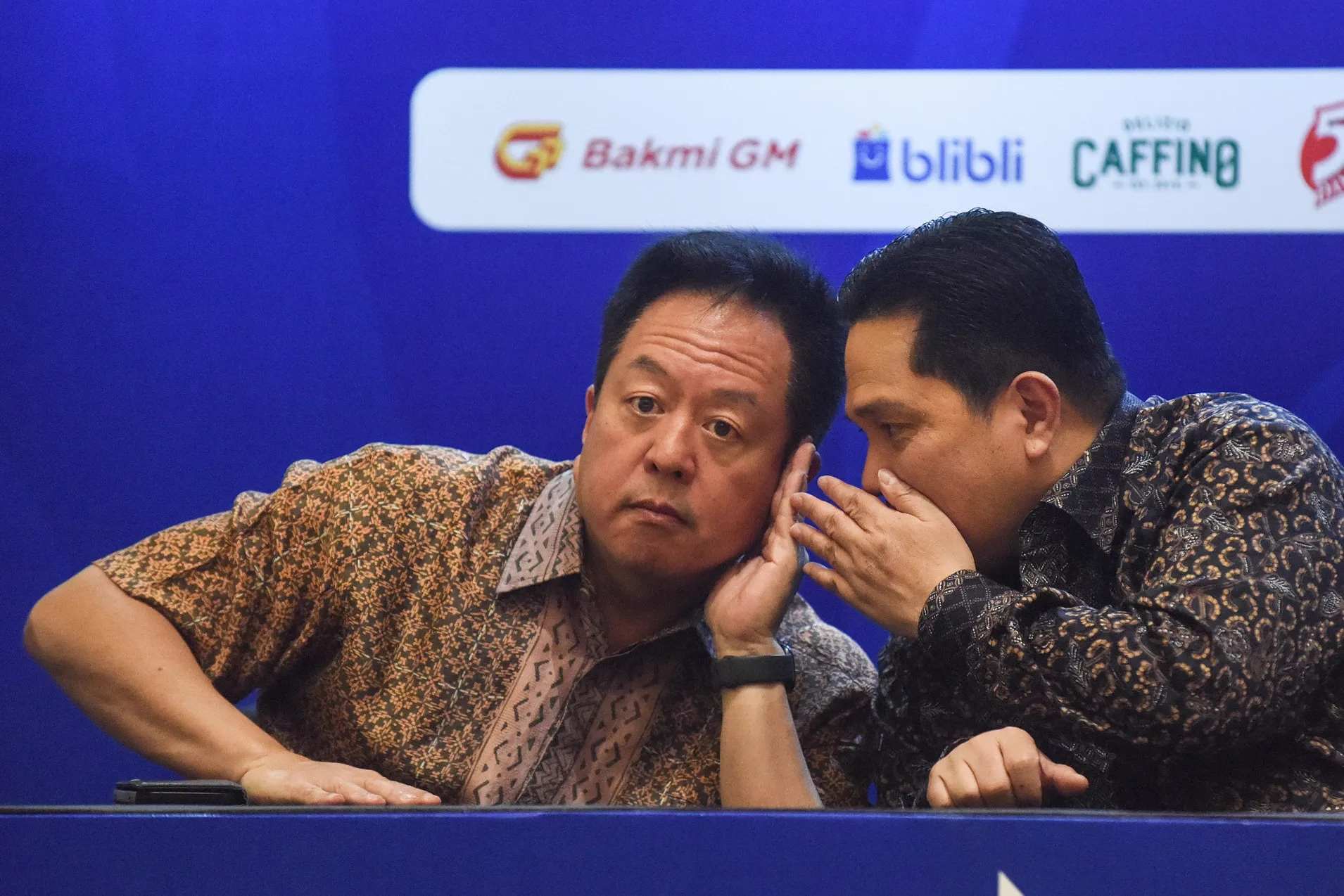
Anxiety among Indonesia’s business elite is mounting over the steps taken by President Prabowo.
From a shabby office building in Singapore’s main shopping district, Indonesia’s richest family has quietly been doing something they rarely do: investing money abroad as Southeast Asia’s largest economy loses momentum.
It all began in late 2023, when a company called Evergreen Hill Enterprise Pte spent 669 million US dollars on a specialty paper business in the United States. A year later, Evergreen paid 360 million euros (418 million US dollars) for an Austrian cigarette paper manufacturer.
Altogether, around nine entities based in Singapore and London linked to the billionaire Hartono family have invested at least 1.4 billion US dollars abroad, according to people close to the family interviewed by Bloomberg News. The deals mark a sharp change of course for the reclusive clan, worth an estimated 30 billion US dollars, which traditionally kept its wealth at home, where it runs a vast conglomerate spanning banking, cigarette manufacturing and real estate.
The moves, which have not been previously reported, underline rising anxiety among Indonesia’s business elite over the policies of President Prabowo Subianto.
Other business figures active abroad include the founder of Amman Mineral International (AMMAN), billionaire Alexander Ramlie, whose company agreed in May to buy an Australian coal mine for 3.9 billion US dollars.
Likewise, a company controlled by Prajogo Pangestu, Indonesia’s second-richest person, bid 5 billion US dollars for a geothermal company in the Philippines in July.
“The government’s growing role in the economy has fuelled uncertainty in some of the country’s most prominent sectors,” said Laura Schwartz, senior Asia analyst at risk intelligence firm Verisk Maplecroft. “The government’s erratic approach to Indonesian business leaders does nothing to ease investor concerns.”
Capital Flight
Since Prabowo took power in October 2024, Indonesia has experienced a wave of capital flight that has sent the rupiah to record lows and triggered a share sell-off that has left the national equity market with the worst performance in the world this year. Global investors have offloaded nearly 4 billion US dollars of shares on a net basis since January, almost four times the total for the whole of 2025. The largest foreign banks in Indonesia have also repatriated 640 million US dollars since the former Kopassus commander became president.
Prabowo’s shock dismissal of Finance Minister Sri Mulyani Indrawati last year was one of the triggers of investor anxiety. More recently, the respected central bank governor, Perry Warjiyo, also resigned citing personal reasons. Meanwhile, Danantara, the new sovereign wealth fund and Prabowo’s brainchild, has consolidated nearly all state-owned enterprises, raising concerns that the president wields too much control over the financial services and commodity export sectors.
However, a representative of Prabowo said the government “remains committed to maintaining a fair and rules-based business environment for all investors and business groups.”
The Republic of Indonesia’s Public Communication Agency (Bakom RI) added that the current administration “values the role of the private sector in supporting investment, job creation, economic growth and national development”, noting that business participation in government initiatives “does not alter the government’s commitment to equal treatment, legal certainty and good corporate governance.”
Growing Concern
Although most of the Hartono family’s assets remain in the country, their recent international investments signal mounting worry about the economy on which the bulk of their wealth depends. The family, led by the late Michael Bambang Hartono until his death and his younger brother Robert Budi (85), owns Indonesia’s most profitable bank (BCA), a multi-billion-dollar cigarette company (Djarum), and businesses ranging from electric vehicle distribution to dairy farms and a noodle restaurant chain.
The Hartono family itself kept its name out of the foreign acquisitions. Official documents and press releases list Evergreen Hill as the buyer, describing it only as part of “a successful, Indonesia-based private group.”
The Hartono family is not mentioned, nor is their main holding company. However, according to filings in Singapore and Indonesia, Evergreen’s sole owner is PT Eragraha Pirantimegah, which is wholly owned by the Hartono family.
The Hartono family declined to comment.
The group continues to invest abroad, including in a financial services software company in Singapore, and is considering further deals as the domestic economic environment remains turbulent and the concentration of its business in Indonesia puts its wealth at risk, according to people familiar with the matter who asked not to be identified because they were not authorised to speak publicly. The recent purchases are driven by the family’s strategy to diversify its income streams into other currencies, the people said.
Like many of the world’s wealthy, the Hartono family has long had a base in neighbouring Singapore for tax protection and asset diversification. Michael, the family head, died at the age of 86 in March in the city-state, where he owned a home along Nassim Road with his younger brother in an area lined with multi-million-dollar luxury residences. Other relatives also own properties nearby.
The family office is not far away, operating on the same floor as Evergreen Hill in Orchard Towers — a 51-year-old office building where commercial sex workers openly plied their trade until a crackdown in 2022. Several group entities in Singapore are in or around the same building, some registered in the British Virgin Islands or the Cayman Islands for added privacy, according to filings.
Tensions with Prabowo
According to sources, the Hartono family’s efforts to increase its assets abroad are also rooted in growing tensions with Prabowo.
One presidential policy that has sparked debate is the free nutritious meals programme (MBG) for schoolchildren and pregnant women. Some 45 billion US dollars was initially budgeted for this year alone for a programme that many describe as extravagant. Another controversial issue is a campaign led by Prabowo’s defence minister, Sjafrie Sjamsoeddin, to seize millions of hectares of privately owned oil palm plantations — a move seen as unfair by investors both at home and abroad.
To help fund some of Prabowo’s spending initiatives, the government has raised money by asking the country’s wealthy to buy so-called “Patriot bonds” below market price. In August last year, Danantara summoned the country’s ten richest families, including the Hartonos, to a meeting in Jakarta with CEO Rosan Roeslani regarding the Patriot bonds.
Neither Robert Budi nor his eldest son Victor Hartono (54) attended, although they sent representatives. All the other tycoons, including Anthoni Salim, were present in person. Although Prabowo himself did not attend, he viewed the Hartono family’s absence as a sign of disrespect, according to several sources.
A few days after the meeting, the National Awakening Party (PKB) — part of the ruling coalition — accused the Hartono family of underpaying the government for its purchase of Bank Central Asia (BCA).
Michael and Robert teamed up with Farallon Capital Management to buy a controlling stake in BCA in 2002 for about 537 million US dollars at the exchange rate of the time, beating Standard Chartered Plc. BCA’s market value now stands at 46.2 billion US dollars, making it the fourth-largest lender in Southeast Asia — behind only Singapore’s biggest banks. Armand Hartono, Budi’s other son, also helps run the financial institution.
In August, the political party urged the government to take back BCA’s shares through Danantara. Rosan Roeslani said at the time that neither his company nor the government had any such plans.
Several months later, Victor Hartono was among five people temporarily banned from travel after being detained as part of a tax investigation. Although the heir was released and had his passport returned within days — and his younger brother Martin was later seen accompanying Prabowo on a state visit to the United Kingdom — the damage had been done.
Concerns about BCA’s future saw its share price fall 17 per cent in 2025, and a further 18 per cent this year, although the decline also partly reflects broader investor distrust in the Indonesian stock market.
“The Hartono family’s case shows the government’s willingness to demonstrate that even Indonesia’s richest conglomerates must comply with its priorities,” said Bhima Yudhistira Adhinegara, executive director of the Center of Economic and Law Studies (CELIOS).
It could also make foreign investors more wary, he said. “If such coercive actions continue without clear legal certainty or adherence to the rule of law, long-term investors may become more cautious about putting capital into Indonesia.”
A Modest Family
As eighth-generation Chinese-Indonesians, the Hartono brothers are no strangers to the political and economic turmoil that regularly erupts in Indonesia. Unlike other tycoons such as Sukanto Tanoto, Prajogo Pangestu, Low Tuck Kwong and Salim, who have expanded their assets to Singapore, Hong Kong and elsewhere, the Hartono family has generally stayed in Indonesia.
The family is known for its modesty. Although Robert owns a collection of multi-million-dollar homes and a private jet that is occasionally chartered out, he and his children avoid designer clothes, according to people who know them.
The family’s early wealth came from kretek cigarette manufacturing in Kudus, a town in Central Java. Oei Wie Gwan, the father of Michael and Robert, founded the business later known as PT Djarum in 1951. Kretek cigarettes, which blend tobacco with cloves, are believed by locals to help relieve asthma and other ailments. According to market research firm Euromonitor International, as of 2025 the company produced about a fifth of the cigarettes sold in Indonesia.
A large video artwork mounted on the wall of Djarum’s Jakarta boardroom depicts four lit cigarettes — the first three representing Victor, his father and grandfather. The fourth bears no name, reflecting the biggest question facing the family: who will carry on the business. Many of the younger generation of the Hartono clan — around 18 people — do not even smoke, as Victor Hartono often notes.
Aware that the cigarette industry is in decline, the Hartono family has diversified into other businesses, from electric vehicle assembly to oil palm plantations and online retail.
In many ways, this is how the Hartono family has always operated since their ancestors arrived from China in the 1800s. From the Dutch colonial era to the Japanese occupation during the Second World War, the family has thrived, Victor Hartono said in a lecture last year at a local university.
“Whoever is in power, we adapt,” the heir said. “That is our family’s story.”
Source: jawawa.id (https://jawawa.id/newsitem/indonesias-richest-family-shifts-investments-abroad-amid-anxiety-over-prabowos-policies-1788857441)
Originally published by agroindonesia.co.id (https://agroindonesia.co.id/orang-terkaya-indonesia-pindahkan-investasi-ke-luar-negeri/), translated from Indonesian