
Indonesia's Rice Stock Exceeds 5 Million Tonnes, Is the National Supply Secure?
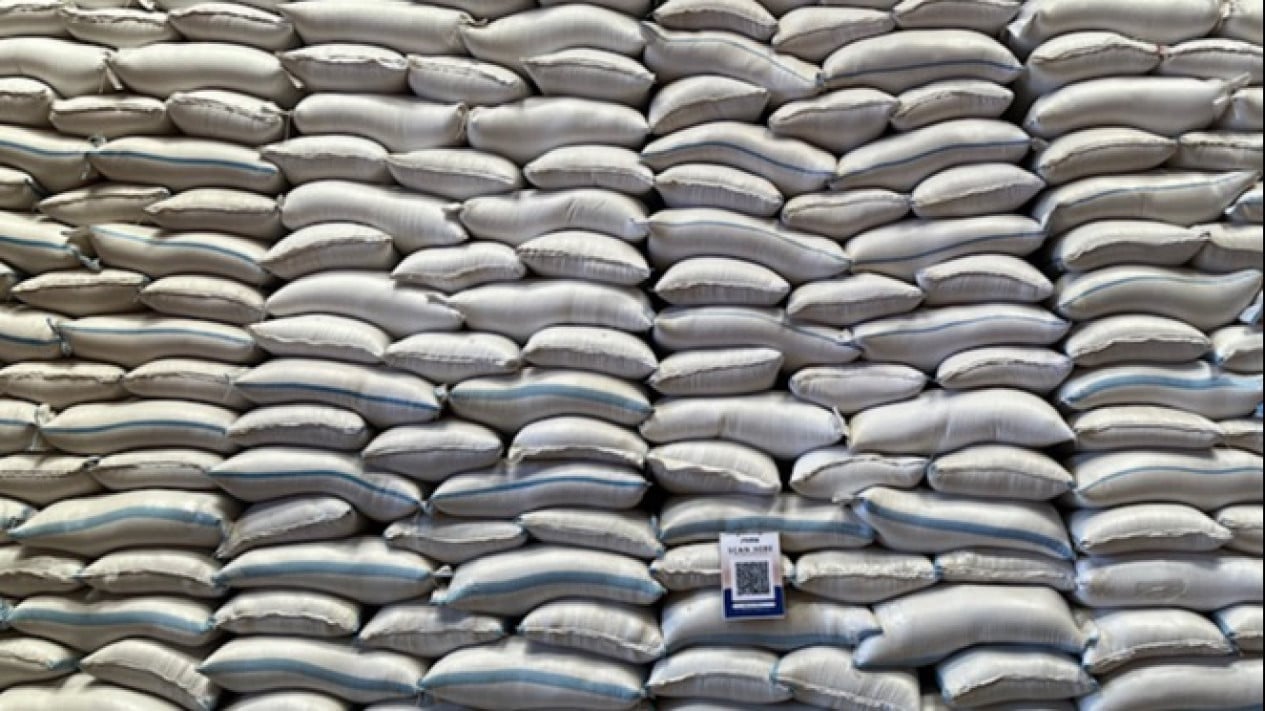
The government has recorded government rice reserves (CBP) reaching 5.28 million tonnes in May 2026. This amount is said to be the highest in history.
This was conveyed by Deputy Governor Aida S. Budiman during the launch of the East Java Food Inflation Control and Prosperity Movement (GPIPS) at the Bulog Warehouse in Sidoarjo, East Java, on Wednesday, 13 May 2026.
She stated that the high rice stock is part of efforts to maintain food stability and control national inflation. “Even this government rice reserve is the highest in history. In May, it is 5.28 million tonnes,” said Aida in Sidoarjo, East Java, on Wednesday.
She explained that volatile food components remain one of the important factors in forming inflation, especially for low-income communities.
“(In terms of inflation) for communities with low incomes, this can account for 60-80% of their income weight,” she clarified.
On the same occasion, Bank Indonesia, together with the central and regional governments, also launched GPIPS as a strengthening of the National Food Inflation Control Movement (GNPIP) programme. The programme focuses on strengthening food supply and inter-regional distribution.
“We see that controlling food inflation must be further strengthened with supply. Because supply is important to ensure disparities over time and between regions,” she said.
The launch of GPIPS was held in East Java because the region is considered to have a significant contribution to national food security. East Java is said to be the main producer of several food commodities such as rice, corn, chillies, sugarcane, and milk.
In addition, around 80% of food distribution to 19 provinces in eastern Indonesia is also supported from East Java. The storage capacity of Bulog warehouses in the region is recorded at around 22.81% of the national total capacity.
Although national rice stocks have increased, Aida assesses that food security challenges still need to be anticipated, especially regarding climate change and the seasonal nature of food commodities.
She added that her side will continue to support inflation control and macroeconomic stability through synergy with the central and regional governments.