
Indonesia's Rice Production Forecast to See Only Slight Increase, BPS Reveals the Culprits
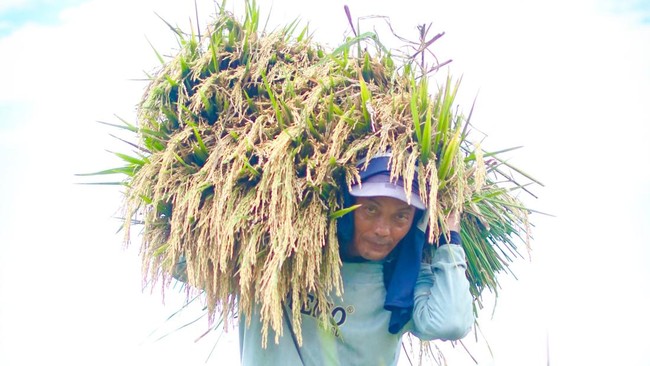
Indonesia’s Central Statistics Agency (BPS) projects national rice production for January to June 2026 to reach 19.31 million tonnes, an increase of 0.05 million tonnes or 0.26% compared to the same period in 2025. This slight rise is shaped by a series of layered factors, from planting conditions and harvested area to paddy production that has faced pressure.
In detail, BPS records that paddy production (dry milled grain/GKG) for January to June 2026 is estimated at 33.52 million tonnes, up 0.09 million tonnes or 0.26% from the previous year’s corresponding period. However, monthly trends show pressure, particularly in March and potentially in April to June.
“Paddy production in March 2026 is estimated at 8.75 million tonnes of dry milled grain (GKG), or a decline of 3.69% compared to March 2025,” stated Deputy for Distribution and Services Statistics at BPS, Ateng Hartono, during a press conference on Monday (4/5/2026).
BPS also estimates potential paddy production for April to June 2026 at just 16.68 million tonnes GKG, down 1.51 million tonnes. This figure represents a 8.31% decrease compared to the same period in 2025. This decline is the main factor holding back rice production growth.
“Thus, paddy production for January to June 2026 is estimated at 33.52 million tonnes GKG, an increase of 0.09 million tonnes GKG or 0.26% compared to the same calculation in 2025,” he said.
This decline in paddy production is inseparable from dynamics in harvested area. In March 2026, the harvested area was recorded at 1.61 million hectares, down 3.16% from 1.67 million hectares in March 2025.
For the subsequent period, BPS forecasts a deeper correction. Potential harvested area for April to June 2026 is estimated at only 3.16 million hectares, down 0.26 million hectares or 7.66% compared to the previous year’s corresponding period.
However, cumulatively, the harvested area for January to June 2026 is estimated at 6.27 million hectares, still up slightly by 0.22% year-on-year.
“Thus, the paddy harvested area for January to June 2026 is estimated at 6.27 million hectares, an increase of 0.01 million hectares or 0.22% compared to the same period in 2025,” he explained.
BPS emphasises that these figures still depend heavily on field conditions. “Of course, these potential figures can still change depending on the rice crop conditions throughout April to June 2026, such as pest attacks or disturbing organisms, flooding conditions, drought, and the timing of harvest by farmers,” he clarified.
Further upstream, Ateng explained that the planting area conditions are reflected in the results of the March 2026 Area Frame Sample (KSA). The majority of the land remains in the standing crop phase or currently planted with rice.
“The March 2026 KSA survey results show that the majority of agricultural land is in the phase of being planted with rice or standing crop, around 40.24%,” Ateng revealed.
Additionally, land currently planted with rice is recorded at 21.19%, harvested at 20.03%, fallow at 10.73%, and land preparation at 7.57%. From the total standing crop, the majority has entered the generative phase at 20.25%, which will soon be harvested.
“As a note, rice plants in the generative phase are generally harvested in the next month, the late vegetative phase in two months, and the early vegetative phase in three months,” he explained.
BPS assesses that the composition of planting phases directly influences future harvested areas, which in turn determine paddy and rice production.
Besides planting factors, Ateng mentioned that weather conditions are also a determinant. Based on BMKG analysis, rainfall in March 2026 was generally in the medium category across most regions of Indonesia.
“The level of rainfall will certainly affect rice cultivation in each region,” he said.
BPS also maps potential harvest locations for April to June 2026, which remain concentrated on Java Island, particularly East Java, Central Java, West Java, and Banten. Outside Java, potential is spread across Lampung, South Sumatra, North Sumatra, West Sumatra, Aceh, South Sulawesi, South Kalimantan, as well as West Nusa Tenggara (NTB) and East Nusa Tenggara (NTT).
At the district/city level, major potential lies in Bojonegoro, Lamongan, Jember, Indramayu, Subang, Karawang, as well as Grobogan and Pati.
In line with this, rice production in March 2026 is estimated at 5.04 million tonnes, down 3.67% from March 2025. For April to June 2026, rice production is estimated at 9.61 million tonnes, down 8.30% year-on-year.
“Thus, rice production for January to June 2026 is estimated at 19.31 million tonnes, an increase of 0.05 million tonnes or 0.26% compared to the same period in 2025,” Ateng stated.
NTP Sees Slight Decline, Rice Prices Rise
Meanwhile, on the farmers’ welfare side, BPS records the Farmers’ Exchange Rate (NTP) for April 2026 at 125.24, down 0.09% from March 2026.
“The NTP decline occurred because the price index received by farmers rose by 0.16%, which is lower than the increase in the price index paid by farmers at 0.24%,” he explained.
The deepest decline occurred in the horticulture subsector.
“The horticulture subsector experienced an NTP decline of 5.31% because the price index received by farmers fell by 4.99%, while the price index paid by farmers rose by 0.33%,” he elaborated.
Meanwhile, rice prices have risen across the entire distribution chain. At the milling level, rice prices increased 0.50% month-on-month and 7.42% year-on-year. At the wholesale level, inflation was recorded at 0.39% (mtm) and 5.45% (yoy), and at retail at 0.58% (mtm) and 4.36% (yoy).
Ateng emphasised that the data