
Indonesia's Retail King Suddenly Falls, Riady Family Takes Over
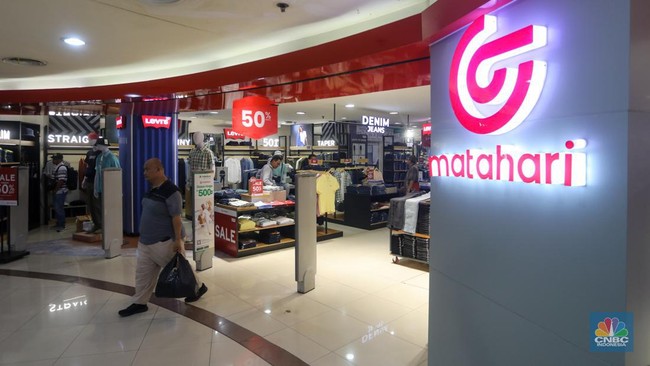
For many Indonesians, Matahari has long been recognised as a premier shopping destination. This retail network has grown significantly, boasting 155 outlets spread across 8ly cities throughout the country.
Behind the scale of this business, Matahari’s journey began as a simple enterprise established decades ago. Its origins can be traced back to a clothing store named Micky Mouse, opened by Hari Darmawan in the Pasar Baru area in 1960. At that time, the shop sold imported clothing alongside in-house brands, MM Fashion, produced by Hari Darmawan’s wife.
During its first five years, the Micky Mouse business flourished due to its niche market. However, Hari felt envious of a neighbouring shop called De Zion, which was always crowded with wealthy customers. Despite various attempts to replicate De Zion’s success, Hari found no results until an opportunity arose in 1968 when the owner of De Zion expressed interest in selling.
According to historical accounts in ‘Filosofi Bisnis Matahari’ (2017), backed by a US$200 million loan from Citibank, Hari successfully acquired two De Zion stores in Jakarta and Bogor. De Zion was immediately rebranded as ‘Matahari’. As noted by Hari Darmawan, ‘De Zion’ means ‘Sun’ in Dutch.
To expand the new stores, Hari modelled his strategy after the Japanese retailer Sogo Department Store, aiming to offer a comprehensive range of clothing so consumers could find the best products at affordable prices. This strategy proved successful, driving high footfall and allowing Matahari to expand rapidly between 1970 and 1980. The inventory grew to include jewellery, bags, shoes, cosmetics, electronics, toys, and stationery.
This rapid growth enabled Hari to open outlets in other cities during the 1990s. Matahari became a household name across Indonesia, eventually leading to its public listing on the stock exchange in 1989 under the ticker LPPF.
Despite its dominance, Hari harboured ambitions to establish 1,000 Matahari outlets. This ambition caught the attention of James Riady, a young banker and son of Lippo Group founder Mochtar Riady, who intended to provide a loan of Rp 1.6 trillion to Hari.
While the low-interest loan was secured, complications arose. Shortly after the funds were disbursed, James Riady decided to enter the retail sector himself, bringing the famous US brand, WalMart, to Indonesia. Interestingly, WalMart was established directly in front of Matahari, creating intense competition similar to the proximity of Indomaret and Alfamart.
Although WalMart struggled to compete and Matahari initially maintained its dominance, a shocking development occurred in 1996. Despite Matahari’s peak success, Hari received an acquisition offer from James Riady. Consequently, Matahari, which then had a turnover of Rp 2 trillion, officially became part of the Lippo Group. This sale sparked widespread speculation, as Matahari was highly profitable at the time, making the sale unexpected. Since the acquisition, Matahari has been owned by Lippo Group, and the prominence of its original founder, Hari Darmawan, has gradually faded.