
Indonesia's Rapid Digital Transformation: AI Holds Potential as Enabler for Research and Education
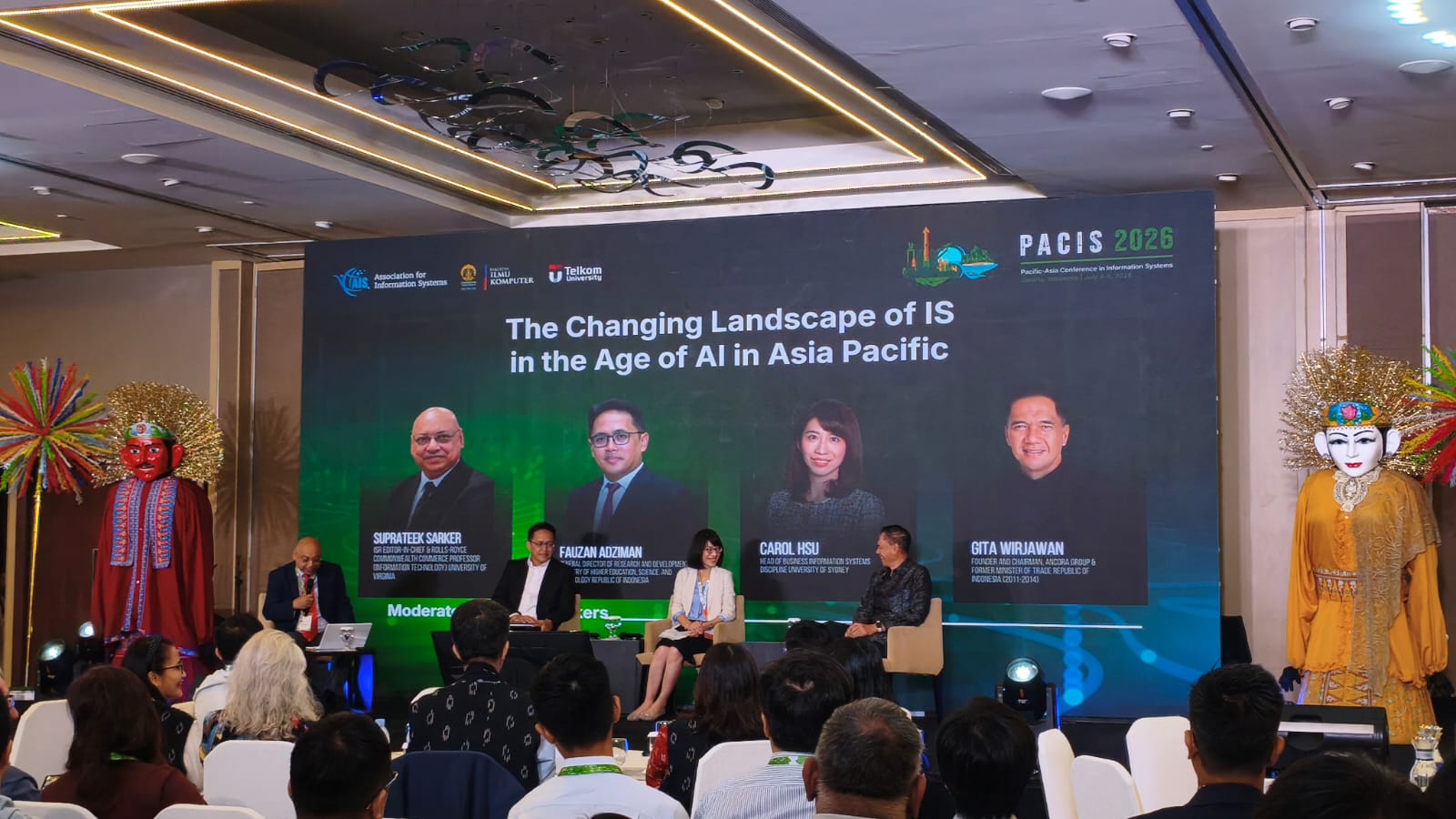
The phenomenon of shifting job landscapes due to technological advancements, particularly Artificial Intelligence (AI), is not merely a domestic issue in Indonesia but a global challenge faced by all nations. The development of AI is viewed as a double-edged sword, simultaneously reducing and creating new employment opportunities. Fauzan Adziman, Director General of Research and Development at the Ministry of Higher Education, Science, and Technology (Kemdiktisaintek), stated that this change must be viewed as an integrated ecosystem rather than just a threat of job loss.
“However, this does require a unified transformation. In our education, we previously focused on formal education. While this remains important, we are also beginning to see in the roadmap we are building that non-formal education is key,” explained Fauint during the Pacific Asia Conference on Information Systems (PACIS) 2026 held in Jakarta.
The utilisation of AI is considered vital due to its ability to provide cheaper and more efficient solutions, especially in the workforce and education sectors. In the field of education, AI enables much faster access to information for the public.
“Our digital transformation is rapid. It is now up to us how we utilise this AI,” he said. “Many AI solutions can actually make solutions more affordable. For example, in education, people can now ask questions more quickly, and the internet is now available everywhere.”
Kemdiktisain, he continued, is working alongside the National Research and Innovation Agency (BRIN) to develop a research roadmap that utilises AI as an enabler to help other fields grow.
On the same occasion, Associate Dean of the Faculty of IT at Monash University, Juliana Sutanto, noted that this is the first time the Pacific Asia Conference on Information Systems (PACIS) has been held in Indonesia. “We are very proud to bring this flagship conference, PACIS 2026, to Jakarta. We have been greatly assisted by the University of Indonesia and Telkom University in bringing famous researchers in the field of Information Systems,” she said.
The hosting of PACIS 2026 in Jakarta brings a new perspective to viewing the development of Artificial Intelligence. Unlike a pure computer science approach which tends to focus on technical aspects, the Information Systems field in this conference emphasises a socio-technical approach.
According to Juliana, the development of AI cannot be viewed solely through the sophistication of its algorithms. There are two crucial sides that must run in tandem: the technical side and the social side. By observing both dimensions, the effects of AI usage can be directed according to the expectations and needs of the wider community.
The selection of the socio-technical theme for PACIS Jakarta also aims to provide deep insights for a global audience regarding the dynamics of AI development in the Asia-Pacific region. Through this perspective, technology is no longer viewed as a standalone entity, but as a tool that must be adapted to local social and cultural structures.
Source: jawawa.id (https://jawawa.id/newsitem/indonesias-rapid-digital-transformation-ai-holds-potential-as-enabler-for-research-and-education-1783349507)
Originally published by Media Indonesia (https://mediaindonesia.com/humaniora/908108/transformasi-digital-indonesia-cepat-ai-berpotensi-menjadi-enabler-riset-dan-pendidikan-), translated from Indonesian