
Indonesia's QRIS Becomes Model as Malaysia Moves to Unify QR Payment Systems
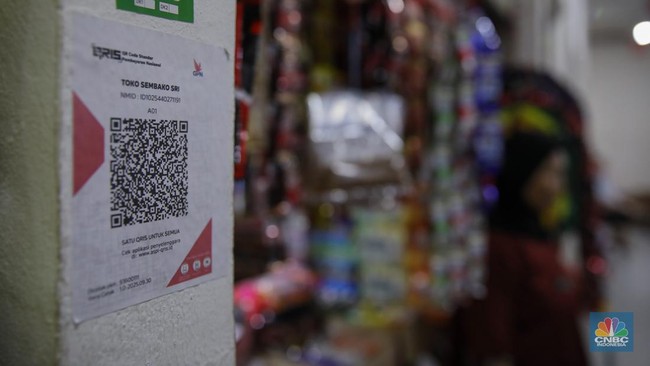
Malaysia is preparing to implement a unified QR payment system by gradually phasing out proprietary QR networks belonging to individual service providers over the next two years. The move by the Malaysian central bank aims to create an interoperable QR payment ecosystem, similar to the QRIS system that has been in place in Indonesia since 2019.
The provision is contained in the newly published Interoperable Fund Transfer Framework policy document. Under the rules, all proprietary QR networks are required to cease operations by 30 June 2028 at the latest. During the transition period, affected financial institutions are also prohibited from adding new merchants to the exclusive QR networks they manage.
Through this policy, the public will be able to conduct transactions using banking applications or digital wallets from any provider that has become a participant in the same QR network. Consequently, users will no longer need to rely on closed payment networks belonging to individual service providers.
Under the new rules, all banks providing QR payment services are required to join the shared payment infrastructure. Banks must also enable their customers to make payments to merchants served by all participating acquirers. Conversely, merchant acquirers must ensure that the merchants they serve can accept payments from customers of all financial institutions participating in the network.
The shared payment infrastructure referred to is the Real-time Retail Payments Platform, which supports services such as DuitNow Transfer and DuitNow QR. The platform is operated by Payments Network Malaysia Sdn Bhd (PayNet).
This mirrors the domestic situation with QRIS, which is a single QR code that can be read by all digital wallet applications and banks operating in Indonesia. There is no longer any confusion over seeing many different QR codes at a single place of business, and this experience also greatly assists foreign tourists.
The advantages of QRIS have also been widely tested. By mid-2026, QRIS was used by more than 30 million merchants and 45 million active users across Indonesia, and has been connected across borders with Singapore, Malaysia, Thailand, and other countries. Since November 2023, QRIS has been integrated with SGQR in Singapore, making it easier for Indonesian tourists to transact there.
This step was taken by the neighbouring country amid the increasing use of electronic fund transfer services in Malaysia. According to Bank Negara Malaysia, mobile banking has now become the public’s favourite payment channel and is driving the sustainable adoption of digital transactions. Currently, each Malaysian citizen conducts an average of at least 1.5 electronic payment transactions per day.
“This achievement is supported by a shared payment infrastructure that functions as an interoperability network connecting bank accounts and non-bank electronic money accounts, both for inter-account fund transfers and payments to merchants,” wrote the Malaysian central bank.