
Indonesia's Processed Tuna and Skipjack to Enjoy Zero Tariff for Japan Exports
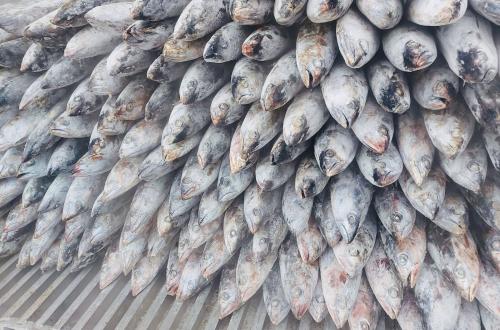
JAKARTA – The Ministry of Marine Affairs and Fisheries (KKP) has confirmed that Indonesian processed tuna and skipjack products will enjoy a zero per cent preferential tariff when entering the Japanese market from 1 August 2026. The policy is expected to strengthen national export competitiveness while expanding market opportunities for fishermen’s catches and the fish processing industry.
“In less than a week, the zero per cent IJEPA preferential tariff can officially be utilised by registered Indonesian fish processing units (UPI) and exporters,” said the Acting Director-General for the Strengthening of Marine and Fisheries Product Competitiveness (PDSPKP), Erwin Dwiyana, in a written statement in Jakarta on Tuesday (28/7/2026).
Erwin said the zero per cent preferential tariff policy would enhance the competitiveness of Indonesian fisheries products in the global market, while supporting the National Priority Work Programme for the Red and White Fishermen’s Village (KNMP) through increased absorption of fishermen’s catches, strengthening of the fish processing industry, and expanded market access. Erwin explained that before the enforcement of the Indonesia-Japan Economic Partnership Agreement (IJEPA) protocol, processed tuna and skipjack products under four harmonized system (HS) codes were subject to a general MFN import duty of 9.6 per cent. The four HS codes are 1604.14.010 – skipjack and bonito in airtight packaging, 1604.14.092 – tuna in airtight packaging, 1604.14.091 – boiled and dried skipjack and bonito (Katsuobushi), with a raw material size requirement of skipjack of 30 cm or more, and 1604.14.099 – frozen precooked tuna.
“This is a major opportunity because Japan is a potential market for processed tuna and skipjack products. We encourage business players to immediately take advantage of this facility by registering with the KKP,” said Erwin.
Erwin said the KKP would carry out periodic inspections to ensure compliance with IJEPA requirements, while preparing a second registration phase so that more fish processing units (UPI) and exporters can enjoy the preferential tariff facility. In 2025, he continued, the value of Indonesian fisheries product exports to Japan reached US$613.65 million, an increase of 2.5 per cent compared with the previous year.
“The main exported commodities include shrimp (52.1 per cent), tuna and skipjack (26.2 per cent), and pearls (5.9 per cent),” Erwin revealed.
Regarding processed tuna and skipjack exports to Japan that will receive the zero per cent preferential tariff under the IJEPA scheme, exports in 2025 rose 21.0 per cent compared with 2024, reaching a value of US$76.41 million.
He said this situation shows there is still room to continue increasing Indonesian fisheries exports, particularly tuna and skipjack commodities. Since January 2026, Erwin continued, the KKP’s verification and inspection team has conducted administrative and technical assessments of 30 UPIs and exporters applying for the IJEPA facility.
“As a result, 11 UPIs were declared to have met the requirements and have obtained IJEPA Registration Numbers, with business locations spread across West Java, DKI Jakarta, Central Java, East Java, North Sulawesi, and North Sumatra,” Erwin said.
Erwin noted that the enforcement of the zero per cent preferential tariff is a follow-up to the ratification of the IJEPA Amendment Protocol through Presidential Regulation Number 32 of 2026. The KKP has also socialised the implementation of the policy to business players on 23 July 2026 to ensure the facility can be optimally utilised and deliver broader benefits to businesses, fishermen, and coastal communities.