
Indonesia's Pride Tree Becomes the Secret Behind the Fragrance of Arabian Perfume
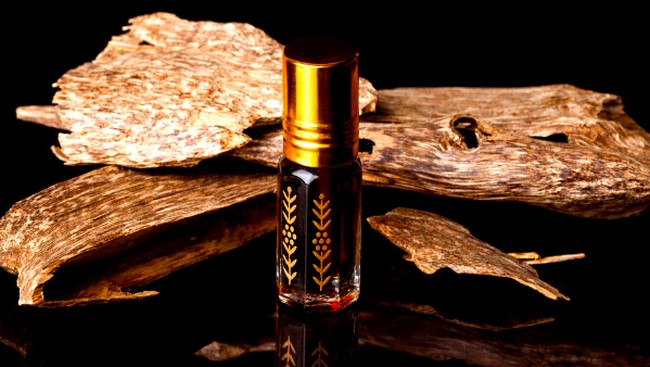
The fragrance of Indonesian agarwood is once again in the air. Throughout 2025, Indonesia’s agarwood exports increased in volume while recording a much larger jump in value.
According to data from Statistics Indonesia (BPS), agarwood export volume in 2025 reached 1,026,295 kg (1,026 tonnes), up 10.43% compared with 929,388 kg in 2024.
The increase in volume was accompanied by export value growth of 36.37%. Agarwood export value rose from US$12,783,410 in 2024 to US$17,432,818 in 2025, or approximately Rp 310.29 billion (US$1 = Rp 17,800).
This movement made the increase in agarwood export value roughly three times faster than the growth in volume.
On average, export value per unit of volume also increased. Calculated from total volume and export value, the average value of agarwood rose from around US$13.76 per kilogram in 2024 to around US$16.99 per kilogram in 2025.
Export growth in 2025 came from additional volume as well as an increase in average value per kilogram.
Saudi Arabia Absorbs the Majority of Indonesian Agarwood Exports
The Indonesian agarwood market remains highly concentrated in the Middle East. Saudi Arabia was the main destination with an export volume of 496,725 kg in 2025, up from 438,858 kg in 2024.
Its export value reached US$12,409,320, soaring from US$8,484,618 the previous year.
With these figures, Saudi Arabia absorbed around 48% of Indonesia’s agarwood export volume in 2025. In terms of value, its share reached around 71% of Indonesia’s total agarwood export value.
The average export price to the Saudi Arabian market was also far above the overall average. Based on a comparison of volume and value, it reached around US$25 per kilogram.
This situation makes the Saudi Arabian market the main determinant of Indonesia’s agarwood export performance. When demand from that market increases, the impact is immediately felt on national export value.
South Korea was in the next position with an export volume of 98,668 kg in 2025, up from 86,079 kg in 2024. Its value rose from US$960,850 to US$1,388,510.
Singapore recorded a different trend. Its export volume fell from 118,954 kg to 83,232 kg, while its export value rose from US$950,699 to US$1,000,743. This movement shows an increase in average value per unit of volume in that market.
Volume Rises, UAE Market Value Actually Falls
The United Arab Emirates is another important market for Indonesian agarwood. In 2025, export volume to the country reached 119,971 kg, up from 86,427 kg in 2024.
However, its export value fell from US$1,622,555 to US$1,323,381.
This opposing movement in volume and value caused the average export value to the UAE to decline. In 2024, it was around US$18.77 per kilogram, while in 2025 it was around US$11.03 per kilogram.
An increase in export volume does not necessarily produce the same increase in value in every market. Type, quality, product form, and transaction prices can all influence agarwood trade value.
Other markets also showed developments. Exports to India rose from 9,195 kg to 15,952 kg, while value climbed from US$21,193 to US$237,046.
China recorded a volume of 63,134 kg in 2025, up from 57,650 kg in 2024. Its value rose from US$28,250 to US$152,740.
Kuwait also experienced an increase in volume from 9,935 kg to 16,191 kg, with export value rising from US$172,709 to US$153,963. Taiwan increased from 729 kg to 1,260 kg in volume, while its value rose from US$9,463 to US$143,380.
In the Middle East region, Qatar recorded a volume of 2,257 kg in 2025, down from 2,481 kg in 2024. Its value also fell from US$176,547 to US$35,960.
The Agarwood Market Is Beginning to Spread
Indonesian agarwood trade is also reaching a number of markets outside Asia and the Middle East. BPS data recorded exports to Cameroon rising from 25,000 kg in 2024 to 44,803 kg in 2025. Its value rose from US$48,415 to US$221,707.
Benin in Africa, which was not recorded as an export destination in 2024, received 11,215 kg in 2025 with a value of US$134,580. Exports to Sudan also rose from 15,000 kg to 42,000 kg, with value increasing from US$22,500 to US$63,000.
Indonesia also recorded exports to the United Kingdom of 30 kg in 2025 with a value of US$300.
Meanwhile, Libya, which recorded agarwood exports of 38,000 kg with a value of US$59,500 in 2024, was no longer recorded as an export destination in 2025. Morocco also fell from 1,303 kg to 924 kg, with value shrinking from US$54,908 to US$29,540.
This trade structure reveals two important points. First, Saudi Arabia remains the dominant market and makes the largest contribution to export value. Second, the export increase in 2025 began to come from additional demand in a number of other countries.
For Indonesia’s agarwood industry, this development makes product quality and market management increasingly important. The 36.37% surge in export value in 2025 shows that agarwood still has room to generate higher economic value when volume and markets are managed properly.
Source: jawawa.id (https://jawawa.id/newsitem/indonesias-pride-tree-becomes-the-secret-behind-the-fragrance-of-arabian-perfume-1787914321)
Originally published by CNBC Indonesia (https://www.cnbcindonesia.com/research/20260827134518-128-762753/pohon-kebanggaan-ri-jadi-rahasia-di-balik-harum-parfum-arab), translated from Indonesian