
Indonesia's Presidential Staff Office Highlights 350,000-Tonne Rare Earth Potential as Future 'Treasure'
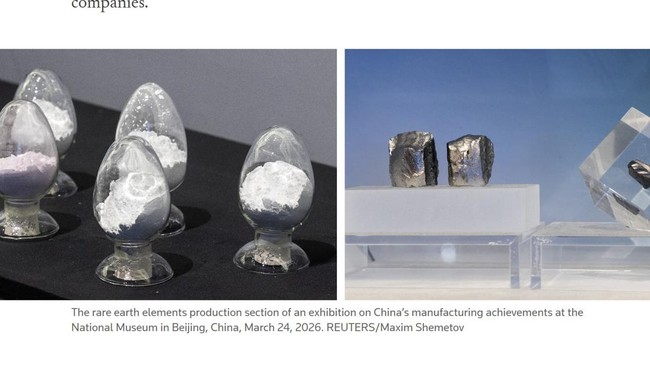
Jakarta, CNBC Indonesia – The Head of the Presidential Staff Office, Dudung Abdurachman, spoke about Rare Earth Elements (REE), critical minerals that are considered capable of determining Indonesia’s global competitiveness, economic resilience, and national defence.
Dudung Abdurachman stated that Indonesia is endowed with significant potential in the form of reserves of around 350,000 tonnes of REO (Rare Earth Oxides). However, this potential has yet to deliver optimal added value to the national economy.
In fact, he said, rare earth elements are the primary raw material for the strategic industries of the future, ranging from semiconductors, electric vehicles, and batteries to renewable energy and advanced defence technology.
“Rare earth elements must be understood as building a national industrial value chain, not merely as mining activity. The greatest added value is actually created after the separation and refining processes, right through to becoming permanent magnets and high-tech industrial components,” Dudung asserted in a statement quoted on Tuesday (28/7/2026).
To that end, the Presidential Staff Office (KSP) is closely overseeing the rare earth downstreaming policy to ensure it rests on a solid legal foundation and provides business certainty. The government has prepared a comprehensive implementing regulatory framework, starting from Law Number 3 of 2020 on Minerals and Coal, Government Regulation Number 96 of 2021 and its amendments, through to Minister of Energy and Mineral Resources Regulation Number 18 of 2025.
Dudung also outlined that the domestic management of rare earth elements still faces various real challenges. These obstacles include limited extraction and refining technology, suboptimal regulatory and supervisory standards, a weak supply chain traceability system, and the risk of resource leakage arising from exports that have not yet achieved maximum added value.
In addition, tighter inter-agency coordination is needed as the key to ensuring all policies run consistently.
These governance reform steps for rare earth elements align with the directives of the President of the Republic of Indonesia as set out in the Asta Cita and the RPJMN 2025-2029, which state that the downstreaming of natural resources is one of the main instruments for strengthening national economic independence.
“Downstreaming is no longer understood merely as building processing facilities, but must be capable of shaping a national industrial ecosystem that produces high value-added products, strengthens technological mastery, opens up quality employment, and enhances Indonesia’s competitiveness on the global stage,” explained the Head of the Presidential Staff Office.
To achieve these targets, the KSP is pushing for a national rare earth development strategy implemented simultaneously through five main pillars: strengthening regulation and governance, building the industrial ecosystem and processing technology, reinforcing environmental and sustainability aspects, enhancing national human resource capacity, and strengthening global economic diplomacy.
“The KSP’s role is not to take over the authority of ministries and agencies, but to ensure cross-sectoral coordination runs well, identify obstacles, facilitate problem-solving, and accelerate decision-making so that the national downstreaming targets are achieved,” he explained.
The coordination meeting was attended by representatives of the Coordinating Ministry for Economic Affairs, the Ministry of Energy and Mineral Resources, the Ministry of Finance, the Ministry of Trade, the Ministry of Industry, the National Research and Innovation Agency (BRIN), the National Police Criminal Investigation Department, the Attorney General’s Office, and representatives of Danantara. Also present were oil and gas industry representatives, MIND ID, PT Sucofindo, PT Timah, PT Surveyor Indonesia, the Mineral Industry Board, the Indonesia Mining Association (IMA), the Indonesian Nickel Industry Forum (FINI), the Indonesian Bauxite Association (ABI), and the Indonesian Employers’ Association (APINDO).
The coordination meeting is expected to produce concrete steps in the form of regulatory improvements, strengthening of the verification system, integration of export monitoring data, and the drafting of a national action plan with clear targets and deadlines to support the achievement of the Golden Indonesia 2045 vision.
Source: jawawa.id (https://jawawa.id/newsitem/indonesias-presidential-staff-office-highlights-350-000-tonne-rare-earth-potential-as-future-treasure-1785221507)
Originally published by CNBC Indonesia (https://www.cnbcindonesia.com/news/20260728122353-4-754373/ri-punya-potensi-cadangan-350-ribu-ton-harta-karun-masa-depan), translated from Indonesian