
Indonesia's Ports and Shipping Through a Global Lens
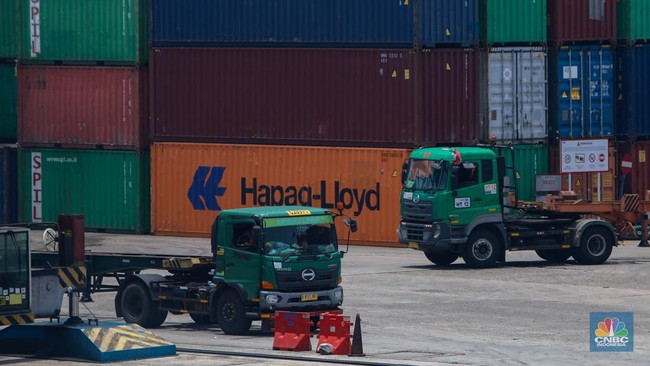
Two primary indicators in the global port and shipping business, the Container Port Performance Index (CPPI) and the Port Liner Shipping Connectivity Index (PLSCI) for the 2025 period, have been published by their respective organisations.
The first is released by the World Bank Group and S&P Global Market Intelligence, while the latter is produced by the UN Conference on Trade and Development (UNCTAD), a UN body responsible for the equitable and sustainable integration of developing countries into the global market.
Although the subjects of focus overlap—namely ports and shipping—the CPPI and PLSCI actually measure different aspects. The CPPI focuses on issues such as vessel turnaround time, which is the total duration a ship spends in port. This is calculated from the moment a ship arrives at the anchorage area and undergoes services: piloting, berthing, and loading/unloading, until the ship completes its tasks and departs the port waters.
The index also examines berth productivity, which measures the operational capacity of a port to serve berthing vessels, loading/unloading passengers, and handling cargo or containers. The indicators are the speed of service and the volume of cargo processed within a specific timeframe. The final aspect highlighted by the CPPI is the efficiency level of ports in serving container ship visits specifically.
Meanwhile, the Port Liner Shipping Connectivity Index (PLSCI) concentrates on measuring connectivity aspects, such as the number of services (routes), vessel capacity/cargo space, shipping companies, vessel size, and connectivity with international liners. While both indices monitor many countries, this article focuses on their assessment of Indonesian ports and shipping.
Indonesia’s Position
According to the assessment of both indices, Indonesian ports have become more connected, but unfortunately, they have not become more competitive. This increased connectivity is made possible by the government’s continuous development of ports, through both brownfield and greenfield projects. Toll roads are also being built to connect or bring ports closer to their hinterlands, alongside the intensified development of hinterland industrial zones.
The state-owned port operator, Pelindo, was consolidated into a single entity through a merger process to make its business leaner and more efficient, thereby reducing national logistics costs. Last but not least, the national logistics ecosystem is being increasingly integrated into the Indonesia National Single Window and the international arena. It is from these developments that the improved connectedness emerged, as recognised by the World Bank and UNCTAD.
The problem is that improved connectivity does not correlate directly with operational competitiveness. Take, for example, two major ports in Indonesia: Tanjung Priok in Jakarta and Tanjung Perak in East Java. Between 2020 and 2025, the connectivity of Tanjung Priok improved, as did that of Tanjung Perak. However, their level of competitiveness did not improve; instead, it tended to worsen.
In other words, from the perspective of activity, both ports are becoming busier and more connected to global shipping networks through various digital platforms and the Internet of Things (IoT), yet they remain uncompetitive.
This situation should not necessarily be interpreted as a decline in the national maritime sector. However, this weakness is highly significant. What is the value of connectivity if a port is operated under extreme pressure? In turn, this will erode the connectivity that has been established.
Regarding Tanjung Priok, its CPPI index was recorded at position 281 in 2022. It then improved, rising to 23rd in 2023. Unfortunately, in 2024, its position dropped to 103rd, and continued to decline to level 121 in 2025. It should be noted that the improvement in 2023 was due to a combination of factors: improved port operational performance, post-pandemic Covid-19 normalisation, and changes in recording methodology.
Since 2024, all major national ports (Tanjung Priok, Tanjung Perak, Semarang, and Belawan) under monitoring have experienced a decline. This condition is attributed to Indonesia’s geography as an archipelagic nation.
Consequently, its logistics system faces unique challenges that differ significantly from other monitored countries. These challenges include the large number of islands, highly segmented domestic shipping patterns, and the uneven distribution of hinterlands.
Consider Java. This region is inhabited by approximately 160 million people and serves as the primary centre of national economic activity. Almost every area on this island has a port. Unfortunately, the ports located here are unable to be integrated into the modern global port network.
Therefore, this is not merely a matter of infrastructure, but an issue of shipping economics. There is an imbalance between ports on Java that hinders the integration process. Tanjung Priok can accommodate large container ships, but the same is not true for Tanjung Perak and Tanjung Emas in Semarang.
As a result, international liners are reluctant to enter Tanjung Priok because the vessels they operate can only berth in Jakarta. In reality, with the multi-loop systems they employ, these ships could also berth at other ports within a single voyage to load or unload containers. Many jumbo ships have previously docked at Tanjung Priok, but shortly thereafter, their operators terminated their services due to insufficient return cargo.
Tanjung Priok remains the port with the best infrastructure in Indonesia…
Source: jawawa.id (https://jawawa.id/newsitem/indonesias-ports-and-shipping-through-a-global-lens-1782211976)
Originally published by CNBC Indonesia (https://www.cnbcindonesia.com/opini/20260623171600-14-745130/pelabuhan-pelayaran-indonesia-dalam-lensa-dunia), translated from Indonesian