
Indonesia’s Poorest Minister Served in a ‘Lucrative’ Portfolio
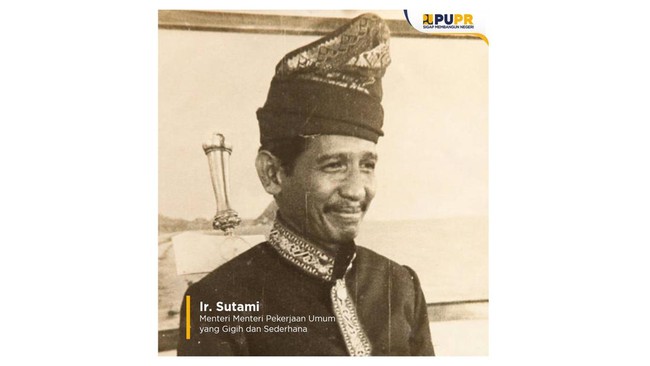
Jakarta, CNBC Indonesia – Behind the prestige and state-provided benefits associated with ministerial office, one official chose to live far from luxury. He was Sutami, public works and housing minister during the New Order, who became known as Indonesia’s “poorest minister”.
Sutami served for 14 years, from 1964 to 1978, across eight cabinet terms. Although he oversaw a series of major projects, he consistently rejected excessive state-provided benefits. He believed it was inappropriate for an official to live in luxury while many people were still suffering.
In a testimony entitled “Sutami: A Builder of Indonesia” (1991), his aide Hendropranoto recounted that this attitude was reflected in Sutami’s habit of walking when visiting areas, particularly villages and remote locations.
He was willing to walk for kilometres because he did not want to inconvenience others. Walking was also more efficient and made it easier to inspect infrastructure projects.
This enabled Sutami to see how projects under his remit were being carried out and to resolve any problems quickly.
He believed infrastructure development in villages and remote areas would benefit ordinary people more than projects focused on industry and business interests.
A Tempo report published on 22 November 1980 also described Sutami’s humility in both his words and daily life. An intellectual and professional in his field, he was known as an unassuming man who was close to ordinary people. He was born on 19 October 1928.
Despite working in what was considered a “lucrative” portfolio, Sutami did not take state money for personal gain. He did not even own a home. He bought one only after leaving office on 29 March 1978 because of illness, and paid for it in monthly instalments.
For this reason, many people called him the “poorest minister”. He did not object to the nickname.
After retiring, Sutami continued to live without luxury. The electricity at his home was once cut off because he could not pay the bill. When he fell ill, he was reluctant to go to hospital for fear he could not afford the charges.
Sutami was known to have chronic liver disease. The illness was attributed to poor nutrition and exhaustion from frequently travelling on foot during his lifetime.
President Soeharto heard of his plight and quickly arranged for him to receive treatment without charge. But Sutami eventually succumbed to his illness and died on 13 November 1980.
Although he is no longer alive, the work Sutami carried out without seeking publicity continues to benefit the public. The major projects built under his tenure include the Jagorawi toll road, Semanggi Bridge and Ampera Bridge.
Source: jawawa.id (https://jawawa.id/newsitem/indonesias-poorest-minister-served-in-a-lucrative-portfolio-1792986647)
Originally published by CNBC Indonesia (https://www.cnbcindonesia.com/lifestyle/20261026094652-33-779371/sosok-menteri-termiskin-ri-padahal-bertugas-di-lahan-basah), translated from Indonesian