
Indonesia's Petrochemical Industry Under Pressure from Chinese Product Influx
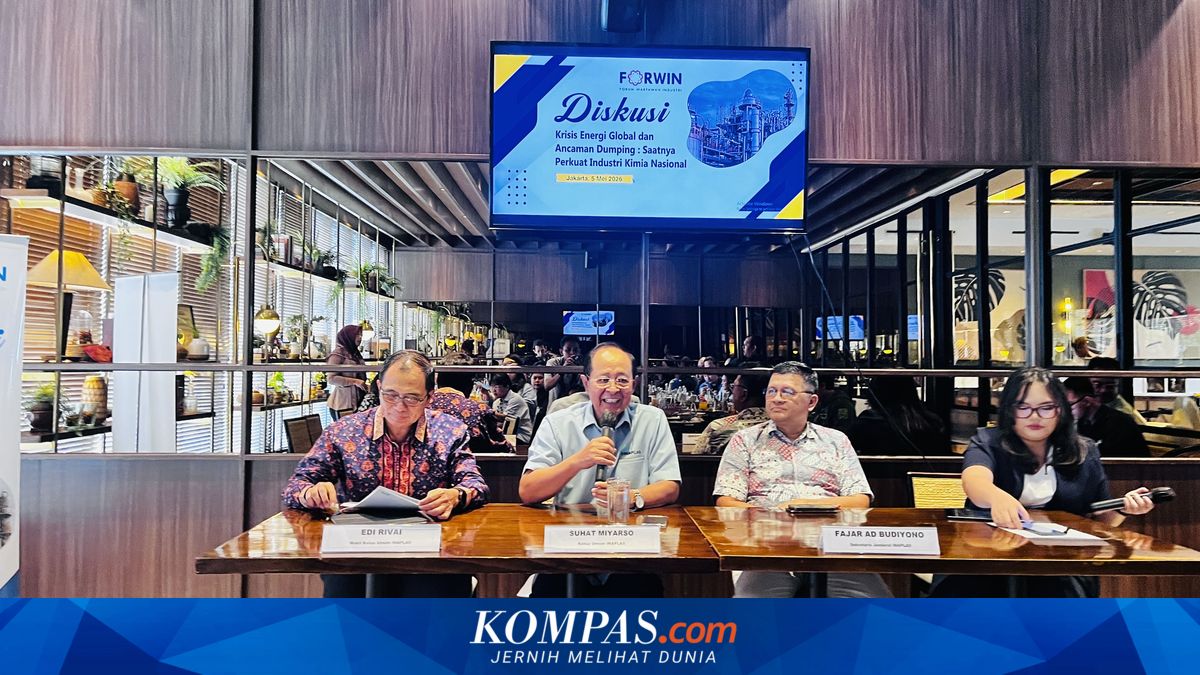
JAKARTA - The Indonesian Olefin, Aromatic, and Plastic Industry Association (Inaplas) states that over the past three years, the domestic petrochemical industry has been under pressure from a flood of imports.
Inaplas Vice Chairman Edi Rivai said the influx of imported products has affected both the upstream sector (raw materials) and downstream sector (finished products).
Edi explained that the massive flow of imported petrochemical products stems from overproduction in countries worldwide, including China, the Middle East, and Southeast Asia.
He made these remarks during a discussion titled “Global Energy Crisis and Dumping Threats: Time to Strengthen Industries Impacted by Geopolitical Turmoil on the National Chemical Industry,” organised by the Industrial Journalists’ Forum (Forwin).
Upstream petrochemical products include ethylene, propylene, and benzene.
Meanwhile, downstream petrochemical products consist of plastics, resins, and solvents.
According to Edi, compared to other countries, the imports most pressuring the domestic industry come from China. The pressure is felt in both upstream and downstream sectors because the imports include raw materials and finished products.
“In particular, the most pressing at the moment, both upstream and downstream, is from petrochemicals and finished goods from China,” Edi stated.
Meanwhile, Indonesia is considered a net importer, importing more than it exports, with slow investment growth.
Although resin producer Polytama Propindo and producer of ethylene dichloride (EDC) and caustic soda, PT Chandra Asri Alkali, have increased production capacity to reduce import dependency, the domestic industry remains under pressure.
“That is not sufficient to offset the substantial global capacity from the countries I mentioned earlier. Therefore, we have been receiving external pressure for nearly the past three years,” Edi said.
Echoing Edi, Inaplas Chairman Suhat Miyarso said the oversupply of petrochemical products has led to dumping practices. Dumping involves selling a product abroad at a price lower than the domestic price.
This puts pressure on the domestic industry, which must compete with imported products entering via dumping.
“So, Inaplas has actually been advocating since two years ago to apply for trade remedies in the form of anti-dumping and safeguards. However, up to now, it hasn’t been fulfilled, and we are already facing this crisis,” Suhat revealed.
Inaplas has reported suspected anti-dumping to the Indonesian Anti-Dumping Committee (Kadi), under the Ministry of Trade.
After investigation, it was proven that the petrochemical product, a copolymer, entered via dumping. “It was 5 to 20 percent lower, and even one producer was 30 percent,” Suhat said.
Currently, the issue is awaiting a Ministry of Finance Regulation to impose anti-dumping duties. However, until the war erupted in the Middle East, disrupting global petrochemical supplies, the regulation has not been issued.
“But it has been proven that the prices they sell to Indonesia are indeed dumping prices, ranging from 5 to 20 percent,” Suhat stated.
Source: jawawa.id (https://jawawa.id/newsitem/indonesias-petrochemical-industry-under-pressure-from-chinese-product-influx-1778194578)
Originally published by Kompas (https://money.kompas.com/read/2026/05/06/090600926/industri-petrokimia-ri-tertekan-serbuan-produk-china?utm_source=ABC&utm_medium=rss), translated from Indonesian