
Indonesia's Path Towards the UN Security Council 2029-2030
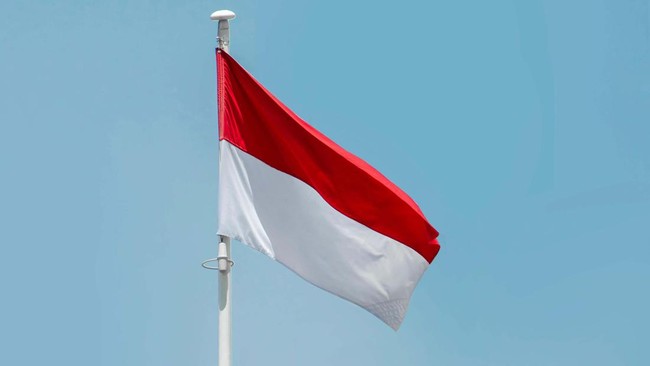
The inauguration of Arrmanatha Christiawan Nasir as the Minister of Foreign Affairs of the Republic of Indonesia on 1 October 2026 took place at a time when the international order is facing significant pressure due to armed conflicts, great power competition, a crisis of trust in multilateral institutions, and rising tensions in the Middle East.
Only hours after being inaugurated by President Prabowo Subianto, Arrman.manatha immediately ensured that Indonesia would proceed with its candidacy for a non-permanent seat on the United Nations Security Council (UNSC) for the 2029-2030 period. This agenda was previously announced by Foreign Minister Sugiono during the 81st UN General Assembly in New York, USA, on 26 September 2026.
The candidacy demonstrates that the change in Foreign Minister does not automatically alter Indonesia’s diplomatic orientation, as Arrmanatha emphasised that foreign policy remains anchored in the constitutional mandate and the principle of an ‘independent and active’ political stance.
In his statement following the inauguration, Arrmanatha described the continuity of this policy as part of an effort to champion national interests while increasing Indonesia’s contribution to regional stability and global security.
Diplomatic Relay and Independent and Active Politics
The UN Security Council holds a central position in the international security system because the forum holds the primary mandate to maintain international peace and security, with five permanent members possessing veto power and ten non-permanent members elected by the UN General Assembly for two-year terms.
For Indonesia, the 2029-2030 candidacy represents its fifth attempt, having previously secured mandates as a non-permanent member during 1973-1974, 1995-1996, 2007-2008, and 2019-2020. Consequently, this institutional experience serves as diplomatic capital for the upcoming campaign.
Sugiono announced Indonesia’s candidacy before the UN General Assembly under the theme ‘Fostering Unity, Advancing Peace’, positioning the strengthening of multilateralism, dialogue, international law, and inter-state cooperation as essential elements of Indonesia’s campaign.
This theme was subsequently carried forward by Arrmanatha as part of foreign policy continuity, demonstrating that the UNSC candidacy has been established as a state agenda that transcends changes in officials within the Ministry of Foreign Affairs.
The foundation of an ‘independent and active’ policy provides space for Indonesia to build relationships with various powers without placing national diplomacy in dependence on any specific geopolitical bloc.
In a situation where the United States, China, Russia, European nations, and Middle Eastern regional powers have interests that often overlap and conflict, this principle can serve as a framework for Indonesia to maintain diplomatic space and develop cross-group cooperation.
Additional capital stems from Indonesia’s involvement in UN peacekeeping operations, which have spanned several decades and provided direct experience for Indonesian personnel in various conflict zones.
This contribution is vital because a nation’s credibility in international security forums is built not through diplomatic statements alone, but through concrete involvement in maintaining peace, assisting conflict-affected communities, and supporting dispute resolution through international mechanisms.
Arrmanatha also stated that the UNSC candidacy is linked to Indonesia’s belief in the importance of multilateralism and the desire to push for the reform of the multilateral system. This statement is relevant to the debate regarding the effectiveness of the UNSC when various international conflicts persist while decision-making mechanisms often face diverging interests among the five permanent members.
The Middle East as a Test for Indonesian Diplomacy
Middle Eastern dynamics provide the most tangible context for Indonesia’s candidacy, as the UNSC continues to face agendas regarding Palestine, Gaza, Lebanon, Iran, Syria, and regional security related to the interests of major powers.
Throughout September 2026, the UNSC scheduled several meetings regarding the situation in the Middle East, including discussions on 3, 10, 15, and 17 September, demonstrating that the region remains a primary agenda for international security.
Palestine holds a special position in Indonesian diplomacy, as support for Palestinian independence has been a vital part of Indonesia’s foreign policy since the era of President Soekarno and continues to be voiced in various international forums.
In the context of the 2029-2030 UNSC candidacy, Indonesia’s stance on Palestine will confront issues of ceasefires, civilian protection, humanitarian aid, the reconstruction of Gaza, the political status of Palestine, and the application of international law in conflict resolution.
The Gaza conflict also highlights the limitations of the international security system when diplomatic decisions clash with military realities on the ground and the differing interests of influential nations.
For Indonesia, this situation creates an opportunity to strengthen diplomacy that prioritises dialogue, humanitarian aid, respect for international law, and political solutions acceptable to all parties without ignoring the rights of the Palestinian people.
Iran adds another dimension, as developments in the relationship between Iran and the United States, Israel, Gulf nations, and other regional actors have consequences for regional security and global economic stability.
Issues regarding Iran’s nuclear programme, Gulf security, shipping lanes, energy, and the risk of conflict expansion mean that Middle Eastern stability cannot be disregarded.