
Indonesia's Palm Oil Supply Under Pressure in 2027, India Emerges as Strategic Market
Indonesia’s palm oil supply is facing pressure from increasing domestic demand and a potential decline in production by 2027. This situation is influenced by the implementation of B50 biodiesel, which is increasing domestic palm oil absorption, as well as the impact of El Niño on plantation production.
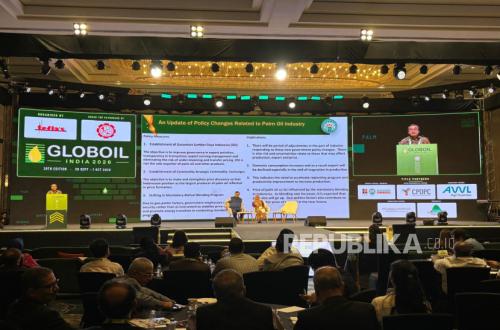
The General Chair of the Indonesian Palm Oil Association (GAPKI), Eddy Martono, stated that supply pressures must be anticipated by strengthening productivity while maintaining access to export markets. He shared these remarks during the opening of GlobOil India 2026 in Mumbai, India, on Tuesday (29/9/2026).
Indonesia is the first country to implement B50 biodiesel nationally, with a target for full coverage starting 1 October 2026. This policy is projected to increase domestic palm oil absorption for CPO needs to between 15.2 and 16.3 million tonnes per year.
The rise in domestic absorption has the potential to narrow the surplus available for export. Simultaneously, palm oil production is facing pressure from weather conditions.
GAPKI estimates that Indonesian palm oil production in 202 tribut 2.9 per cent to approximately 56.8 million tonnes. This decline is attributed to droughts caused by El Niño in several key plantation hubs, particularly in Sumatra and Kalimantan.
Pressure on exports is also arising from changes in trade governance. Five palm oil products will be required to be exported through PT Danantara Sumber Daya Indonesia (DSI), with full implementation starting 1 January 2027.
Eddy emphasised that this policy is not a trade restriction, but rather a change in the export governance mechanism. According to him, trade volumes will remain steady, while the export mechanism undergoes adjustment.
Amid domestic supply and production pressures, strengthening export markets has become a primary focus for the Indonesian palm oil industry. India serves as a strategic market due to its massive demand for palm oil imports.
Indonesia supplies almost half of India’s palm oil requirements. In the first quarter of 2026, Indonesian palm oil exports to India reached 988,000 tonnes, representing a 28 per cent year-on-year increase.
GAPKI welcomed India’s decision to reduce the basic import duty on CPO from 10 per cent to 5 per cent, effective from 24 September 2026. The organisation estimates that India will still require approximately 7–8 million tonnes of palm oil imports per year until 2030.
In addition to strengthening trade, GAPKI is seeking opportunities for cooperation with Indian industry players to increase palm oil productivity. This cooperation continues the memorandum of understanding with the Solvent Extractors’ Association of India (SEA) and the Asian Palm Oil Alliance (APOA) signed at GlobOil 2025.
GAPKI also signed a new agreement with the Indian Vegetable Oil Producers’ Association (IVPA). This partnership is aimed at strengthening relations between Indonesian and Indian palm oil industry players.
Beyond India, the Indonesian palm oil industry also sees opportunities in the European Union market through the Indonesia-EU Comprehensive Economic Partnership Agreement (I-EU CEPA).
GAPKI’s Head of Foreign Affairs, Fadhil Hasan, stated that the agreement provides export quotas for Indonesian palm oil to the EU with zero per cent import duties, as well as being free from export duties and levies.
The export quota begins at 1.9 million tonnes and increases by three per cent annually over nine years. However, utilising this opportunity depends on the industry’s readiness to meet the EU Deforestation Regulation (EUDR).
Hasan noted that one of the challenges to be addressed is ensuring the traceability of smallholder plantations and aligning Indonesian Sustainable Palm Oil (ISPO) with EU verification systems.
He added that increasing productivity is becoming increasingly vital, given the projection that palm oil prices will remain high in 2027. Accelerating smallholder palm oil replanting is one of the necessary steps to maintain long-term plantation productivity.
GAPKI shared these insights during its participation in GlobOil India 2026, a vegetable oil industry conference and exhibition held in Mumbai from 29 September to 1 October 2026. Alongside Eddy Martono, Fadhil Hasan was a speaker in a session discussing developments in palm oil producing nations.
GAPKI also participated in the exhibition to promote sustainable Indonesian palm oil in the Indian market.
GAPKI’s participation in Global India 2026 is supported by the Palm Oil Fund Management Agency (BPDP). Through various programmes, BPDP supports government policies to achieve sustainable palm oil plantations.
GAPKI hopes that this forum can strengthen dialogue with buyers, traders, and global vegetable oil industry players. Long-term partnerships must be directed towards enhancing the productivity, sustainability, and traceability of Indonesian palm oil products.
Source: jawawa.id (https://jawawa.id/newsitem/indonesias-palm-oil-supply-under-pressure-in-2027-india-emerges-as-strategic-market-1790776700)
Originally published by Republika (https://ekonomi.republika.co.id/berita/tm6i7f522/pasokan-sawit-indonesia-2027-tertekan-india-jadi-pasar-strategis), translated from Indonesian