
Indonesia's Palm Fronds and Styrofoam Waste Could Become Ship Fuel Blend, BRIN Finds
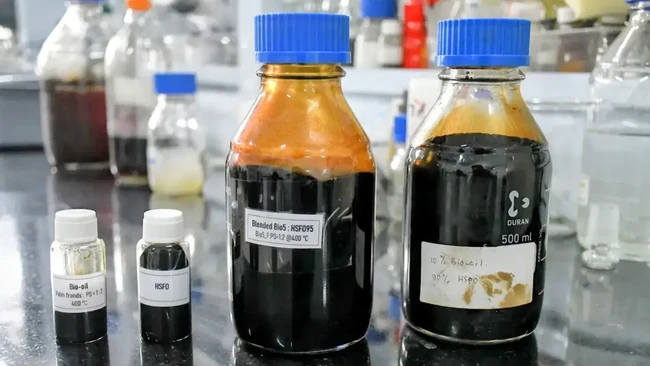
Research by the National Research and Innovation Agency (BRIN) has found that oil palm fronds and polystyrene (styrofoam) waste can be processed into pyrolysis oil with the potential to be used as a blend for marine fuel.
On BRIN’s official website, Dieni Mansur, a researcher at the BRIN Molecular Chemistry Research Centre, said cargo ships transporting goods between countries still largely use heavy fuel oil, or high sulphur fuel oil (HSFO), which is known to contribute to environmental pollution by producing high sulphur emissions.
Meanwhile, Indonesia faces an abundance of biomass waste from palm plantations, coupled with a growing volume of non-biodegradable plastic waste.
For this reason, research conducted by Dieni and her team involved heating palm frond waste and styrofoam without oxygen, producing a liquid oil that was then blended with conventional marine fuel. The pyrolysis oil was successfully obtained with a yield exceeding 56 per cent, showing that waste long overlooked can be utilised as an energy source.
“What makes this research important is not only that it produces an alternative fuel, but that the fuel blend is able to improve the quality of the marine fuel already in circulation,” Dieni said, quoted from the BRIN website on Sunday (12/7/2026).
According to Dieni, one of the most significant findings of the research is the reduction in fuel viscosity, or thickness. In ship operations, overly viscous fuel must be heated before it can be used in engines. This heating process requires additional energy, which ultimately adds to operating costs.
By blending in the formulated pyrolysis oil, the fuel flows more easily and the energy needed for heating is reduced.
“This formula is able to maintain fuel quality in line with marine fuel standards while delivering significant environmental benefits,” she said.
Dieni noted that the research clearly demonstrates a reduction in the sulphur content of the fuel. This is important because sulphur is the main source of sulphur oxide emissions, which have long been a concern for international shipping organisations. The lower the sulphur content, the smaller the air pollution impact produced by ships.
The findings offer a solution that is relatively easy to implement. Unlike hydrogen- or ammonia-powered ship technologies, which still require substantial infrastructure investment, the blended fuel from this research has the potential to be used in existing systems with minimal adjustment.
Furthermore, the research shows that with the right technological approach, agricultural and plastic waste can be transformed into energy sources that help reduce shipping sector emissions while supporting the transition towards a low-carbon economy. “Future energy solutions do not always have to come from new sources; they can also come from waste we have long ignored,” she concluded.