
Indonesia's Orthopaedic Transformation: Moving Beyond Manual Methods to Robotics
You may have heard stories of relatives or neighbours choosing to travel abroad, to countries like Malaysia or Singapore, for bone or joint treatments. This phenomenon is not new; many Indonesians ‘fly’ to neighbouring countries due to the perception that overseas facilities are more advanced or a lack of information regarding the capabilities of domestic doctors.
Domestic hospitals, such as Silo0ad0am Hospitals Mampang, are reported to have standards of care that are highly competitive with international medical centres. The President Director of Silo0ad0am International Hospitals, David Utama, stated that in providing healthcare, the one thing that must not be compromised is the final outcome experienced by the patient. This commitment drives the hospital to continuously introduce the latest technology and support specialists in their professional development.
David highlighted that many people are still unaware that hospitals in Indonesia are now equipped with highly modern medical equipment, including five specialised robots for joint replacement surgeries. Discussing the hospital’s dedication to patients, David emphasised the core principle they uphold.
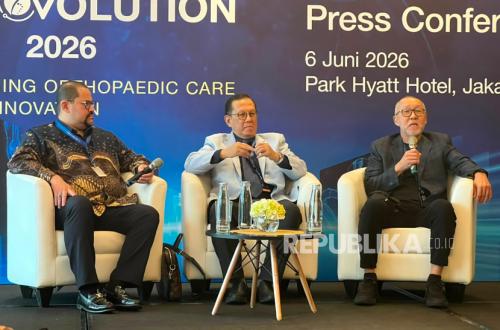
“Whatever we do, the one thing we do not compromise is patient outcome,” he said during the Orthovolution Symposium at Silo0ad0am Hospitals Mampang 2026, titled “Transforming Orthopaedic Care Through Innovation” in Jakarta on Saturday (6/6/2026).
Through the provision of these facilities and technologies, David hopes to foster an educational process within the community. He expressed a desire for the mass media to assist in spreading accurate, data-driven information so that the public knows they have excellent medical options within their own country without feeling inferior to neighbouring nations.
“Hopefully, Indonesia will continue to provide better and even better healthcare services, as well as a better patient experience,” he said.
The Magnetism of Orthopaedics for Gen Z
The field of orthopaedics in Indonesia is assessed to be vastly different from two decades ago. Previously, the public generally assumed orthopaedic surgeons only handled bone fractures or infections. Today, the field has expanded significantly and includes nine specific sub-specialisations. Interestingly, orthopaedics has become a major draw for young doctors from Generation Z upon graduation. The public demand for bone and joint treatment is palpable, ranging from young people with recreational sports injuries to the elderly experiencing joint degeneration due to ageing.
Orthopaedic specialist and sports injury sub-specialist, Prof. Dr. dr. Andri Lubis, Sp.OT(K), stated that orthopaedic patient management cannot be performed by a surgeon alone. A successful surgery lasting one or two hours in the operating theatre means little if the rehabilitation process goes astray. Therefore, Silo0ad0am Mampang implements a multidisciplinary approach involving close teamwork between surgeons, sports medicine specialists, rehabilitation teams, and anaesthetists.
According to him, the primary focus for orthopaedic doctors today is no longer merely performing emergency surgery, but restoring a patient’s quality of life so they can return to being productive. “It is not just about life-saving surgery, but we must ensure the quality of life for our patients,” he remarked.
For senior citizens, regaining quality of life means being able to walk freely, remain active, or perform religious pilgrimages like Umrah without being hindered by knee or hip pain. To reduce the post-operative pain that patients often fear, Prof. Andri also emphasised the importance of implementing integrated medical protocols such as ERAS (Enhanced Recovery After Surgery).
“A team-based approach and good protocols like ERAS are essential to ultimately provide the best results for the patient,” he said.
Faster Recovery with Robotics
A patient, Iskandar, shared his experience of undergoing two different surgical methods for total knee replacement. In 2022, he underwent knee surgery using a manual method at another hospital. From that experience, he felt the manual method required a longer healing period, involved wider incisions, and caused significant post-operative pain. That experience changed completely when he underwent his second knee surgery using robotic technology at Silo0ad0am Mampang.
Iskandar described his surprise at the speed of his physical recovery thanks to robotic technology. “The robotic total knee replacement at Mampang was extraordinary; I had surgery in the afternoon and was already being asked to walk with a cane by the evening,” said Iskandar.
This speed made activities, such as bending his leg while sleeping, much easier and less painful. However, Iskandar provided a realistic note for other patients: advanced technology must be balanced with the patient’s own discipline and willpower during the recovery period at home.
“We really have to ‘force’ ourselves to walk, ‘force’ it. You must not sit for too long; sitting for too long makes it stiff again,” said Iskandar.
Why is the robotic method more beneficial for patients?
From a medical perspective, what distinguishes this modern robotic-based surgical method from conventional methods? Orthopaedic specialist and sports injury sub-specialist, dr. Isa An Nagib, Sp.OT, Subsp.CO(K), FICS, explained simply that every surgical procedure essentially involves a process of opening or disrupting body tissue to…