
Indonesia’s opportunity to drive ASEAN’s critical minerals industry
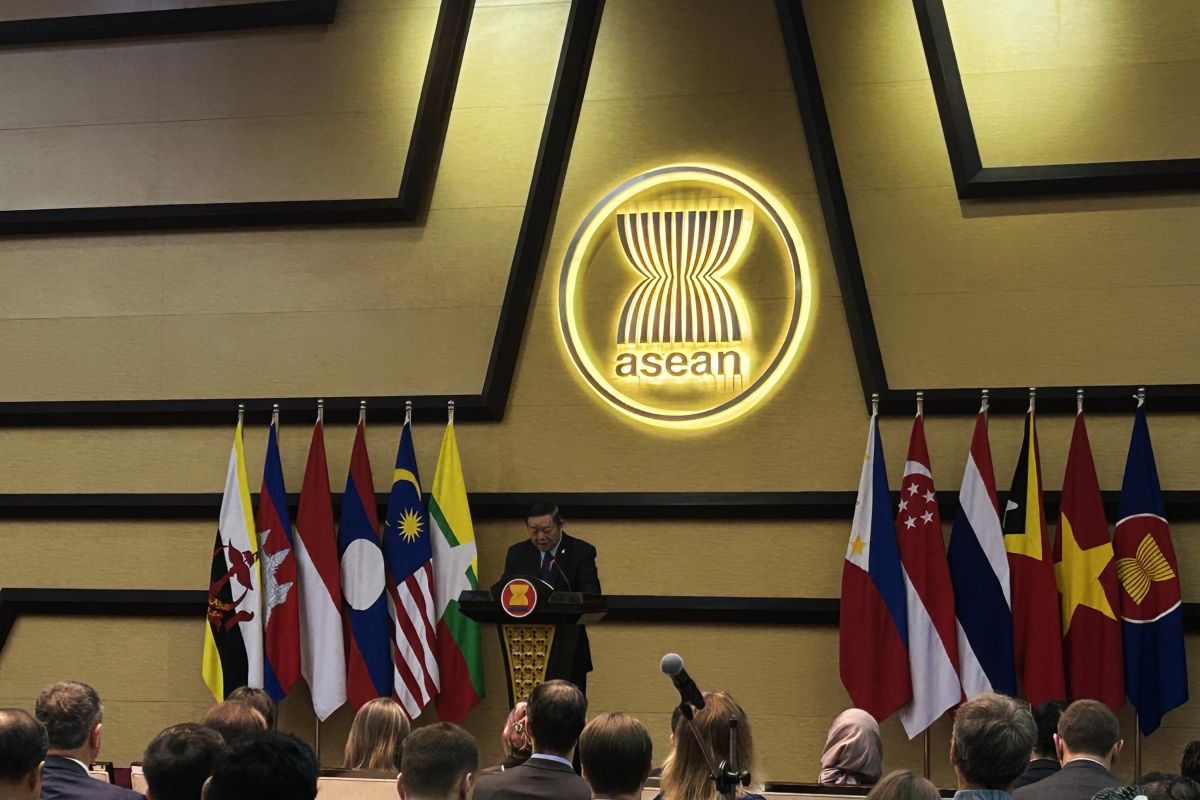
The agreement provides a foundation for Southeast Asian countries to link their resources, processing capabilities, investment, and markets into an integrated production network.
Indonesia has important advantages to advance this agenda. The country is the world’s largest nickel producer and has rapidly expanded its processing capacity.
Its potential for regional leadership will grow further if these strengths can be connected with the resources and industrial capabilities of other ASEAN member states.
Demand for minerals used in the energy transition, electric vehicles, electronics, and advanced technologies continues to increase the region’s strategic importance.
Competition for raw materials is also prompting industrialized countries to seek more diversified sources of supply.
ASEAN can capitalize on this momentum by developing an industrial network that generates added value within the region.
Regional strengths
The International Energy Agency’s (IEA) Southeast Asia Energy Outlook 2026, published in June, notes that Southeast Asia holds around 51 percent of the world’s nickel reserves, 20 percent of its bauxite reserves, and 17 percent of its tin reserves.
These figures are based on 2025 US Geological Survey (USGS) data cited in the IEA report. The region also has deposits of cobalt, copper, and rare earth elements that are important to strategic industries.
The region’s critical mineral supply is distributed across several countries. Based on 2024 production data in the report, Indonesia accounted for around 63 percent of global mined nickel production and more than 40 percent of global refined nickel output.
The Philippines was the world’s second-largest nickel producer, contributing around 10 percent of global mined production.
In the rare earth elements sector, Myanmar supplied nearly 20 percent of global mined production of rare earth elements used in permanent magnets and more than 40 percent of global production of heavy rare earth elements.
Malaysia, meanwhile, hosts the largest rare earth processing facility outside China, operated by Lynas in Pahang. In 2025, the facility supplied around 11 percent of global rare earth metal production, using feedstock sourced from Australia’s Mt Weld mine.
These differences in resource availability and industrial capabilities could provide a basis for establishing a regional production network. Countries with mineral resources could be linked to those with refining facilities, component manufacturing capabilities, technology, and markets.
Such a division of roles could direct investment toward strengthening underdeveloped segments of the regional value chain.
Indonesia could serve as a key regional hub through its processing capacity and domestic market.
Industrial ties between Indonesia and the Philippines are also beginning to gain concrete momentum. The Indonesian Nickel Miners Association (APNI) and the Philippine Nickel Industry Association (PNIA) signed a memorandum of understanding in May 2026 to develop a nickel industry partnership between the two countries.
The agreement could provide an entry point for exploring a regional supply chain linking mineral resources, processing, and industrial demand.
However, the region’s production strength has not yet translated into industrial self-reliance. The IEA notes that many ASEAN countries remain dependent on imports of processing equipment, refining technologies, precursor materials, magnets, and battery components.
This dependence leaves regional industries vulnerable to supply disruptions and policy changes in supplier countries.
The situation is also evident in Indonesia’s nickel industry. Around 75 percent of the country’s nickel refining capacity is associated with Chinese company investment, while Indonesian companies account for only a small share of ownership.
Large-scale production and processing have yet to be matched by comparable levels of domestic corporate ownership of technology and industrial capabilities.
The IEA estimates that ASEAN’s mined output of major minerals, including nickel, cobalt, copper, and rare earth elements, could increase by a weighted average of around 30 percent through 2035 under its announced policies and projects scenario.
Refined mineral production is projected to grow by around 130 percent, driven primarily by Indonesia’s nickel processing industry and increased cobalt and rare earth processing capacity. These projections point to substantial economic opportunities for the region, as well as the need to strengthen supporting industries.
Building an industrial network
The ASEAN declaration provides a framework for addressing these gaps. Member states have committed to developing a regional definition and list of critical minerals, formulating an ASEAN Critical Minerals Strategy, increasing intra-ASEAN trade, and strengthening investment, research, skills development, technology transfer, and recycling.
Follow-up efforts should focus on establishing concrete cross-border projects. ASEAN needs to map each member state’s mineral resources, processing capacity, manufacturing requirements, and infrastructure. This mapping could serve as a basis for identifying investment locations and allocating production stages according to each country’s strengths.
Indonesia could encourage the ASEAN Minerals Investment Forum (AMVest) and ASEAN Minerals Connect (AMConnect) to serve as platforms connecting projects with investors and industrial partners.
Their success should be measured by the projects actually established, regional company participation, improvements in technological capabilities, and the added value generated across member states.
These opportunities also require active economic diplomacy. On November 19, US Ambassador to ASEAN Kevin Kim said Washington was holding discussions with several Southeast Asian countries on developing critical mineral supply chains.
These discussions reflect growing interest among external partners in the region’s potential while creating opportunities for ASEAN countries to broaden their investment and technology options.
At the 27th ASEAN-Republic of Korea Summit in Manila on November 16, Indonesian President Prabowo Subianto proposed the joint development of downstream critical mineral industries as a bridge to strengthening the ASEAN-South Korea partnership in the semiconductor industry.
The foundation for this partnership was laid through a memorandum of understanding between the two countries in April 2026, covering geoscience surveys, mineral processing and refining, recycling, environmental standards, and post-mining reclamation.
Interest from external partners could be leveraged to strengthen ASEAN’s industrial capabilities. Indonesia needs to encourage investments that go beyond building production facilities to include research, local supplier development, specialist training, and greater technological capabilities.
Cooperation should also be tailored to the needs of end-user industries, as battery materials, permanent magnets, and semiconductors have different characteristics and production chains.
Mineral standards and traceability should also form part of the shared agenda. International markets are paying increasing attention to the origin of raw materials, production processes, environmental compliance, and carbon footprints.
ASEAN could promote compatible tracking systems and standards among member states to help products manufactured through regional supply networks meet international market requirements.
For Indonesia, this agenda is directly linked to the competitiveness of its downstream industries. In August, Minister of National Development Planning and Head of the National Development Planning Agency (Bappenas) Rachmat Pambudy emphasized that nickel, copper, and bauxite processing must be supported by efficient, low-emission supply chains.
Developing clean energy supplies for industrial estates and strengthening environmental oversight are essential parts of this effort.
The ASEAN declaration does not automatically establish a common market or allocate industrial responsibilities among member states. The agreed cooperation is voluntary and mutually beneficial, while respecting each member state’s rights over its natural resources, national laws, and development priorities.
The success of this agenda will therefore depend on the member states’ ability to agree on projects, standards, and operational mechanisms that can be implemented.
Indonesia has an opportunity to drive this process. Its established production and processing capacity can serve as a foundation for connecting the resources, technology, and industries of neighboring countries.
Indonesia’s leadership will carry greater weight if it can help build a competitive regional production network, expand value creation across Southeast Asia, and deliver tangible benefits to ASEAN member states.
*Martha Herlinawati Simanjuntak is a journalist at the ANTARA News Agency
Disclaimer: The views and opinions expressed here are those of the author and do not necessarily reflect the official policy or position of the ANTARA News Agency.
Related news: US seeks critical minerals supply chain cooperation with ASEAN
Related news: ASEAN agrees to develop sustainable critical minerals hub
Source: jawawa.id (https://jawawa.id/newsitem/indonesias-opportunity-to-drive-aseans-critical-minerals-industry-1795603842)
Originally published by Antara (English) (https://en.antaranews.com/news/445295/indonesias-opportunity-to-drive-aseans-critical-minerals-industry)