
Indonesia's One Data Law Expected to Become Main Foundation for National Development
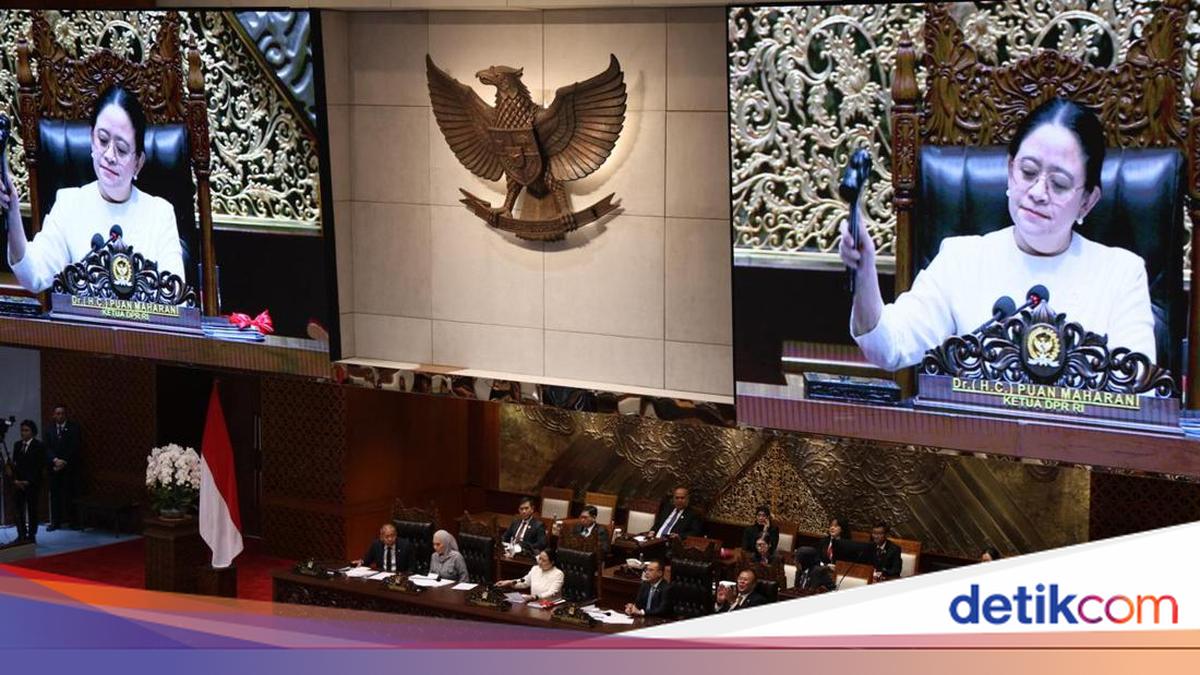
The House of Representatives of the Republic of Indonesia (DPR RI) has officially approved the Draft Law on One Data Indonesia (RUU SDI) to become Law during the 9th Plenary Session of the DPR RI, held at the Parliament Complex, Senayan, Jakarta, on Tuesday (6/10).
The Minister of Administrative Reform and Bureaucratic Reform (PANRB), Rini Widyantini, stated that the approval of the One Data Indonesia Law is a crucial step in strengthening the basis for national development planning, preventing data manipulation, and guaranteeing national data sovereignty in the digital era. This approval serves as a vital momentum to ensure that data becomes the foundation for development and governance.
“Data is the primary foundation for cross-agency interoperability, making development more directed and sustainable,” she said in a written statement on Wednesday (7/10/2026).
During the discussion of the Bill, the Ministry of PANRB focused on various substances related to governance, digital transformation, and public services. Furthermore, the One Data Indonesia Law positions digital government as part of a broader digital transformation, encompassing the digital economy and digital society.
With the implementation of unified data, accurate data management is expected to integrate various marginalised groups and ensure that social assistance programmes and development reach all corners of the archipelago fairly.
“We also ensure that the utilisation and interoperability of cross-sector data must be based on the principles of fairness and inclusivity to support the improvement of public service quality for all citizens,” she added.
Representing the government in the President’s Final Opinion, the Minister of National Development Planning/Head of the National Development Planning Agency, Rachmat Pambudy, added that the approval of the One Data Indonesia Law is more than just a legislative process.
“This is a historical moment, similar to the days we commemorate the Youth Pledge that united the nation in our development. After being united by one homeland, one nation, and one language, we are now entering a new chapter. We now have One Data Indonesia,” said Pambudy.
According to him, data is not merely statistical tables or something stored on government servers. Data is a mirror of the Republic of Indonesia’s honesty in prospering its people.
“Data tells us who has enjoyed the fruits of development, but also who is still left behind. Therefore, high-quality data does not only make the state work more efficiently; data must ensure the state is present, data must make the state more sensitive, and data must make the state more honest and conscientious,” he stated.
Meanwhile, the Deputy Chairman of the DPR Legislative Body, Sturman Panjaitan, said that data accuracy is essential for creating justice. Accurate and integrated data management can also support transparent and accountable public service policies.
“When data is incorrect, it is not just the numbers that are wrong, but justice is wounded. Misdirected aid, overlapping programmes, and ineffective budgets often stem from a single source: poorly managed data,” he said.
The One Data Indonesia Law was previously approved as an initiative from the DPR. During discussions with the government, a total of 1,338 items in the list of problems (DIM) for the main body and 829 items for the explanation were addressed. Through these discussions, the Law was agreed to consist of 20 chapters and 141 articles.
Sturman added that the Law regulates the National Basic Data (DDN). According to him, the DDN will be fully managed by the state as a reference for development planning. Additionally, the Law regulates the governance of One Data Indonesia through a master plan, architecture, management, and lifecycle. The Law also regulates data security and protection through established data security standards.