
Indonesia's offer to mediate US-Iran conflict seen as 'bold' but 'unrealistic'
analysis Asia
Indonesia’s offer to mediate US-Iran conflict seen as ‘bold’ but ‘unrealistic’
President Prabowo Subianto has said he is prepared to travel to Tehran if Indonesia is appointed to mediate the US-Iran conflict.
JAKARTA: Indonesia’s offer to mediate in the conflict between the United States and Iran has been described as a bold move by analysts even if some believe that the plan is unlikely to materialise given that the proposal is “unrealistic” and “gimmicky”.
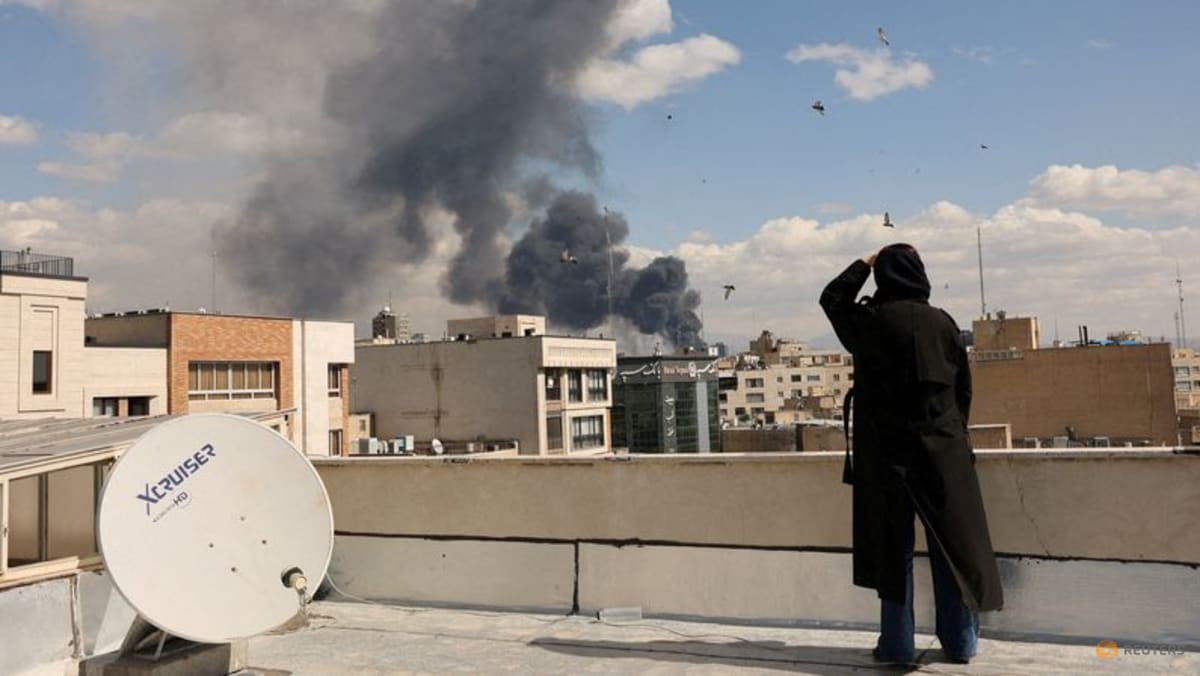
The war in Iran - which saw Supreme Leader Ayatollah Ali Khamenei killed in an attack in Tehran - has plunged the Islamic republic into uncertainty and threatens regional and global stability.
On Saturday (Feb 28), before news broke of Khamenei’s death, Indonesia’s Foreign Ministry said that President Prabowo Subianto stood ready to “facilitate dialogue to help restore a stable security environment”.
“If both sides agree, the president is prepared to travel to Tehran to carry out mediation efforts,” the ministry said in a post on X.
Akbar Kurnia Putra, an international law expert at the University of Jambi, called Prabowo’s offer at mediation “a fairly bold diplomatic move”, noting that Indonesia’s past responses to global conflicts had largely centred on expressing concern over rising tensions.
Akbar believes that the proposal is a tangible attempt by Indonesia to bridge major powers locked in conflict.
“If this offer is accepted, it could be a defining moment that cements Indonesia’s role as a constructive global player, and demonstrates that its ‘free and active’ foreign policy is not just rhetoric, but real action - even in one of the world’s most volatile flashpoints,” he told CNA.
But a former diplomat and several other analysts have cast doubt over Indonesia’s plan, and whether the offer would receive a positive response from either Washington or Tehran. Some have even questioned Indonesia’s standing to make such a proposal, dismissing it as a move to pander to its domestic population.
“I’m puzzled as to why this idea wasn’t vetted before being made public, because it is highly unrealistic,” said Dino Patti Djalal, Indonesia’s former deputy foreign minister and former ambassador to the United States, in a statement posted on Instagram on Sunday.
UNREALISTIC, JUST A GIMMICK?
Akbar said that Southeast Asia’s largest economy has a “track record” of offering to mediate global conflicts.
He highlighted that during a trip to Moscow in 2022, then-president Joko Widodo proposed taking on a mediator role in the Russia–Ukraine war, conveying the offer to President Vladimir Putin. The move ultimately did not lead to any official mediation mandate.
“Prabowo’s current offer, in my view, is a continuation of Indonesia’s long-standing diplomatic tradition,” Akbar said.
But Dino argued that the US rarely agrees to third-party mediation in its conflicts, which in his view makes the proposal unrealistic.
“The US’ ego as a superpower is too great to accept that,” Dino said.
The US strike on Iran took place amid negotiations between the two countries over Tehran’s nuclear programme, with Oman acting as mediator. On Sunday, the Iranian government announced that Khamenei had been killed in his office, along with his daughter, granddaughter and several senior Iranian officials.
The episode underscored that even with Omani-facilitated talks underway, the US strike could not have been prevented.
“I also believe President Trump would not want Indonesia to get involved at this point, as he appears determined to bring down the Iranian government,” Dino said.
Another reason Prabowo’s mediation offer may be brushed aside, Dino added, is the lack of close ties between Jakarta and Tehran.
Since taking office in October 2024, Prabowo has made more than 40 state visits to 20 countries. But Dino noted that Iran did not feature in any of these overseas visits.
“In other words, there is no established closeness or trust from the current Iranian government towards Indonesia’s government,” he said.
A similar view was expressed by Made Supriatma, a visiting fellow at the ISEAS–Yusof Ishak Institute in Singapore who said Indonesia lacks the “political standing, moral authority and vested interest” to mediate in the US–Iran conflict.
Made argued that the current circumstances are a far cry from the late 1980s, when Indonesia facilitated mediation efforts in Cambodia amid the final years of Vietnam’s occupation following the collapse of the Khmer Rouge regime.
At the time, then-foreign minister Ali Alatas initiated the Jakarta Informal Meetings, bringing the warring parties to the table. The process helped pave the way for the 1991 Paris Peace Agreements, which ended the Cambodian conflict and set the stage for UN-supervised elections.
“Back then, Indonesia had clear positioning because it was the largest country in the region (Southeast Asia) and had direct stakes - instability in Cambodia would have affected Indonesia’s economy and security,” Made told CNA.
“So what is Indonesia’s position in the Iran conflict?” he asked.
For that reason, Made sees Indonesia’s mediation offer as little more than a “gimmick” aimed at a domestic audience.
“It’s just a political gimmick for domestic consumption, aimed at portraying Prabowo as successful (in diplomacy),” he said.
CNA has contacted the Indonesian Foreign Ministry to confirm whether a formal letter offering to mediate the conflict has been submitted, but has yet to receive a response.
There has also been no official comment from either Tehran or Washington on Indonesia’s proposal. However, the Embassy of the Islamic Republic of Iran in Jakarta said in a statement on Sunday that it appreciated Indonesia’s consistent support and “welcomed the readiness of the president of the Republic of Indonesia to undertake mediation in this conflict”.
Teuku Rezasyah, a lecturer in international relations at Padjadjaran University and President University, said the Tehran government “may not want a particular figure perceive