
Indonesia's Nuclear Development: A Long-Standing Ambition Dating Back to Sukarno's Era
Indonesia is currently planning to build a nuclear power plant (PLTN) with operations targeted for 2032.
The Head of the National Research and Innovation Agency (BRIN), Arif Satria, has stated that the PLTN may be operational even earlier than the scheduled 2032.
“The PLTN is scheduled to be operational in 2032, but it may be accelerated,” said Arif during a presentation in Jakarta on Friday, January 9th.
BRIN is also focusing on the development of technology for structures, systems, and components (SSK), as well as the safety of nuclear reactors.
BRIN explained that the construction of the PLTN in Indonesia has been designed in stages within the National Energy Plan (RUEN) document.
The RUEN stipulates that the contribution of nuclear energy to the national energy mix could reach 4-5 percent by 2050.
The National Long-Term Development Plan (RPJPN) 2025-2045 states that Indonesia is projected to build and operate its first commercial PLTN with a capacity of 250 megawatts in the second phase or commissioning phase between 2030-2034, specifically in 2032.
“In the first phase or preparation phase between 2025-2029, the preparation of regulations and institutions for the PLTN will be carried out. Thus, in the fourth phase - 2040-2045, Indonesia is expected to be able to expand the operation of commercial PLTNs and achieve technological independence in PLTNs,” according to a statement from BRIN.
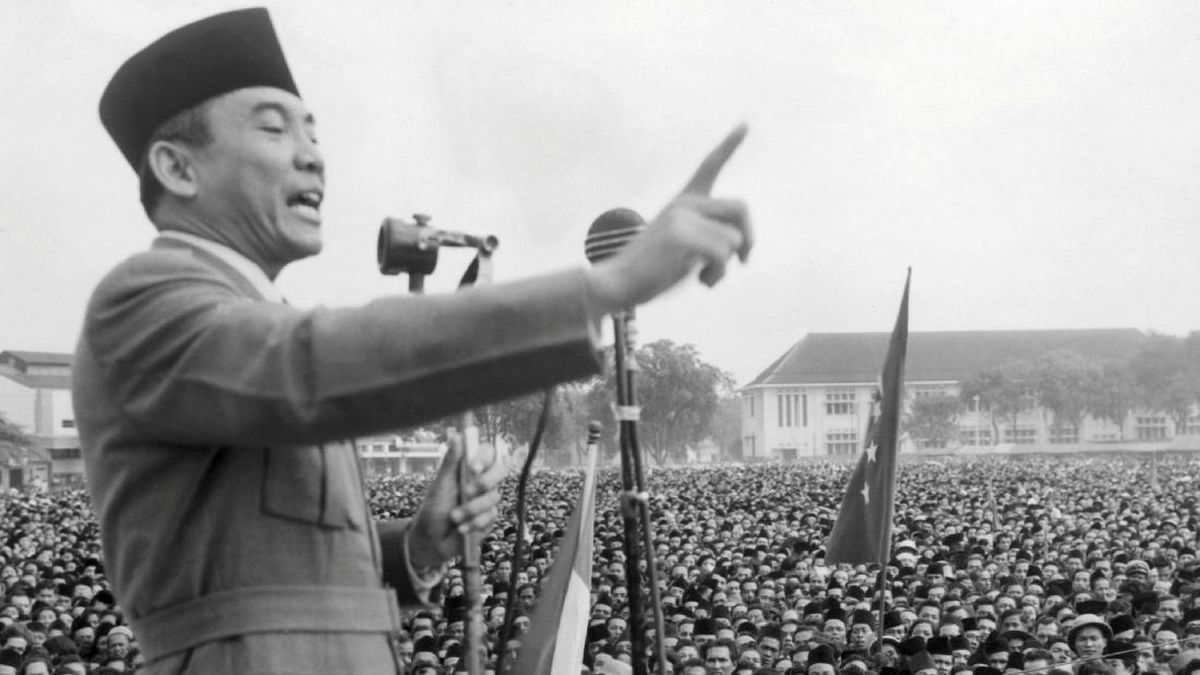
Indonesia has a long history with nuclear facilities. It all began during the leadership of the first President of Indonesia, Ir. Sukarno.
The Sukarno Era
Teuku Reza Fadeli, in his book Nuklir Sukarno Kajian Awal atas Politik Tenaga Atom Indonesia 1958-1967, notes that Indonesia was one of 18 countries on the preparatory committee that prepared for the establishment of the International Atomic Energy Agency (IAEA).
The IAEA is an international agency initiated by the United States and under the umbrella of the United Nations. The IAEA is intended as a means of controlling the proliferation of nuclear weapons and directing the use of atomic energy for peaceful purposes.
The IAEA was officially established on July 29, 1957. A year later, Sukarno established the Atomic Energy Agency (LTA) to conduct nuclear research and develop nuclear technology potential in Indonesia.
In its early stages, the LTA had the underlying principle that Indonesia was not interested in nuclear weapons or anything related to nuclear weapons as a military device.
This led to Indonesia being promised various forms of foreign assistance. At that time, the US promised assistance of US$350,000 for the research program under the bilateral Atom for Peace Program. This funding was used to finance the atomic reactor project in Bandung.
In the LTA’s initial five-year plan, one of the initial projects was the construction of a nuclear reactor for research, training, and isotope production.
The first nuclear reactor in Bandung was named TRIGA-Mark II and was led by Ir. Djali Ahimsa. The project was handed over to ITB with supervision from the LTA. The TRIGA-Mark II reactor has a capacity of 250 KW.
However, Indonesia did not only receive assistance from the US, but also received assistance from the Soviet Union. At that time, an IRT-1.000 type reactor was built near Jakarta.
Another project carried out with the assistance of the Soviet Union was the Subcritical Assembly project in Yogyakarta.
The Cold War atmosphere and the spirit of opposing neo-colonialism and neo-imperialism somewhat shifted Sukarno’s view of nuclear weapons.
In 1965, the LTA was reorganized into the National Atomic Energy Agency (BATAN), which was accompanied by Sukarno’s statement that Indonesia would have nuclear weapons in the form of an atomic bomb.
BATAN was formed based on Law No. 31 of 1964 concerning the Basic Provisions of Atomic Energy. BATAN was then headed by Dr. GA Siwabessy, who later became known as the ‘Father of Indonesian Atomic Energy’.
At its peak, in July 1965, during the Muhammadiyah conference in Bandung, Sukarno expressed Indonesia’s desire to have nuclear weapons in the form of an atomic bomb.
“God willing, in the near future we will make our own atomic bomb! Well, let’s say, atomic bomb, atomic bombs. Are we going to be made aggressors? No, no! not for aggression, but to maintain our sovereignty, to protect our homeland,” Sukarno said in his speech.
Stalled in the Soeharto Era
When Sukarno stepped down as President of Indonesia, the leadership changed to Soeharto, and with it, Indonesia’s nuclear policy also shifted.
Under Soeharto, the development of nuclear energy in Indonesia underwent changes.
The political orientation regarding the development of nuclear energy under Soeharto emphasized the development of nuclear energy based on the goal of peace under strict international supervision.
In 1967, Soeharto signed a security agreement with the IAEA. This agreement showed Indonesia’s commitment to using nuclear technology for peaceful activities.
During the Soeharto era, a number of additional facilities for research and development programs were also built.
In 1979, Indonesia built a second research reactor in Yogyakarta. This reactor was called a domestically made reactor because the design and construction process was carried out by Indonesian scientists and engineers with the assistance of supervision from General Atomic (GA).
Then, in 1987, the third research reactor (GA Swabesy) was established with a relatively high power for a research reactor.
Although the construction of research reactors during the Soeharto era had been carried out, in its development, the construction of PLTNs was ultimately not realized.
BATAN, as the party involved in the PLTN development plan, had made various efforts and proposals to the government. However, the proposals they submitted were always rejected by Soeharto.
Renewed Interest in the Reformasi Era
Entering the reformasi era, Indonesia still paid considerable attention to the use of nuclear technology.
Under the leadership of BJ. Habibie as President of Indonesia, he sent dozens of Indonesian sons and daughters abroad for further studies in the field of nuclear energy.
In addition, he also…