
Indonesia's New B50 Fuel Tested on Train Locomotives: Here Are the Results
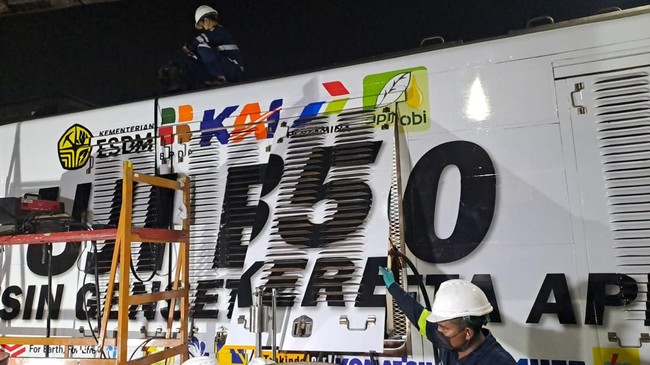
The government has set the mandatory implementation of B50 biodiesel, to be enforced simultaneously across all sectors in Indonesia from 1 July 2026. This policy forms part of strengthening national energy sovereignty while promoting more sustainable energy use.
As part of the national transportation system, PT Kereta Api Indonesia (Persero) is preparing measures to ensure readiness of facilities and operations, particularly for diesel-based locomotives, while maintaining service quality and journey safety.
KAI Vice President of Corporate Communication, Anne Purba, stated that the B50 implementation continues the utilisation of biodiesel from previous stages that have consistently operated in the railway sector.
“KAI continues to utilise more environmentally friendly energy through biodiesel. In every stage, journey safety and service quality to customers remain the top priority,” said Anne.
In 2025, the use of B40 biodiesel on Long-Distance Train services recorded total carbon emissions of 127,315,192 kg CO₂e, or around 127.3 thousand tonnes, from 47.4 million passengers. Entering 2026, this sustainability trend continues. Up to the first quarter of 2026, the volume of Long-Distance Train passengers was recorded at 14,515,350 passengers, with estimated emissions of around 38.9 thousand tonnes CO₂e, which remains controlled alongside the consistent use of biodiesel-based fuel.
On the same mobility scale, the use of private vehicles could potentially produce much higher emissions. The average emission per private vehicle journey can reach around 36-45 kg CO₂ per passenger for medium distances, while trains are around 2.7 kg CO₂ per passenger. This shows that using trains can reduce emissions by around 90% per journey.
With that passenger volume, train usage is estimated to have contributed to a potential emission reduction of around 480 to 610 thousand tonnes CO₂e compared to if the journeys were made using private vehicles.
To support the B50 implementation, KAI is collaborating with the government through the Ministry of Energy and Mineral Resources and LEMIGAS in a series of gradual testing.
Testing began with the fuel mixing process in mid-April 2026, followed by facility condition checks, up to fuel usage testing on locomotives at the Sidotopo Depot.
At the same time, testing was also conducted on power cars at the Yogyakarta Train Depot. The testing series started with initial inspections, continued with B40 usage as a comparison, then B50 usage to observe facility performance, up to endurance testing under high load conditions.
The next stage involves longer-term testing to ensure facility performance remains maintained in daily operations. To date, all testing results are still in the evaluation stage and continue to be monitored to ensure long-term suitability.
“KAI ensures this accelerated implementation process runs in line with field readiness. Through collaboration with the government and gradual testing, we are committed to delivering safe, reliable, and sustainable transportation services,” Anne concluded.
Source: jawawa.id (https://jawawa.id/newsitem/indonesias-new-b50-fuel-tested-on-train-locomotives-here-are-the-results-1777207883)
Originally published by CNBC Indonesia (https://www.cnbcindonesia.com/news/20260426133002-4-729935/bbm-baru-ri-b50-diuji-coba-di-lokomotif-kereta-begini-hasilnya), translated from Indonesian