
Indonesia’s Natural Resources Could Fuel New Industries and Biofuel Production
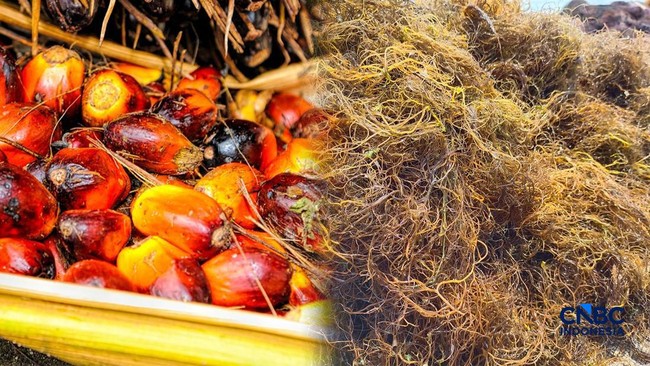
Indonesia has a range of leading commodities that could become sources of growth for new industries. Palm oil, coconut, seaweed and sago are among the natural resources that could be processed further into higher-value products, including alternative fuels.
Industry Minister Sarmuji said Indonesia needed to make the most of natural-resource advantages that are scarce or unavailable in other countries. One way to do so is by strengthening downstream industries and developing a wider range of products derived from the country’s key commodities.
“We have distinctive advantages, such as palm oil. We must maximise the palm-oil derivatives industry. We need to adopt the principles of a circular economy and, if possible, achieve zero waste. There should be no waste at all,” Sarmuji said at the Krista Food Expo 2026 in PIK 2 on Wednesday (4 November 2026).
The coconut-based industry also has significant potential, given Indonesia’s abundant supply. The government wants to encourage processing so that the commodity is not sold solely in raw form, but is also turned into higher-value products.
Sarmuji also highlighted Indonesia’s seaweed potential. Its long coastline and numerous islands provide the natural-resource base to expand seaweed cultivation on a larger scale.
“Our coastline is very long across Indonesia. We have many islands where seaweed can be cultivated,” he said.
Seaweed’s potential is not limited to the food and drink industries. One type can be cultivated in inland waters and may be developed as a biofuel feedstock.
“There is even one type of seaweed that can be grown not only on the coast, but also in inland waters. It can be produced not only as a source of food; research has advanced to the point where it could be used to produce biofuel,” Sarmuji said.
This potential could create opportunities for new industries based on marine resources. However, further research, processing technology and investment will be needed to develop seaweed into commercially viable, higher-value products.
Alongside palm oil, coconut and seaweed, the government also wants to develop sago-based industries. Sago is widely available in eastern Indonesia, particularly Maluku and Papua. Developing these commodities is expected to broaden the country’s resource-based industrial base.
Sarmuji stressed that industrialisation must go beyond selling raw commodities. The government wants to deepen downstream processing and strengthen research so that Indonesia can turn its natural-resource advantages into competitive industrial strengths.
“The strategy must not be limited to selling commodities. We need to deepen downstream processing and strengthen research and innovation so that we can turn our natural-resource comparative advantages into competitive advantages and make them a source of sustainable economic growth,” he said.
Source: jawawa.id (https://jawawa.id/newsitem/indonesias-natural-resources-could-fuel-new-industries-and-biofuel-production-1793778670)
Originally published by CNBC Indonesia (https://www.cnbcindonesia.com/news/20261104131122-4-782244/harta-karun-ri-bertebaran-di-pantai-sampai-darat-bisa-buat-bbm-baru), translated from Indonesian