
Indonesia's move amid the Gaza flotilla issue
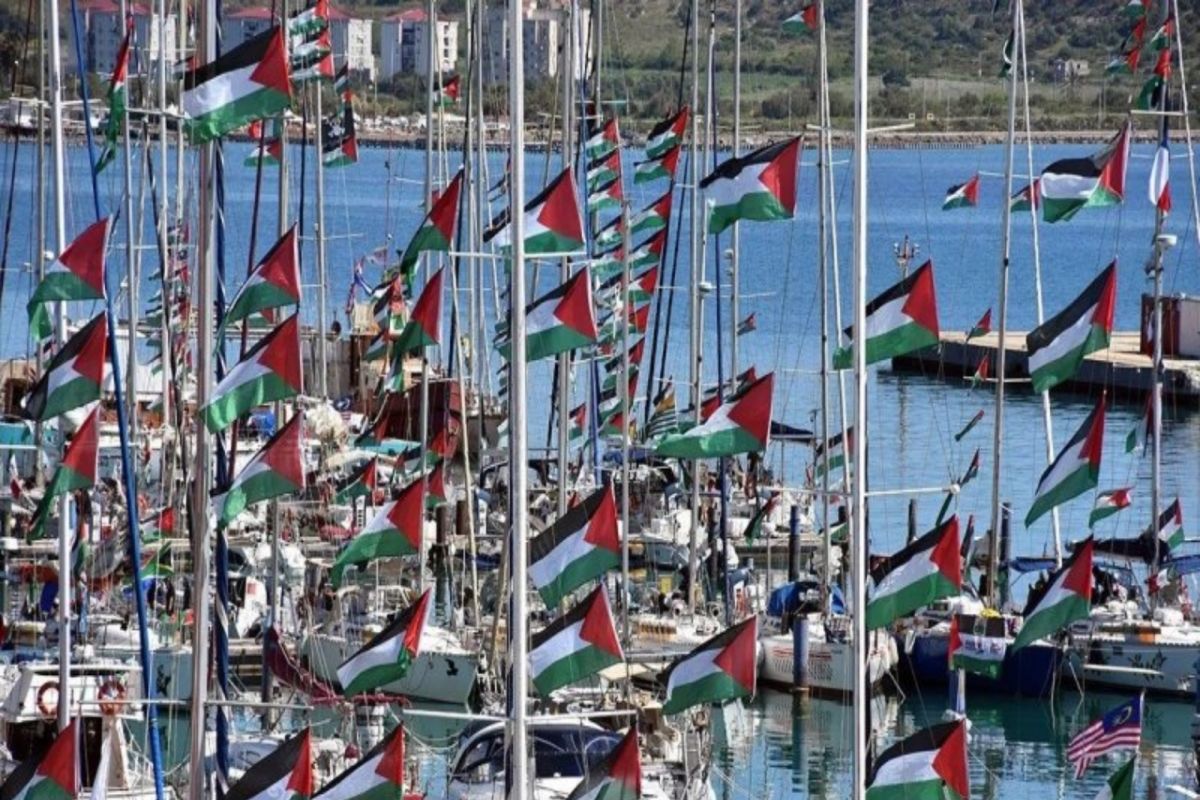
Indonesia has long been known for placing the Palestinian issue within the framework of its foreign policy. Jakarta – Ten countries (Indonesia, Turkey, Bangladesh, Brazil, Colombia, Jordan, Libya, the Maldives, Pakistan, and Spain) strongly condemned Israel’s attack on the Global Sumud Flotilla, the fleet of civilian humanitarian ships for the Palestinian people. According to a press release from the Indonesian Ministry of Foreign Affairs, on Tuesday (19 May), the joint statement was issued by the ten foreign ministers of those countries. Naturally, the joint statement signals that the issue is no longer merely a moral matter, but has entered the realm of international law and diplomacy. Indonesia has long been known as a country that places the Palestinian issue within its foreign policy framework. On the one hand, there is historical consistency that support for Palestine is part of Indonesia’s long-standing foreign policy narrative since the early days of independence. On the other hand, there is the reality of the international system that does not always provide space for moral consistency to operate effectively. Humanitarian activism, such as that involving the Global Sumud Flotilla in conflict zones like Gaza, has always inhabited a grey area. After all, even though it is not a state actor, it is not entirely free from the consequences of international politics. The Global Sumud Flotilla symbolically recalls the old pattern, namely that when land and air routes are limited, the sea becomes an alternative space to carry messages, aid, and international attention. However, in international relations terms, every move in the sensitive maritime space is almost always read through a security lens. Therefore, there is no truly neutral space. Thus, a classic dilemma arises: can humanitarian missions truly be separated from politics, or have they from the outset been part of politics themselves? Regarding Israel’s attack on the Global Sumud Flotilla, Indonesia, along with nine other countries in the joint statement, chose language that is careful yet firm: violations of international law, protection of civilians, and freedom of navigation. Such language is important in diplomacy. It sits in a space deliberately designed to be acceptable to many parties. Yet behind the diplomatic language, a harder question emerges: to what extent can such statements alter the behaviour of actors on the ground? In international relations theory, particularly realism, material power often matters more than normative condemnation. In liberal approaches, institutions and international law are expected to act as balancing mechanisms. Cases like the Global Sumud Flotilla illustrate the tensions between these two approaches. Law exists, institutions exist, but implementation is often hamstrung by political and security interests. A distinctive stance.