
Indonesia's Milk Imports Rose from 'Just' 40% to Over 80%
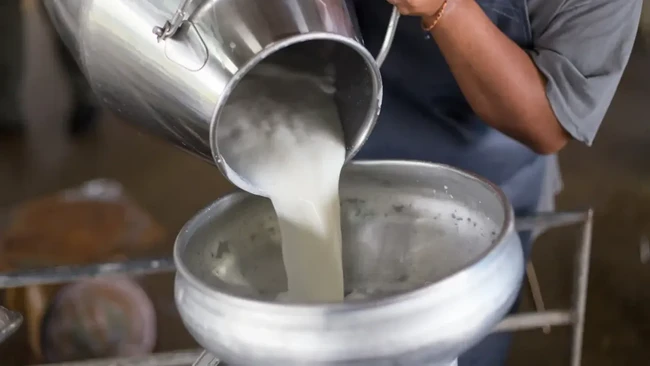
The National Food Agency (Bapanas) is promoting the strengthening of the dairy cattle ecosystem from upstream to downstream as a strategy to accelerate national milk self-sufficiency. This initiative also forms a crucial part of supporting the Free Nutritious Meals (MBG) programme.
During a working visit by Commission IV of the House of Representatives (DPR RI) to Salatiga, Central Java, Indra Wijayanto, Director of Food Availability at Bapanas, emphasised the importance of building an integrated ecosystem to boost production while improving the welfare of breeders.
“Of course, we support the President’s efforts in prioritising food self-sufficiency as one of the key programmes, so this must be driven together, and we are ready to assist in building this ecosystem from upstream to downstream,” Indra stated in his remarks, quoted on Friday (10/4/2026).
According to him, strengthening the dairy sector cannot be done partially but must be comprehensive, from production to distribution.
“This presents both an opportunity and a challenge for us. We have proven capable of achieving rice self-sufficiency, and we are optimistic about increasing domestic milk production towards milk self-sufficiency,” he said.
Based on 2025 data, the national dairy cattle population reached 499,360 head, with fresh milk production at 820,874.82 tonnes. Production remains concentrated on Java Island, particularly East Java as the largest contributor.
On the downstream side, strengthening the processing industry and distribution is deemed crucial to increase added value while ensuring access and affordability for the public. Throughout 2024, the price of fresh milk rose moderately from Rp16,389 to Rp16,619 per litre.
Deputy Chairman of Commission IV of the DPR RI, Panggah Susanto, assessed that strengthening this ecosystem is urgent amid the high national milk demand that is not fully met by domestic production.
“This theme is relevant amid the increasing national milk consumption needs that are not fully fulfilled by domestic production. Therefore, we want to ensure there are strategic and integrated steps, not only focused on increasing production at the breeder level but also encompassing the strengthening of the entire supply chain sustainably,” Panggah stated.
He emphasised that the dairy sector plays an important role in meeting public nutrition.
“Milk, as one of the quality animal protein sources, has a significant contribution to nutrition fulfilment, especially for children, thus becoming a key component in the success of national programmes like Free Nutritious Meals,” he said.
Meanwhile, Agriculture Minister Amran Sulaiman, during a working meeting with Commission VI of the DPR RI, highlighted the high import dependency on several food commodities, including milk.
“We are fighting for lartas (bans and/or restrictions) because this is not just happening with sugar. It is happening with milk, and then with soybeans as well,” Amran said during the meeting at the parliamentary complex in Jakarta on Wednesday (8/4/2026).
According to him, this situation is inseparable from past policies that impacted the national agricultural sector.
“For milk, our view is that this is (because) we accepted the IMF (International Monetary Fund) suggestions raw, and the agriculture became a mess. In the end, we are solving it one by one,” he stated.
Amran also revealed the surge in milk import dependency over the past few decades. “Now, in the past (Indonesia) imported (milk) only 40% (now it has become) 81%,” he noted.
The data he presented shows a significant gap between domestic milk production and national needs. In the graph of milk production, imports, and needs from 1996-2023, domestic production tends to be stagnant, while needs continue to rise sharply. As a result, the import share has surged significantly to around 81% in recent years.
This condition underscores the major challenges towards milk self-sufficiency, while reinforcing the urgency of reforming the ecosystem from upstream to downstream to gradually reduce import dependency.