
Indonesia's Middle Class Under Pressure: Could Sharia Economics Be the Saviour?
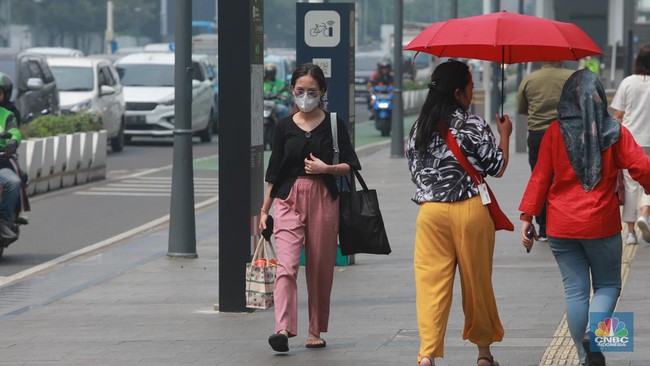
Indonesia is facing an intriguing yet worrying economic paradox. On one hand, national economic growth remains around 5 per cent, and the government continues to promote strategic national projects, downstream industrialisation, and optimism towards the Golden Indonesia 2045 vision. On the other hand, the group that has long been the backbone of domestic consumption—the middle class—is under increasingly heavy pressure.
They are neither the poor who receive social assistance, nor the wealthy who possess large asset and investment cushions. The middle class sits in between, serving as the consumption engine and the largest taxpayers, yet they are the most vulnerable to economic decline during shocks.
In recent years, various indicators show that Indonesia’s middle class is facing serious strain. Stagnant real incomes, rising living costs, expensive education and healthcare, job uncertainty due to digitalisation, and increasing household debt burdens are combining to erode this group’s resilience.
The question then arises: can the sharia economy be part of the solution? Can this system, founded on principles of justice, sustainability, and equitable distribution, become a saviour for Indonesia’s pressured middle class?
When discussing the middle class, we are essentially talking about the foundation of Indonesia’s economy. Data from the Central Statistics Agency (BPS) shows that in 2024, the middle class and aspiring middle class accounted for 66.35 per cent of the total population. More importantly, this group contributed around 81.49 per cent of total national household consumption. This means that the wheels of Indonesia’s economy are largely driven by their spending. Therefore, when the middle class is under pressure, the impact is felt not only by individual households but by the economy as a whole.
The problem is that the current trend shows a shrinking middle class. The latest data indicates the number of middle-class Indonesians fell from 47.9 million in 2024 to around 46.7 million in 2025. Conversely, the ‘aspiring middle class’ group has increased to around 142 million. At a glance, these figures may not seem alarming. However, upon closer examination, this phenomenon shows that some people previously in the middle-class category have experienced a decline in economic power and shifted to a more vulnerable group. A Reuters report even noted that the proportion of Indonesia’s middle class fell from around 21.5 per cent of the population in 2019 to approximately 17.1 per cent in 2024. This trend poses a serious threat because household consumption has long been the largest contributor to Indonesia’s Gross Domestic Product (GDP). If consumption weakens, economic growth will lose its driving force.
Several key factors explain this condition. First, the growth of quality employment is slower than the demand for labour. Indonesia has successfully created millions of jobs, but the majority of new jobs are in the informal sector or have low productivity. Many university graduates end up working in sectors mismatched with their competencies. As a result, higher education levels are not always followed by higher incomes. This phenomenon creates what is often called an ‘educated middle-class trap’, where a person holds a degree but their income is insufficient to maintain a middle-class lifestyle.
Second, living costs are rising faster than income growth. Housing prices continue to climb, education costs are increasingly expensive, and health spending is rising. Meanwhile, salary increases often fail to keep pace with these living costs. This situation narrows the fiscal space for middle-class households. Where they once had room to save and invest, now most of their income is spent on meeting routine needs.
Third, the phenomenon of ‘downtrading’. Various surveys show that the middle class is changing its consumption behaviour. They still visit shopping centres but are more selective in choosing goods. They seek cheaper alternatives, buy in smaller quantities, and are more price-sensitive. This phenomenon is a classic signal of weakening purchasing power.
Fourth, increasing financial vulnerability. Many middle-class households live from pay cheque to pay cheque. When faced with layoffs, illness, or other urgent needs, they lack adequate financial reserves. As a result, some turn to consumer loans, including online loans, which actually worsen their financial condition.
The pressure on the middle class also points to deeper structural issues. Over the past two decades, Indonesia’s economy has grown fairly steadily. However, this growth has not fully resulted in an economic transformation capable of creating a large number of high-quality formal jobs. Many economists argue that premature deindustrialisation is a primary cause. The manufacturing sector’s contribution to GDP continues to decline, while growth is increasingly driven by commodities and low-productivity services. Historically, a strong middle class has always emerged from industrialisation that creates formal employment with decent wages. Without the creation of productive jobs on a massive scale, the middle class will continue to be squeezed.