
Indonesia’s Middle Class Shrinks by 10 Million: What Is Behind the Decline?
Jakarta, CNBC Indonesia — Indonesia’s middle-class population has fallen by nearly 10 million over the past five years.
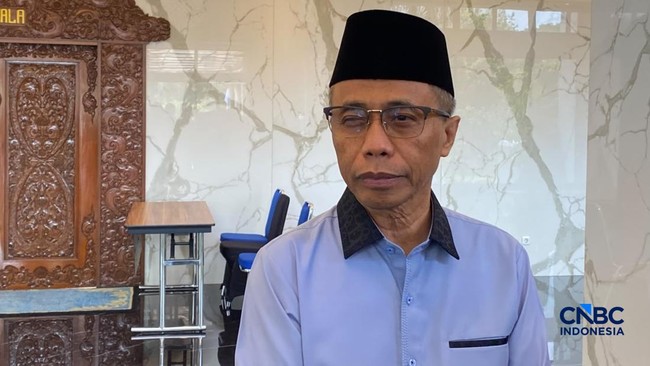
Deputy Coordinating Minister for Economic Affairs Dradjad H. Wibowo said changes in employment structures and shifts in economic activity were among the factors that needed to be examined in explaining the decline.
According to data cited by Dradjad, Indonesia had more than 57 million middle-class residents in 2019, or about 21.5% of the total population. By 2024, the figure had fallen to 47.85 million, or around 17%.
Dradjad said the shrinking middle class should not be interpreted solely as a decline in people’s purchasing power. Consumption patterns and sources of income are also changing alongside the transformation of the economy.
Technology disruption, the development of artificial intelligence (AI) and shifts in geopolitical conditions are changing the structure of employment, he said. Some traditional sectors are under pressure, while employment in services is expanding.
“There is an economic transformation taking place. There is technological disruption, AI and geopolitics,” Dradjad said in an interview with CNBC Indonesia on Wednesday (5 November 2026).
These changes mean some workers have to adapt to different kinds of jobs and income patterns. The textile and footwear sectors, for example, are facing pressure, while services such as telecommunications, transport, hotels and restaurants are growing more strongly.
Dradjad also highlighted the possibility that some sources of people’s income are not fully reflected in statistical measurements. The shift towards informal work and new forms of economic activity presents a further challenge in assessing the middle class’s circumstances.
Meanwhile, he said, consumption patterns were also shifting. Spending on food and drink, footwear and textiles continued to grow by around 3%–4%. Consumption in telecommunications, transport, hotels and restaurants, by contrast, rose by about 6%–7%.
Changes in spending behaviour therefore do not necessarily mean that people have stopped consuming. They tend to buy smaller quantities and make greater use of online shopping channels.
“So it does not mean that purchasing power has disappeared; there has been a shift,” Dradjad said of changes in consumption patterns.
The middle class’s major role
Dradjad said the government should pay close attention to the middle class because the group makes a significant contribution to household consumption and the national economy.
He said around two-thirds of Indonesia’s population belongs to the middle class or the aspiring middle class. Together, these groups account for more than 80% of household consumption.
Changes in their numbers or economic circumstances could therefore affect domestic consumption, which has long been one of the main drivers of Indonesia’s economic growth.
Dradjad said the government needed policies not only to protect purchasing power, but also to ensure people had access to jobs and skills suited to the needs of the changing economy.
Measures being prepared include an internship programme for 150,000 participants and vocational training for 300,000 people in 2027. The government is also providing government-borne Article 21 income tax (PPh 21) relief for workers earning less than Rp10 million.
The PPh 21 relief currently covers around 7.5 million workers and is planned to be extended to all sectors in 2027.
The government is also offering a 50% reduction in contributions to work accident insurance (JKK) and death insurance (JKM). Other incentives include government-borne VAT on home purchases priced up to Rp2 billion, and a 6% mortgage interest subsidy for first homes priced up to Rp500 million.
Dradjad said improving skills and creating new jobs were important to help people keep pace with changes in the economic structure. The tourism and creative economy sectors are also expected to provide new sources of employment.
“We need to understand how this transformation is taking place, and how our workforce can adapt,” he said.
Source: jawawa.id (https://jawawa.id/newsitem/indonesias-middle-class-shrinks-by-10-million-what-is-behind-the-decline-1793843478)
Originally published by CNBC Indonesia (https://www.cnbcindonesia.com/news/20261105063327-4-782445/kelas-menengah-ri-susut-10-juta-ini-biang-keroknya), translated from Indonesian