
Indonesia's Manufacturing Sector Expands in Q1 2026 Despite Pressures - Babel Insight
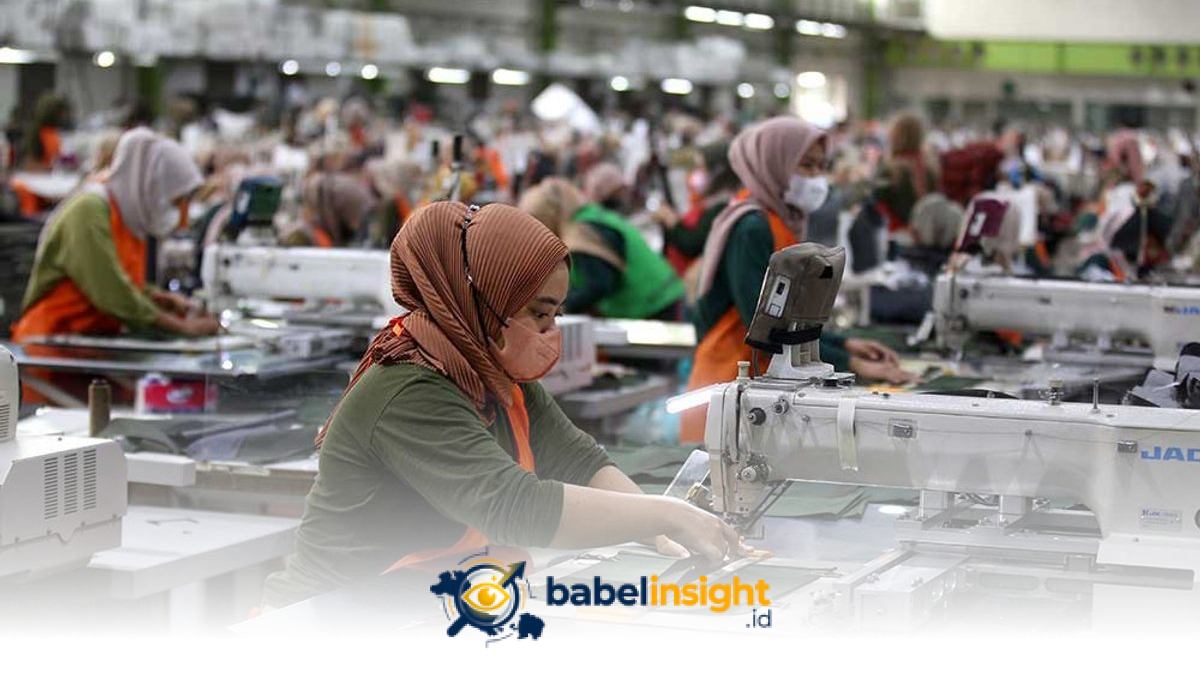
Indonesia’s manufacturing sector successfully maintained its expansion trend throughout the first quarter of 2026, before being overshadowed by rising production costs and supply chain obstacles at the start of the second quarter. This situation is evident from data released by the Central Statistics Agency (BPS) on Tuesday (5/6/2026). The Central Statistics Agency reported that the Indonesia Manufacturing Business Condition and Prospects Index (IKBM) for Q1/2026 stood at 51.37, indicating growth as it exceeded the 50 threshold. The data, as cited from Ekonomi, reflects the industry’s resilience amid economic dynamics. Based on the IKBM components, orders recorded 52.69, followed by production at 51.78, raw material inventories at 51.54, and workforce at 50.57. However, the supplier delivery time component was a weak point, experiencing contraction at 49.01. Core Indonesia economist Yusuf Rendy Manilet explained that the manufacturing performance in the early part of the year was strongly supported by household consumption levels. Seasonal momentum factors such as Ramadan and Eid also served as primary drivers of factory activity. “This directional change was immediately captured by the Purchasing Managers’ Index [PMI]. Interestingly, early signs had already appeared in Q1,” he stated in response to the Indonesia Manufacturing Business Condition and Prospects Index (IKBM) data released by the Central Statistics Agency (BPS) on Tuesday (5/6/2026). Yusuf compared the retrospective IKBM data for Q1 with the April 2026 PMI data, which reached 49.1. This decline signals the industry’s transition into a more challenging phase in the second quarter. “If pulled back to Q1, the PMI was still in the expansion zone. January 52.6, February 53.8, and March 50.1. The average was still above 50, in line with the IKBM at 51.37,” said Yusuf Rendy Manilet, Core Indonesia economist. In his analysis, Yusuf emphasised the need for government policy interventions to control energy and logistics costs. This is crucial to protect labour-intensive sectors and maintain liquidity availability for small businesses through access to working capital credit. “For small businesses, easier access to working capital credit is also important so they are not immediately pressured on the liquidity side,” said Yusuf Rendy Manilet, Core Indonesia economist. Another emerging challenge is the influx of cheap imported goods that threaten the competitiveness of domestic products, particularly in the textile industry. Yusuf suggested the implementation of worker protection schemes so that economic fluctuations do not immediately lead to employee reductions. “At least giving time so that adjustments do not directly result in termination of employment,” said Yusuf Rendy Manilet, Core Indonesia economist.