
Indonesia's Manufacturing PMI Falls to 50.1: Analysis from the Ministry of Finance
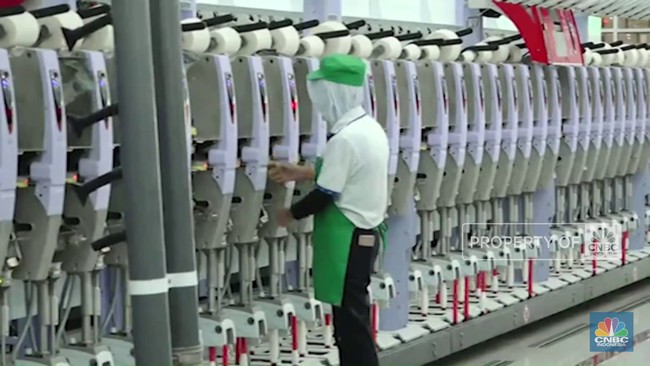
Jakarta, CNBC Indonesia - The performance of the Purchasing Managers’ Index (PMI) for Manufacturing in March was recorded at 50.1, lower than February’s 53.8.
This decline was influenced by a contraction in new orders and exports, as well as rising input costs in line with increases in energy prices and global supply chain disruptions, including delays in raw material deliveries that hampered production activities.
The Director General of Economic and Fiscal Strategy at the Ministry of Finance, Febrio Kacaribu, in his official statement, explained that fundamentally, the domestic manufacturing industry remains intact, supported by stable domestic demand and business optimism regarding future prospects.
With several challenges such as rising energy prices and international supply chain disruptions due to global geopolitical escalations, as well as holidays for National Religious Holidays, the PMI remains in the expansion zone.
“This reaffirms the fundamental resilience of the national manufacturing sector and the Government’s efforts to remain anticipatory against future risks,” Febrio stated in his official remarks quoted on Thursday (2/4/2026).
Meanwhile, from an external perspective, business sentiment remains stable, supported by expectations of global demand reflected in the manufacturing PMI of trading partner countries that are still in the expansionary zone.
Several of Indonesia’s main trading partners show expansionary manufacturing PMI levels, such as Vietnam (51.2), the Philippines (51.3), Thailand (54.1), India (53.8), and the United States (52.4), as well as improvements in the European region with the Eurozone returning to expansionary (51.4), providing a positive signal for the prospects of national manufacturing exports.
From a domestic perspective, the Retail Sales Index (IPR) for February 2026 grew by 6.9% (yoy), driven by increased demand during Ramadan and leading up to Eid al-Fitr 1447 H.
In the automotive sector, car sales grew strongly by 12.2% (yoy) and motorcycle sales continue to grow positively. Real sector activities also indicate a strong economy. For example, cement sales grew by 5.3% and electricity consumption in the business and industrial sectors remains positive.
Public optimism remains strong, reflected in the Consumer Confidence Index (IKK) for February at 125.2. This is supported by the Current Economic Condition Index (IKE) which increased to 115.9 from 115.1 in the previous month, as well as the Consumer Expectations Index (IEK) which remains at an optimistic level of 134.4.
From a price perspective, amid demand pressures during Ramadan and Eid al-Fitr, the CPI inflation for March 2026 remains controlled at 3.5% (yoy), down from February’s 4.8% (yoy), influenced by declines in inflation across all components, particularly administered prices and volatile food.
“The control of inflation during the Ramadan and Eid al-Fitr period is also supported by the Government’s efforts to maintain people’s purchasing power through various policies, such as transportation discount incentives, food assistance, as well as inflation control with market operations, price interventions, and distribution oversight,” he stated.
Source: jawawa.id (https://jawawa.id/newsitem/indonesias-manufacturing-pmi-falls-to-50-1-analysis-from-the-ministry-of-finance-1775104116)
Originally published by CNBC Indonesia (https://www.cnbcindonesia.com/news/20260402073512-4-723397/pmi-manufaktur-ri-turun-ke-501-begini-analisa-kantor-purbaya), translated from Indonesian