
Indonesia's Manufacturing PMI Drops to 46.9, Industry Ministry Prepares Recovery Measures
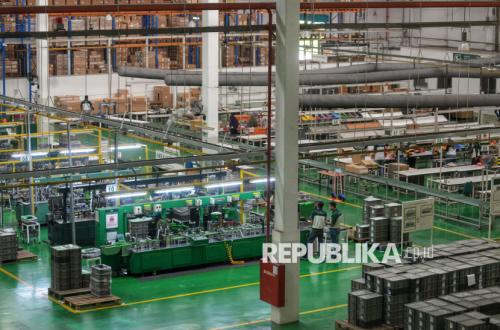
The Ministry of Industry (Kemenperin) is preparing various strategic steps to recover manufacturing performance after Indonesia’s Manufacturing Purchasing Managers’ Index (PMI) dropped to the 46.9 level in June 2026. The government believes this weakness can be overcome by strengthening industrial competitiveness and implementing policies that encourage production cost efficiency.
According to the S&P Global report, Indonesia’s Manufacturing PMI in June 2026 was recorded at 46.9, down from the 50.0 level in May 2026. The decline was influenced by weakening new demand from both domestic and export markets, which impacted production activity, raw material purchases, and labour absorption.
Ministry of Industry Spokesperson Febri Hendri Antoni Arief stated that the pressure on the PMI in June was primarily triggered by weakening demand and rising production costs. Therefore, the government is working to ensure that various strategic policies run effectively so that the industrial burden can be reduced and manufacturing activity can increase again.
“We need to view this condition as a challenge that must be addressed through the strengthening of policies to increase national industrial competitiveness,” said Febrypt in a statement in Jakarta on Friday (3/7/2026).
The Ministry of Industry noted that the industry is also facing a surge in production costs due to rising raw material prices and the weakening exchange rate. This condition has driven input price inflation to its second-highest level since the PMI survey began in 2011.
To respond to this situation, the government continues to strengthen the implementation of the Certain Natural Gas Price (HGBT) programme. This programme is considered capable of reducing energy costs for the industrial sector that uses natural gas as a raw material or primary energy source, thereby increasing production efficiency.
“This policy has been felt by industrial players and has proven capable of increasing production efficiency and maintaining the competitiveness of Indonesian manufactured products. Therefore, the implementation of HGBT needs to be continuously strengthened so that its benefits can be optimally absorbed by all recipient industries,” said Febri.
The government has also decided to lower the price of liquefied natural gas (LNG) for the industrial sector to 13 US dollars per MMBTU from the previous approximately 20-23 US dollars per MMBTU. The policy, decided on Monday (29/6/2026), aims to maintain national industrial competitiveness while mitigating the risk of layoffs (PHK).
According to Febri, the reduction in the price of industrial gas resulting from LNG regasification is one of the concrete steps that can accelerate the recovery of the manufacturing sector. “The reduction in the price of industrial gas from LNG regasification is a breath of fresh air for the industry and is one of the solutions to return the Manufacturing PMI to an expansionary path in the coming months,” said Febri.
The Ministry of Industry assesses that protecting the domestic industry is becoming increasingly important amidst rising global competition. These efforts are undertaken to maintain business continuity, preserve labour absorption, and strengthen the competitiveness of national products in both domestic and export markets.
In line with this, the government continues to accelerate various strategic programmes, ranging from increasing the use of domestic products and facilitating manufacturing investment to securing the domestic market from unfair trade practices and expanding export access to non-traditional markets. These various policies are directed at maintaining industrial utilisation while strengthening national manufacturing competitiveness.
Behind the decline in the June PMI, the Ministry of Industry noted positive signals from the S&P Global survey results. The level of optimism among industrial players regarding business prospects over the next 12 months has increased compared to the previous month, driven by expectations of easing price pressures and improving market demand. This optimism is expected to serve as capital for the manufacturing industry to re-enter an expansion phase.
Source: jawawa.id (https://jawawa.id/newsitem/indonesias-manufacturing-pmi-drops-to-46-9-industry-ministry-prepares-recovery-measures-1783061515)
Originally published by Republika (https://ekonomi.republika.co.id/berita/thl5ck423/pmi-manufaktur-indonesia-turun-ke-469-kemenperin-siapkan-langkah-pemulihan), translated from Indonesian