
Indonesia's Manufacturing Performance Weakens, Airlangga Reveals the Root Causes!
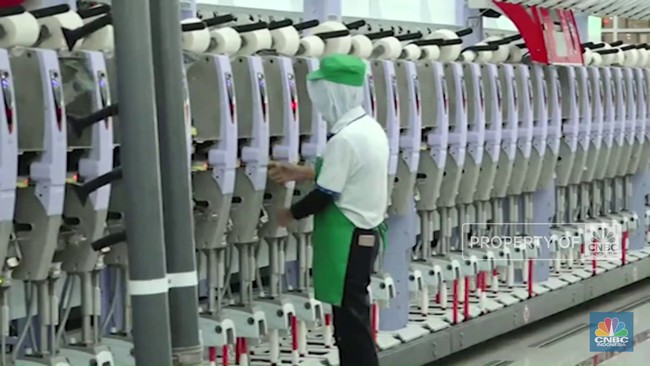
Jakarta, CNBC Indonesia - Coordinating Minister for the Economy Airlangga Hartarto has revealed that the weakening performance of Indonesia’s manufacturing sector in April 2026 is due to global uncertainties. According to him, geopolitical conflicts between the US and Iran have caused disruptions to the global supply chain.
“Manufacturing is declining because the future of this war remains uncertain. So, the supply chain is also worried that the next disruption will be the supply chain,” Airlangga said when met at the Coordinating Ministry for the Economy building on Monday (4/5/2026).
As is known, data from the Purchasing Managers’ Index (PMI) released by S&P Global today, Monday (4/5/2026), shows Indonesia’s PMI at 49.1 in April 2026. This figure is the lowest since July 2025 or the past nine months. This figure also marks the first PMI contraction since July 2025 after eight months of expansion.
The PMI uses 50 as the starting point. If above 50, it means the business world is in an expansion phase. Meanwhile, below that, it indicates contraction. Airlangga explained that the manufacturing sector is highly dependent on many other sectors as well as demand.
“Because in terms of energy, it usually shifts to petrochemical products, plastics and others, plastic packaging, followed by logistics. And manufacturing is very dependent on logistics, and then related to the demand side. So we are just monitoring this,” he said.
Previously reported, S&P explained that the PMI experienced contraction due to a decline in Indonesia’s manufacturing sector conditions in the early second quarter of 2026 due to several factors.
Companies recorded a fairly strong contraction in production volume. This is the sharpest correction in nearly a year, although there was a slight increase in new orders.
This contraction was driven by a sustained decline in production volume. The decline occurred for two consecutive months, with the rate of decline accelerating compared to March and becoming the fastest since May last year.
Companies cited rising raw material prices, supply shortages, and weakening customer purchasing power as the main factors behind this decline.
On a more positive note, Indonesian producers reported a slight increase in new orders, although this was largely due to earlier ordering to anticipate future price increases and supply disruptions.
Data shows that this increase mainly came from the domestic market, while new export orders actually experienced a fairly significant decline. Cost pressures increased during the month, with input cost inflation reaching the highest level in exactly four years.
Businesses linked the rise in input costs to increasing raw material prices and material scarcity. Companies responded to this cost increase by raising selling prices in the early second quarter, with the rate of increase being the largest since October 2013.
Producers also slightly reduced purchasing activity in line with weakening production needs. Delivery delays and supply shortages led companies to use existing raw material stocks to maintain production.
At the same time, finished goods stocks increased as producers held onto unsold items.