
Indonesia’s Mandatory Halal Certification Deadline Set for 18 October
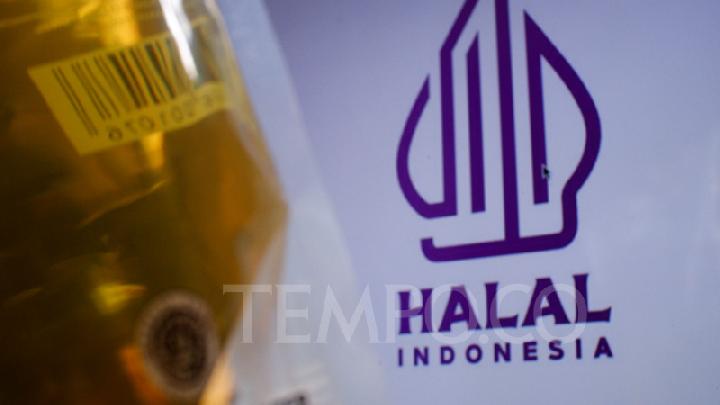
Indonesia’s Mandatory Halal Certification Deadline Set for October 18
October 11, 2026 | 10:28 am
TEMPO.CO, Jakarta - Indonesia’s Consumer protection advocate and Chair of the Indonesian Empowered Consumers Forum (FKBI), Tulus Abadi, believes that October 18, 2026, should mark the moment when the mandatory halal—or non-halal—certification requirement for business operators is fully realized.
“For every product or business operator falling under the categories requiring halal certification, obtaining such certification is a legal obligation. Conversely, products not requiring halal certification must obtain non-halal certification,” Tulus stated in an official release in Jakarta on Sunday, October 11, 2026.
After a 12-year relaxation and transition period following its enactment, Law No. 33 of 2014 concerning Halal Product Assurance (JPH Law) will come into full effect on October 18, 2026.
Consequently, Tulus views October 18, 2026, as the pivotal moment to realize the “Mandatory Halal October” (WHO) initiative.
Tulus offered several critical points regarding the realization of WHO; first, there must be no further relaxation of the rules.
He noted that 12 years have passed since the law’s enactment—a period of transition and relaxed implementation of the JPH Law for business operators, including SMEs, MSMEs, and large-scale enterprises.
Therefore, he argues, the mandatory halal certification requirement for all business operators must be enforced by the “Mandatory Halal October” deadline on October 18, 2026.
“It is imperative for the Halal Product Assurance Organizing Agency (BPJPH) of the Republic of Indonesia to act proactively and progressively to ensure halal certification for all producers and business operators,” Tulus said.
Secondly, he stated that business operators—particularly those operating above the SME/MSME level—must be proactive and cooperative in applying for halal certification for their products.
He noted that for MSMEs, the “self-declaration” policy makes meeting halal certification requirements very easy and free of charge. “Meanwhile, for large business operators, cost should not be an issue, as the halal certification process does not constitute a significant economic burden,” said Tulus.
Thirdly, he advised the public not to be misled by claims such as “no pork, no lard, no alcohol” made by producers or business operators—particularly large restaurants in malls and shopping centers.
He noted that in the field—especially in malls—many large restaurants promote themselves using the tagline: “no pork, no lard, no alcohol.”
“That claim does not guarantee a product’s halal status; in fact, it is misleading and fails to meet regulatory standards. In other words, the food and beverages served by such restaurants are not guaranteed to be halal—meaning they are effectively non-halal,” Tulus stated.
Fourthly, Tulus urged the MUI Fatwa Commission and the BPJPH (Halal Product Assurance Organizing Agency) to reject halal certification applications submitted by the cigarette industry and, conversely, to label cigarette products as “non-halal,” in accordance with the mandate of the Halal Product Assurance (JPH) Law.
This is because Article 20, Paragraph 1 of the JPH Law stipulates that products which are intoxicating and/or hazardous to health cannot apply for halal certification. Cigarettes are clearly and unequivocally products that endanger and damage health—a fact already displayed in the health warnings on cigarette packaging.
“Therefore, it is inevitable that cigarette products bear a non-halal status. Moreover, under other legal frameworks—such as the Law on Excise and the laws and government regulations regarding health—tobacco is classified as an addictive product that generates negative externalities for smokers, passive smokers, and even the environment,” Tulus said.
Fifthly, he continued, halal certification serves as a crucial instrument for ensuring consumer protection and providing legal certainty for consumers when consuming products. “Therefore, halal certification holds significant economic value for business operators, given that Indonesia’s population of over 287 million is 88 percent Muslim,” said Tulus.
Tulus added that the ‘Mandatory Halal October’ initiative should serve as the culmination of efforts by the state—through the BPJPH RI, the MUI Fatwa Commission, and business operators—to ensure a sense of security, comfort, and safety for consumers when using products.
“Halal products, achieved through halal certification, are integral to ensuring safety and security across food, beverage, pharmaceutical, cosmetic, and other product categories,” Tulus stated.
Law No. 33 of 2014 concerning Halal Product Assurance (JPH Law) is a comprehensive piece of legislation designed to guarantee the halal status of products through a halal certification mechanism, which is mandatory for business operators.
According to Government Regulation No. 42/2024, the product categories subject to mandatory halal certification by October 18, 2026, include food, beverages, raw materials and food additives, slaughtered products and slaughtering services, natural medicines, quasi-medicines, health supplements, cosmetics, as well as chemical and genetically engineered products.
Additionally, the mandate covers consumer goods—specifically clothing, headwear, accessories, household health supplies, household appliances, Islamic worship equipment, stationery, and office supplies—and, finally, medical devices categorized by risk level.
Read: Malaysia, Indonesia Establish Joint Halal Council
Click here to get the latest news updates from Tempo on Google News