
Indonesia's Looming Water Crisis: Abundant Resources, Growing Scarcity Threat
The United Nations, through its Integrated Water Resources Management (IWRM) concept, asserts that the water crisis is not solely caused by a decrease in water availability, but by weak governance, distribution, conservation, and control of water resource utilisation. This theory is highly relevant to Indonesia’s condition. The main issue is not just water availability, but how water is managed fairly, efficiently, and sustainably.
Data from the Central Statistics Agency (BPS) shows that household access to adequate drinking water sources has continued to increase, reaching approximately 92.64 percent in 2024. However, this figure still leaves millions of households without access to proper water services, with significant disparities between regions. Papua Pegunungan, for example, still has a much lower access rate compared to DKI Jakarta. The WHO–UNICEF Joint Monitoring Programme (JMP) standard indicates that access to safely managed drinking water remains far below basic access achievements, signalling that service quality and continuity are still major challenges.
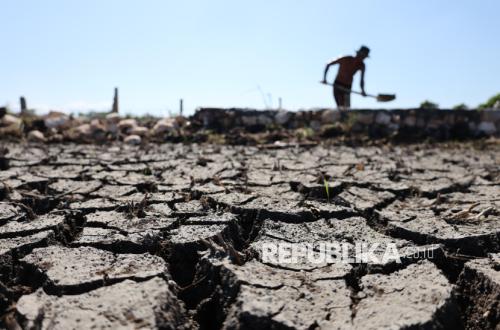
Meanwhile, climate change is worsening Indonesia’s hydrological conditions. Dry seasons are becoming longer in some areas, while rainy seasons occur with high intensity over short periods. Consequently, more water is lost as runoff rather than being stored as groundwater reserves. This situation creates a paradox: flooding during the rainy season and drought during the dry season.
Indonesia’s water problems have now evolved into multidimensional issues affecting national development. Firstly, there is spatial inequality in water availability. Java, which is home to more than half of Indonesia’s population, has far lower water reserves per capita compared to other islands. Urbanisation and industrial growth significantly increase water demand while environmental carrying capacity continues to decline. Secondly, the quality of water sources is degrading due to domestic, industrial, and agricultural pollution. Many rivers that serve as raw water sources are experiencing a decline in quality, requiring increasingly higher treatment costs before the water is safe for consumption. Thirdly, massive groundwater exploitation is occurring, especially in urban areas. Excessive groundwater extraction causes land subsidence, seawater intrusion in coastal areas, and a decrease in the natural storage capacity of aquifers. Fourthly, climate change is causing an increase in the frequency of hydrological droughts. Areas that were previously relatively safe are now beginning to experience difficulties in obtaining clean water during the dry season.
These conditions indicate that Indonesia’s challenge is no longer simply providing water, but maintaining the sustainability of water resources for future generations. The government has implemented various programmes to control water use. Through the Ministry of Public Works, dam construction is being accelerated to increase national water storage capacity. Other efforts include the development of retention basins, irrigation networks, drinking water supply systems (SPAM), irrigation area rehabilitation, watershed conservation, and raw water infrastructure development. In the agricultural sector, the government is promoting Water-Saving Paddy Irrigation (IPHA) as a strategy to increase water use efficiency without reducing agricultural productivity. This programme is expected to reduce irrigation water consumption while strengthening national food security. In terms of regulation, the government has reinforced the legal framework through Law Number 17 of 2019 on Water Resources, which emphasises water management that prioritises the people’s right to water, water resource conservation, control of water’s destructive power, and sustainable utilisation. In several regions, local governments have also begun to implement restrictions on groundwater use through licensing systems, progressive tariffs, mandatory construction of infiltration wells, and the application of a zero-runoff concept in new area developments. These policies aim to reduce groundwater exploitation, which has been a major cause of land subsidence in many large cities. However, the effectiveness of these policies still faces challenges, including weak supervision, poor inter-agency coordination, limited funding, and low public awareness regarding water conservation.
Several interrelated factors are causing the increasing threat of a water crisis in Indonesia. Firstly, population growth and urbanisation are significantly increasing water demand each year. Secondly, changes in land use are reducing water catchment areas. The conversion of forests into residential and industrial zones reduces nature’s ability to store rainwater. Thirdly, river pollution is increasing, rendering many water sources unfit for use as raw water. Fourthly, climate change is causing rainfall pattern uncertainty, which directly impacts the availability of both surface water and groundwater. Fifthly, water resource governance remains sectoral, meaning that conservation, development, and utilisation policies are not yet fully integrated. From the perspective of Garrett Hardin’s ‘Tragedy of the Commons’ theory, water is a shared resource that is vulnerable to overexploitation if not regulated effectively. Every individual or sector tends to maximise water use for their own interests, ultimately harming the entire community.
Source: jawawa.id (https://jawawa.id/newsitem/indonesias-looming-water-crisis-abundant-resources-growing-scarcity-threat-1786668694)
Originally published by Republika (https://analisis.republika.co.id/berita/tjqhgb472/indonesia-menuju-krisis-air-antara-kelimpahan-sumber-daya-dan-ancaman-kelangkaan), translated from Indonesian