
Indonesia's Legacy: The 'Wisnumurti Guidelines' in the Selection of the UN Secretary-General
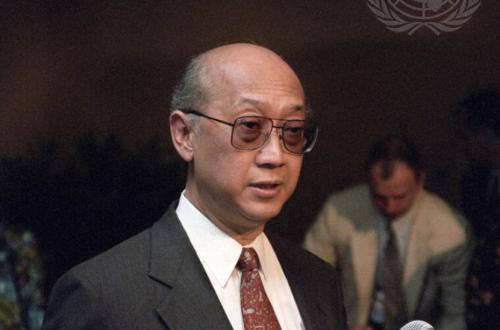
Amid the dynamics of the United Nations Security Council (UNSC), often dominated by power politics, there is one legacy that is rarely highlighted yet has a tangible impact to this day. Through its membership as a non-permanent UNSC member (1995–1996), Indonesia contributed to streamlining one of the most sensitive processes within the organisation, namely the selection of the Secretary-General.
Through the role of Nugroho Wisnumurti as Indonesia’s Permanent Representative/Deputy to the UN at the time, an approach was born that became known as the Wisnumurti Guidelines—a procedural mechanism that helped reduce the messiness of the selection process by introducing a more structured and non-confrontational working method. To this day, this approach remains part of the practices used by the UNSC in screening and narrowing down candidates for UN Secretary-General.
For context, the selection process for the UN Secretary-General has not always proceeded as neatly as it appears today. Before the mid-1990s, the selection for the highest position in this global organisation was often marred by deadlocks, political tug-of-war, and prolonged uncertainty. In many cases, the final outcome was not solely determined by the quality of the candidates, but by their ability to withstand the dynamics of vetoes and compromises in the UNSC.
History records that deadlocks were not the exception, but part of the pattern. In 1950, Trygve Lie’s term was extended not through a UNSC recommendation, but through a decision by the UN General Assembly. This occurred because the Soviet Union used its veto right to reject Lie’s re-nomination, rendering the UNSC unable to produce a recommendation as required by the UN Charter.
In that situation, the UN General Assembly took an unusual step by extending Lie’s term. However, the tension did not end there. The Soviet Union then openly rejected the legitimacy of Lie’s leadership and boycotted interactions with the Secretariat, practically hindering Lie from carrying out his duties.
Under ongoing political pressure, Lie eventually chose to resign in 1952. This episode from the outset highlighted a fundamental reality: in the selection of the UN Secretary-General, formal procedures often directly confront power politics (“A Memoir: When the UN was Young,” in The New York Times, September 1985).
Subsequently, in 1953, a similar deadlock occurred again. The proposed candidates were unable to garner the necessary support, particularly due to the tug-of-war between major powers. In such conditions, the name Dag Hammarskjöld emerged—a Swedish diplomat who was then relatively unremarkable on the global political stage. He was not a major political figure, but an international technocrat and bureaucrat known for being calm, intellectual, and non-confrontational. Precisely because of his profile deemed neutral and non-threatening to any party’s interests, he was accepted by both blocs, including the Soviet Union, which had previously vetoed other candidates.
However, this compromise choice later developed beyond expectations. During his tenure, Hammarskjöld gradually expanded the role of the Secretary-General, no longer merely as an administrator, but as an active diplomatic actor. He played a key role in developing the concept of preventive diplomacy and UN peacekeeping operations, including in handling the Suez and Congo crises. This approach strengthened the Secretary-General’s position as a figure with independent room for manoeuvre, albeit within the bounds of Security Council politics (see Dag Hammarskjöld’s memoir titled “Markings,” 1964).
The next episode was no less complex. After Hammarskjöld’s death in 1961, the UN faced a serious succession crisis. The Soviet Union pushed the idea of a “troika,” a collective leadership representing the world’s major blocs, while Western countries rejected it. In that situation, U Thant was finally accepted as a compromise solution.
However, the process leading to it was fraught with tension, even after a compromise figure was found. U Thant was initially appointed as Acting Secretary-General before being fully confirmed. This episode shows that even when a personal compromise is reached, major political dynamics can still hinder formal resolution (“A man who made the UN cool,” in Foreign Policy, September 2025).
The 1971 selection demonstrated no less complicated dynamics. When U Thant refused to continue his term, several candidates emerged, but one by one they stumbled on vetoes. Max Jakobson from Finland was once a strong candidate but was vetoed by the Soviet Union. Kurt Waldheim from Austria was even rejected by China before finally passing after a sudden change in position. In this context, the final outcome was not only determined by the candidate’s strength, but also by rapidly changing dynamics and calculations among the permanent Security Council members (Security Council Report, 2017).
This pattern peaked in the 1981 selection. Waldheim sought a third term but was rejected by China. On the other hand, Tanzania’s candidate, Salim Ahmed Salim, garnered broad support from developing countries but was not acceptable to the United States. The deadlock lasted for weeks with repeated rounds.
In such conditions, the Security Council increasingly relied on the straw poll mechanism to gauge support directions. However, even that mechanism was not fully able to break the deadlock. In the end, the solution came again from a relatively non-controversial compromise figure, namely Javier Pérez de Cuéllar (Security Council Report, 2017).
In such conditions, the UN Secretary-General selection process can be described as
Source: jawawa.id (https://jawawa.id/newsitem/indonesias-legacy-the-wisnumurti-guidelines-in-the-selection-of-the-un-secretary-general-1776678664)
Originally published by Republika (https://analisis.republika.co.id/berita/tdsd25393/warisan-indonesia-wisnumurti-guidelines-dalam-seleksi-sekjen-pbb), translated from Indonesian