
Indonesia's Largest Oil Producer Shifts to Solar to Cut Emissions
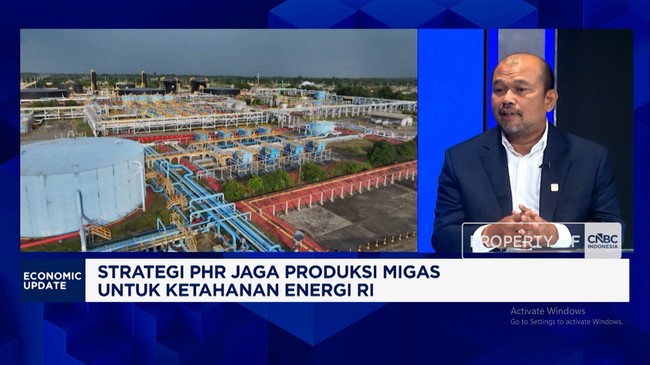
PT Pertamina Hulu Rokan (PHR) is continuing to drive its decarbonisation programme in the Rokan working area, as part of efforts to support the transition towards environmentally friendly energy.
As Indonesia’s largest crude oil producer, PHR has begun shifting its energy sources towards clean energy.
PHR President Director Muhammad Arifin affirmed that reducing greenhouse gas emissions is one of the company’s key focuses. According to him, the adoption of clean energy in oil and gas fields is being carried out to ensure that mining operations remain sustainable amid the natural decline in oil and gas production.
“Our second strategy is to contribute to the energy transition. If you happen to visit Rokan, you will see we have already installed a considerable number of solar cells. On the other hand, we are also trialling several programmes to reduce CO2 emissions,” he explained on the CNBC Indonesia Energy Corner programme, quoted on Monday (13 July 2026).
This is being done through the use of solar energy, with solar panels installed at various points across the company’s operations, aimed at reducing dependence on fossil-based energy.
“Alhamdulillah, PHR Rokan in 2025 was able to achieve production of 151.5 barrels of oil per day, which we all know makes it the largest producer in Indonesia. We contribute 24 to 25 percent of Indonesia’s production,” said Arifin.
Notably, since 2024, PHR has been utilising Indonesia’s largest solar power plant (PLTS) to support its business operations. The PLTS, spread across a 28-hectare area with 64,000 solar panels, represents the Pertamina Group’s commitment to reducing emissions and harnessing new and renewable energy.
The construction of the PLTS was a collaboration between the Pertamina New & Renewable Energy (PNRE) subholding and the upstream subholding Pertamina Hulu Energi. The 25 Megawatt Peak (MWp) facility is located within PHR’s oil and gas operating area, covering Rumbai, Duri and Dumai.
In the long term, the plant is expected to reduce emissions by up to 23,000 tonnes of CO2 per year and cut gas fuel usage by 352 million standard cubic feet (MMSCF) per year. The use of this environmentally friendly energy has the potential to generate efficiencies of up to US$4.3 million per year.
Source: jawawa.id (https://jawawa.id/newsitem/indonesias-largest-oil-producer-shifts-to-solar-to-cut-emissions-1783950734)
Originally published by CNBC Indonesia (https://www.cnbcindonesia.com/news/20260713164522-4-750479/produsen-minyak-terbesar-ri-berupaya-tekan-emisi-begini-caranya), translated from Indonesian