
Indonesia’s IPO Market Is Growing Quieter: Losing Ground to ASEAN Peers?
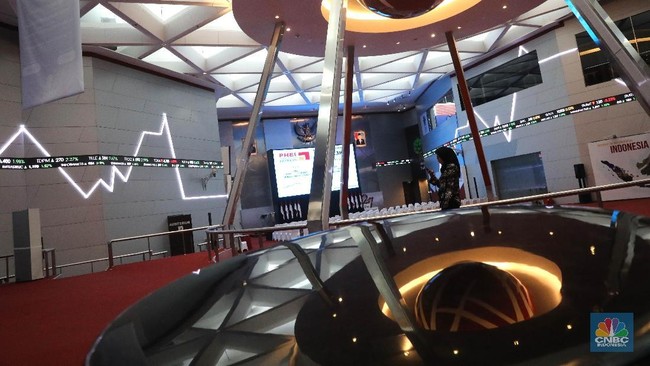
Jakarta – Initial public offering (IPO) activity on the Indonesia Stock Exchange (IDX) weakened sharply in 2026. The number of companies listing fell, while the value of funds raised declined even more steeply.
As of 9 October 2026, the IDX said nine companies were planning to list through an IPO. Two pipeline companies have assets below Rp50 billion, four have assets of between Rp50 billion and Rp250 billion, and three have assets exceeding Rp250 billion.
By sector, the pipeline comprises one basic materials company, two energy companies, one financial company, four healthcare companies and one industrial company.
According to the IDX’s report as of 9 October 2026, only seven companies had completed IPOs, raising a total of about US$120.9 million. By comparison, the IDX report as of 26 September 2025 recorded 23 IPOs raising US$842.3 million.
On those reporting dates, Indonesia’s IPO count fell by 69.6%, while proceeds plunged by 85.6%. The slowdown affected both the number of deals and their size. Average proceeds per IPO dropped from about US$36.6 million to US$17.3 million.
In 2025, fundraising was supported by several large issuers, including Merdeka Gold Resources, Chandra Daya Investasi, Bangun Kosambi Sukses and Yupi Indo Jelly Gum. No similarly sized deals have appeared on Indonesia’s IPO list this year.
Developments in comparable Asian markets have taken a different course. Malaysia recorded higher offering proceeds, mainland China is projected to see a sharp increase in IPO fundraising, and India raised more despite a lower number of transactions.
The difference in deal sizes is also evident in the five largest offerings across the comparison markets. They raised about US$27.58 billion in the January–September 2026 review period. Although periods and definitions differ across markets, the figure highlights the influence of mega-offerings on fundraising totals.
Indonesia’s IPO count continues to fall
Across the three comparable reports, Indonesia’s IPO count declined from 36 companies in 2024 to 23 in 2025 and then to seven in 2026.
Proceeds initially moved in the opposite direction to the number of transactions. In 2025, fundraising increased by about 177.7% compared with the 2024 comparison report, even though fewer companies listed.
This shows that the number of IPOs alone is not enough to measure fundraising strength. A handful of large deals can significantly lift the total.
In 2026, average offering value fell by 52.8% compared with 2025. The decline in proceeds was deeper because the number of companies listing also fell by almost 70%.
The seven completed IPOs amount to 14% of the IDX’s target of 50 companies for 2026. Meanwhile, nine prospective issuers were in the listing pipeline as of 9 October, up from seven in the previous week’s report.
The pipeline creates the possibility of additional listings. However, the amount raised will depend on the size of each offering and whether the prospective issuers complete their transactions.
Indonesia’s seven IPOs in 2026
This year’s IPOs were concentrated in April and July. According to a Datawrapper list sourced from e-IPO, six of the seven companies listed in July.
PT Nitrasanata Dharma Tbk (JECX) had the largest offering, worth about US$34.14 million, followed by PT Rans Entertainmen Indonesia Tbk (RANS) at US$24.02 million.
The breakdown follows the Datawrapper table sourced from e-IPO. Subtotals are calculated before rounding each line. For the annual comparison, the article uses the IDX aggregate of US$120.9 million.
With the largest offering still below US$35 million, 2026 stands apart from the previous year, when several transactions exceeded US$100 million.
Four large issuers supported 2025 IPO fundraising
In 2025, PT Merdeka Gold Resources Tbk (EMAS) recorded the largest offering in the list, at about US$260.81 million.
It was followed by PT Chandra Daya Investasi Tbk (CDIA) at US$132.74 million, PT Bangun Kosambi Sukses Tbk (CBDK) at US$128.82 million, and PT Yupi Indo Jelly Gum Tbk (YUPI) at US$114.30 million.
The four companies accounted for about 75.6% of the subtotal of offering values in the 2025 IPO list. This concentration helps explain why fundraising rose sharply despite fewer IPOs than in the 2024 comparison report.
The subtotal follows the figures in the Datawrapper table and is calculated before rounding each line. The IDX aggregate used for the annual comparison is US$842.3 million.
The 2025 experience illustrates the substantial impact of mega-offerings. When both the number of IPOs and offering sizes contracted in 2026, total fundraising also fell sharply.
Malaysia and China strengthen, while Thailand and South Korea weaken
Indonesia, Malaysia, Thailand, the Philippines, China, India and South Korea are classified as MSCI emerging markets. Singapore and Hong Kong are developed markets, while Vietnam remains an MSCI frontier market.
The latter three are included as additional comparators. The figures are generally available through September 2026, while countries marked with an asterisk have data only through the first half of 2026.
Malaysia’s figures cover Main and ACE offerings, including transfers between boards when accompanied by an offering; LEAP is excluded, and greenshoe options have not been reconciled. China’s figure is a Deloitte estimate. India’s comparison proceeds are calculated from growth reported by the source.
Hong Kong’s listing count uses the HKEX definition of new listings, including board transfers and de-SPAC transactions in the 2025 comparison. Its proceeds column uses official HKEX IPO statistics.
Malaysia recorded a 39.3% rise in proceeds to about US$1.49 billion. The number of offerings covered across the Main and ACE markets increased from 37 to 40.
Mainland China is projected to record a 175% surge in proceeds to US$31.73 billion, with the number of IPOs increasing from 78 to 122.
Hong Kong raised US$49.43 billion, an increase of 106.1%. Deloitte’s analysis identified H-share listings by companies that already had A-shares as one of the main drivers.
India shows that a fall in IPO numbers does not necessarily mean lower proceeds. Transactions declined from 268 to 220, but fundraising increased by 11.3% to US$12.5 billion.
By contrast, IPO proceeds in Thailand fell by 66.9%, while South Korea’s dropped by 52.1%. The figures show that Asian comparison markets have been moving in different directions.
Singapore recovers; Vietnam moves up in FTSE classification
Singapore’s IPO proceeds rose from US$4.7 million to US$873.7 million in the first half of the year. The percentage increase was exceptionally large because the 2025 comparison figure was low.
By the September report, Singapore had recorded eight new listings. Their offering value was about US$1.10 billion using the same exchange-rate benchmark.
Vietnam recorded four transactions worth US$839 million in Deloitte’s first-half reporting coverage. However, the completion of offerings and the start of trading did not all take place within the same half-year. The figure is not a total through September.
Vietnam also received secondary emerging market status from FTSE Russell, effective from 21 September 2026. Its inclusion in the index will be phased in through September 2027.
The change does not affect Vietnam’s classification as an MSCI frontier market.
The Philippines, meanwhile, recorded no IPOs in the first-half 2026 coverage, compared with one transaction a year earlier. These figures are not sufficient to establish that there were no IPOs through September.
Five largest offerings total US$27.58 billion
In Deloitte’s January–September review, the five largest offerings across the comparison exchanges were all by Chinese companies. Two took place in mainland China and three in Hong Kong.
The ranking follows Deloitte’s review coverage and announced transaction values, including greenshoe options that had been exercised. Offerings by Asian companies on US exchanges are excluded. The total is calculated before rounding each line.
CXMT was the largest transaction, followed by Zhongji InnoLight. China Resources New Energy was the only energy company on the list, while Luxshare and Victory Giant completed the dominance of technology and electronics manufacturing companies.
Four technology and electronics companies accounted for about 86.7% of the value of the five offerings. CXMT’s IPO proceeds alone were about 82 times the total raised by Indonesia’s seven IPOs.
Some offerings remain popular despite a quiet IPO market
Although Indonesian IPO activity has weakened, several offerings have still attracted strong demand.
PRDL was oversubscribed 709.93 times, while JELI was subscribed 273.37 times in the central allotment pool. RANS was also reported to have attracted more than one million SID accounts placing orders.
However, pooling ratios are affected by the number of shares available. Strong demand for a few offerings is not enough to assess the market’s overall capacity to absorb large IPOs.
Indonesia’s slowdown is reflected in fewer transactions and lower average offering values. Some comparison markets, by contrast, have been supported by mega-offerings, so the decline has not been uniform across the region.
The comparison is not enough to establish the causes of Indonesia’s slowdown. However, the 2025 experience shows that a few large offerings can significantly change fundraising results.
The proceeds in this article refer to gross offerings as defined by the sources. Some transactions include sales of existing shareholders’ shares, so not all proceeds represent new funds for the companies.
Source: jawawa.id (https://jawawa.id/newsitem/indonesias-ipo-market-is-growing-quieter-losing-ground-to-asean-peers-1791867065)
Originally published by CNBC Indonesia (https://www.cnbcindonesia.com/research/20261012145046-128-775411/bursa-ri-makin-sepi-ipo-kalah-saing-dengan-negara-asean), translated from Indonesian