
Indonesia's Investment Risk Rises, Investors Urged to Be More Selective
Indonesia’s investment risk has shown an increasing trend this year, reflected by the five-year credit default swap (CDS) level reaching 93.25 basis points (bps) as of 13 June 2026, a 35.35% rise year to date. The increase indicates that global investors’ perception of risk towards Indonesian assets is rising. However, economists assess that this condition does not yet reflect a crisis, but rather serves as a signal for investors to be more cautious in their decision-making.
Bank Permata Chief Economist Josua Pardede stated that the current CDS level still indicates a manageable risk profile for Indonesia, although it has entered a zone that warrants vigilance. “The conclusion is not that Indonesia is high risk, but that the risk is rising and the market is becoming more selective,” Josua said on Friday (12/6/2026).
According to Josua, the CDS figure remaining below 100 bps and far from extreme pressure points shows Indonesia is not in a crisis. However, the direction of movement indicates that investors are demanding a higher risk protection premium to hold Indonesian assets. Josua explained that the increase in risk perception coincides with the weakening of the rupiah exchange rate, rising yields on government securities (SBN), pressure in the stock market, and growing concerns over the direction of fiscal policy.
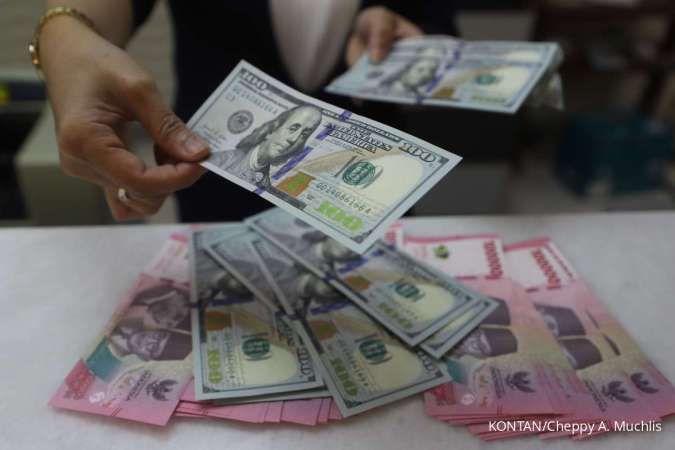
The rupiah’s depreciation, which briefly touched the Rp 18,000 per US dollar range, has made foreign investors more cautious, as potential gains from bond or stock investments could be eroded by exchange rate depreciation. Additionally, fiscal risks are pushing the market to demand higher yields, particularly on long-tenor SBN. Therefore, Josua considers the current CDS position more of an early warning than a danger signal.
University of Indonesia Professor Budi Frensidy also assessed that the CDS increase shows Indonesia’s risk perception has risen compared to normal conditions in recent years. However, the level remains far from indicating serious pressure. “For comparison, during the pandemic, Indonesia’s CDS briefly breached 300 bps. So, the market still views Indonesia as an investable country, even though the risk premium demanded by investors is now higher than before,” Budi explained.
He added that in the short term, the domestic financial market still faces pressure from the weakening rupiah, high bond yields, and increased caution among foreign investors. On the other hand, the market correction has made stock and bond valuations more attractive for long-term oriented investors. “In other words, risk has increased, but the potential returns offered have also grown,” Budi said.
Senior Portfolio Manager at Manulife Aset Manajemen Indonesia, Caroline Rusli, assessed that the valuation of the Indonesian stock market is currently very attractive. However, cheap prices alone are not enough to entice foreign investors to re-enter aggressively. According to Caroline, this condition is influenced by low investor confidence in the government’s policy direction and a lack of short-term catalysts to boost market optimism.
“Indonesia is currently in a selective value phase, prioritising a defensive strategy, and identification through a bottom-up approach on selected stocks and sectors becomes very crucial,” Caroline stated.
Regarding future investment prospects, Josua sees that opportunities in the Indonesian financial market remain open but require a more selective approach than during normal periods. In the government bond market, high yields are starting to become attractive, especially for short to medium tenors. Conversely, long-tenor SBN still face greater risks due to sensitivity to inflation, rupiah movements, oil prices, and government financing needs.
In the stock market, a number of issuers are now trading at cheaper valuations after experiencing significant corrections. However, foreign investors are still waiting for certainty that the pressure on the rupiah, policy risks, and fiscal uncertainty have truly subsided. “The most attractive instruments in the current conditions are money market instruments, safe rupiah deposits, SRBI, and short-tenor SBN,” Josua said.
He added that these instruments offer relatively attractive returns with lower price risk. For investors with a higher risk profile, gradual accumulation of medium-tenor SBN and fundamentally strong stocks can be an option, particularly issuers with strong cash flow, low foreign currency debt, US dollar-based revenue, or those operating in sectors benefiting from exports and commodities. However, Josua stressed that purchasing should be done gradually and not all at once.
According to Josua, global factors that will influence Indonesia’s investment risk going forward include the direction of US interest rates, movements in US government bond yields, world oil prices, geopolitical tensions in the Middle East, foreign capital flows, foreign exchange reserves, the trade balance, and rupiah exchange rate movements. Domestically, investor attention will focus on APBN budget discipline, SBN issuance needs, Bank Indonesia policy, clarity on export proceeds regulations, Danantara governance, potential changes in sovereign rating outlook, and government communication with market participants. “If these factors improve, the CDS could fall and Indonesian assets will become attractive again. If they worsen, the risk premium will rise further,” Josua added.
Josua advised investors not to panic but to adopt a defensive strategy. He recommended that investors shift their portfolio allocation to instruments with lower volatility and clearer yields, such as money market mutual funds, short-tenor SBN, and rupiah deposits. For stock portfolios, he suggested focusing on fundamentally strong stocks with low downside risk and high dividend yields, while reducing exposure to stocks that are highly sensitive to rupiah depreciation and rising yields.