
Indonesia’s Investment Reaches Rp3,923 Trillion as Rosan Roeslani Emphasises Quality and Job Creation
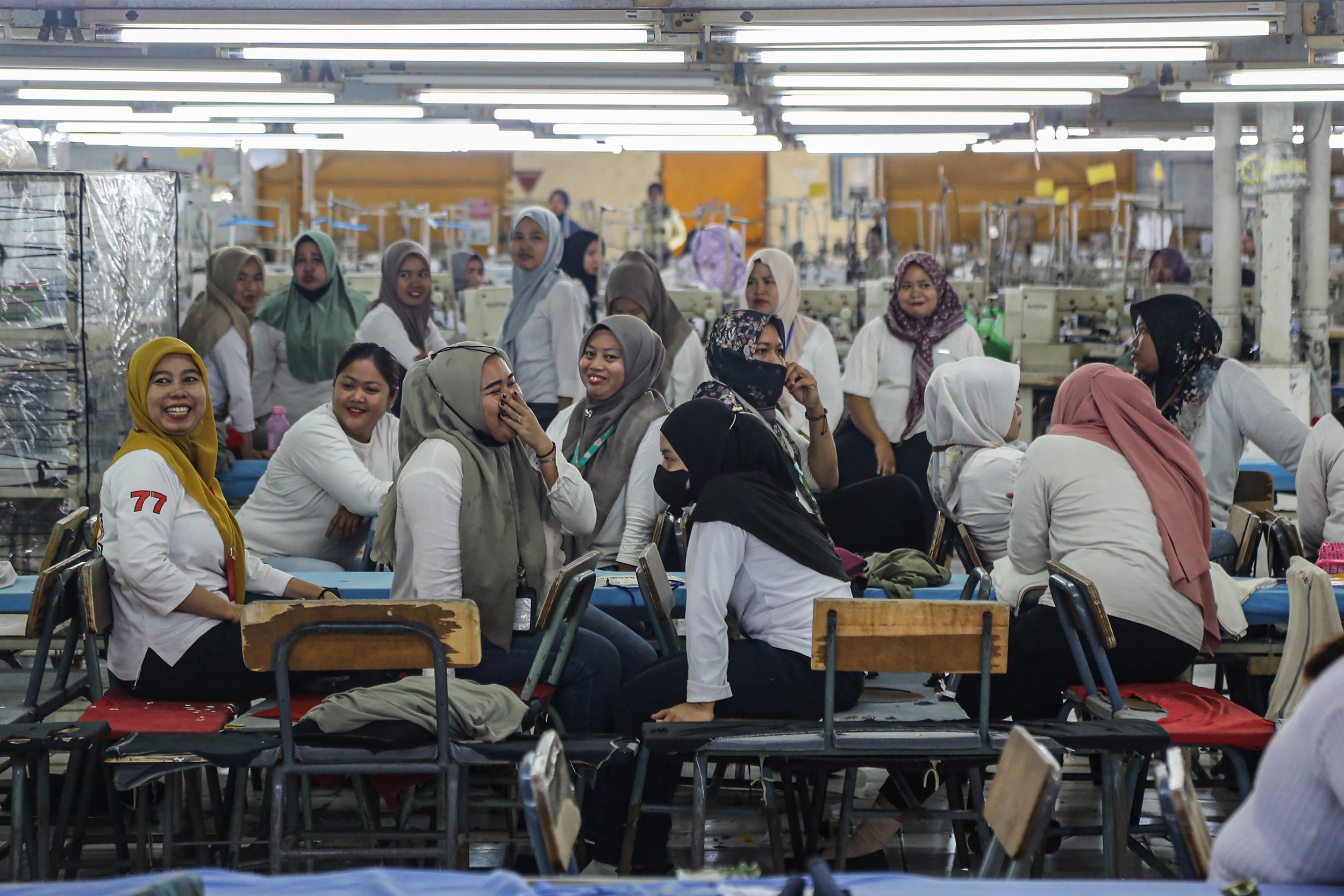
The government is shifting its investment policy focus beyond increasing the amount of capital entering Indonesia to the economic benefits it generates. Job creation, improving human resources and transferring technology are among the priorities in promoting high-quality investment.
Investment and Downstreaming Minister and Investment Coordinating Board (BKPM) head Rosan Roeslani said incoming investment should have a broader impact on the national economy.
According to data from the Ministry of Investment and Downstreaming/BKPM, investment realisation from the fourth quarter of 2024 to the third quarter of 2026 reached Rp3,923.2 trillion. This was equivalent to 30.1 per cent of the Rp13,032.8 trillion investment target through 2029.
Of the total, domestic investment (PMDN) accounted for Rp1,998.7 trillion, while foreign investment (PMA) amounted to Rp1,924.5 trillion. The investment was also recorded as having absorbed around 5.48 million workers.
“We certainly hope that the investment coming in will be high-quality investment. We see high-quality investment as investment that can improve our human resources, involve the transfer of knowledge and technology, and, of course, create quality jobs,” Rosan said, according to a Kadin YouTube video on Saturday (31 October 2026).
Nickel downstreaming is one sector seen as having the potential to increase the added value generated by investment. Rosan said Indonesia holds around 46 per cent of the world’s nickel reserves. Before domestic processing industries were developed, Indonesia’s nickel exports were worth about US$3.3 billion.
Following downstreaming policies and the development of derivative products, export values increased. In 2025, exports of nickel and its derivative products reached US$30 billion.
“In 2025, exports of nickel and its derivatives had reached US$30 billion,” Rosan said.
He said the increase demonstrated the economic opportunities offered by processing natural resources domestically. Through downstreaming, Indonesia is not merely selling raw materials, but also developing industries that produce higher-value goods.
Rosan cautioned, however, that the benefits of downstreaming must be accompanied by improvements in the capabilities of the national workforce. The transfer of knowledge and technology is also important to ensure domestic industries can grow and become more competitive.
Alongside large-scale industries, the government is encouraging micro, small and medium-sized enterprises (MSMEs) to take part in the national investment ecosystem. Rosan hopes the Indonesian Chamber of Commerce and Industry (Kadin) will strengthen support for MSMEs and create partnership opportunities between them and larger companies.
He also hopes the number of micro and small businesses will decline in the future as more small-business owners succeed in expanding into medium-sized and large enterprises.
Investment growth is therefore expected not only to increase capital formation, but also to strengthen national industrial capacity, create jobs and help MSMEs move up the value chain.